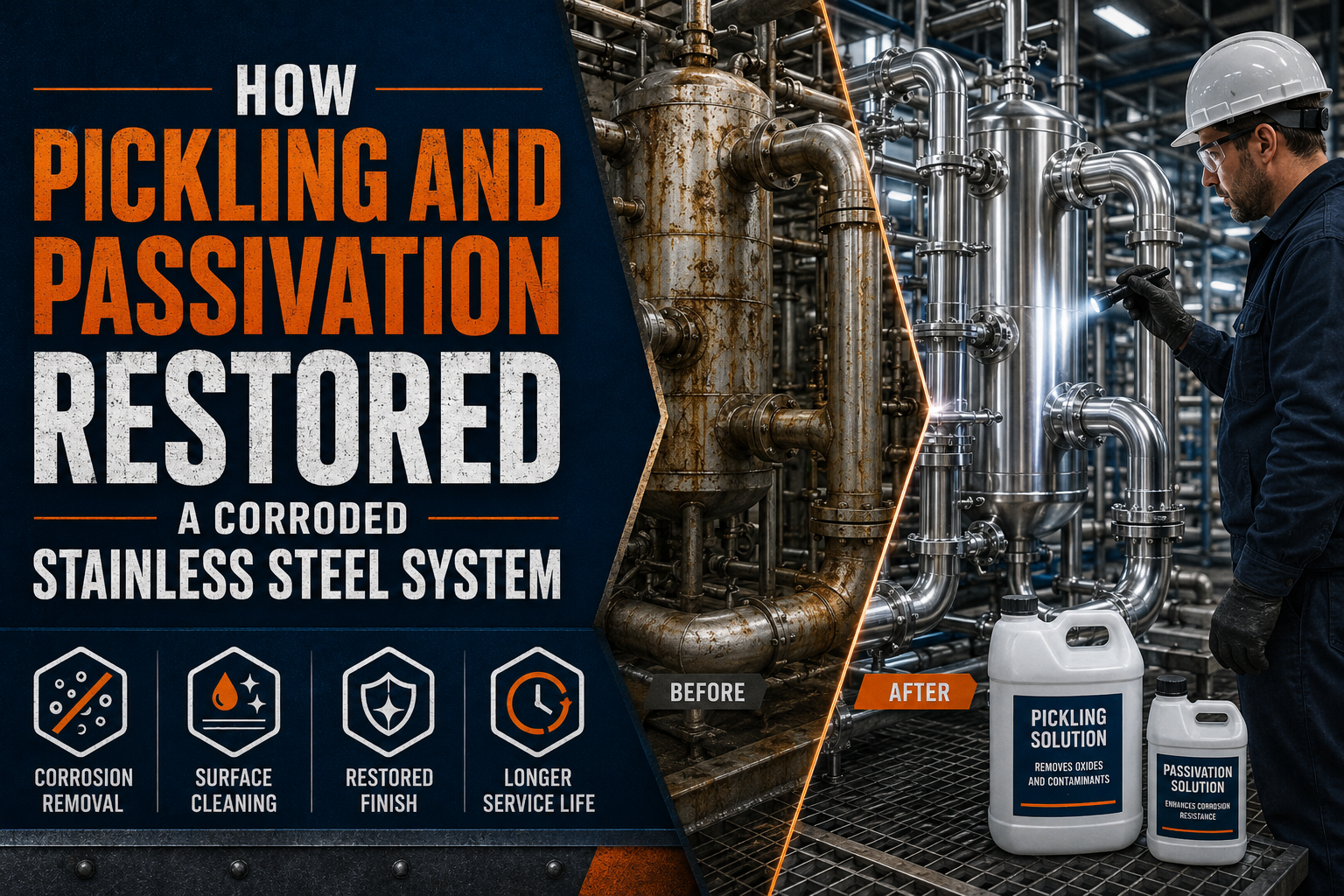
Stainless steel has an extremely long life and provides resistance to corrosion and high durability (i.e., it is very tough). In the UAE, oil & gas, food, water treatment, and construction industries are generally very dependent on stainless steel systems to ensure that their operations run efficiently, no matter how harsh the environmental conditions they may be in. There are cases where (in addition to being in an aggressive environment) stainless steel may corrode due to contamination or improper fabrication.
This is where pickling and passivation come into play. These processes are very important for being able to restore components made from stainless steel, thus allowing for an extended lifespan of equipment; and they help ensure compliance with the appropriate industrial standards.
In this article, you will be able to learn about how pickling and passivation worked together to restore heavily corroded stainless steel systems; along with what importance they have for other industries operating in the UAE.
How to Reduce Corrosion on Stainless Steel: The Problem with Stainless Steel
Stainless steel is often thought of as corrosion-resistant; however, it is actually reliant on a thin layer of oxide, known as a passive layer, that forms on its surface for corrosion protection. If this layer is compromised, it can result in rapid contamination and corrosion.
This issue recently affected a water treatment facility located in the United Arab Emirates after many years of service. Operators noticed several issues:
- Changes in the color of the surface.
- Rusting near the welded joints.
- Reduced flow capacity.
- Evidence of pitting corrosion inside the pipeline.
The facility operated in a coastal area, which was conducive to increased humidity and exposure to salt, conditions that accelerated corrosion rates. In addition, welds were not effectively cleaned, and residues from welding were left on the surface before cutting into the pipe. According to research conducted by industry experts, improper post-weld cleaning is one of the leading contributors to the premature corrosion of stainless steel in industrial applications; however, this issue is compounded considerably in marine or humid areas such as the UAE.
What Is Pickling and Passivation?
Pickling and passivation are some of the processes usually referred to before reaching the restoration stage.
Pickling
Pickling is a chemical cleaning process used to remove the weld scale, heat tint, rust and surface contaminants and iron particles embedded during fabrication. Typically, acidic solutions are used that dissolve out impurities without any corrosive action on the stainless steel.
Passivation
The passivation process restores the protective chromium oxide layer on stainless steel surfaces. After contaminants are removed by pickling, passivation further enhances the metal’s natural corrosion resistance by promoting a reaction between oxygen and chromium on the surface.
Combining pickling and passivation restores the optimum protective condition of stainless steel.
The Restoration Process of the Damaged Piping System is as Follows
The water utilities worked with a Qualified Corrosion Specialist to restore the Piping System. The restoration took place through a carefully developed process as follows:
1. Surface Inspection and Corrosion Assessment
The purpose of Step 1 is to determine the extent of the corrosion. To do this, the technician performed the following:
- Visual Inspection
- Assessment of the integrity of the welded joints
- Testing for surface contamination
- Measurement of the thickness of the wall of the pipe
The results of these inspections indicate that corrosion was found at all locations of the welded joints and at locations where stagnant water was present.
2. Mechanical Surface Cleaning
Prior to commencing the chemical treatment, all loose rust debris and contaminating material from the surfaces was removed by mechanical means to ensure that the chemical product would be able to work effectively on the contaminated surface. To achieve this, the technician used non-contaminating stainless steel brushes in addition to other special cleaning tools in order not to introduce carbon steel particles to the surfaces.
3. Pickling Treatment
After preparing the surface, a controlled-application pickling paste was applied to the affected areas (i.e., welded joints and corroded areas). The pickling process successfully removed:
- Heat tints discolouration
- Oxidized scale
- Embedded iron contaminants
- Surface rust
Within a few hours following the pickling process, the stainless steels surface had returned to a clean metallic appearance.
One of the Maintenance Engineers involved with the project said: “The difference was immediate; places that appeared to be permanently damaged returned to a condition very near their original state after being pickled.”
4. Passivation Process
After extensive washing and rinsing, the passivation process was applied to the system. Passivation creates a chromium-rich passive (nonreactive) layer which protects the stainless steel against corrosion in the future.
The passivation process improved the system’s resistance to the following environmental attacks:
- Chloride exposure
- Humidity
- Chemicals
- Oxidation
Laboratory testing confirmed that the system had an increased ability to resist rusting and improved surface conditions.
The Results: A Fully Restored Stainless Steel System
The Benefits of Having a Complete Restored Stainless Steel System (Results Beyond Expectations)
Following a Pickling and Passivation Treatment -As soon as the treatment is completed, you will see your system reliability, reduced maintenance costs, increased ability to resist corrosion, longer life of your equipment, and greater operational efficiency. Most importantly, you will have avoided a total replacement of your pipelines and saved tremendously on both costs and downtime.
According to industry studies, an adequate surface finishing treatment can result in a 30% extended life of the stainless steel equipment in extreme environments. For the various industries located in the UAE that operate in high temperature or coastal areas, this will provide significant benefit over time.
Why Is Pickling and Passivating So Important to the UAE?
There are several environment issues in the UAE that affect stainless steel systems.
- Very high salt content in the coastal areas,
- Very high temperatures,
- Exposure to industrial chemicals,
- A lot of humidity fluctuation.
Without proper preparation, even high-quality stainless steel will degrade faster than expected.
Because of this, more and more industries in the UAE are turning to pickling and passivation to provide their systems with the overview of preventive maintenance practices that will allow them to maintain:
- A hygienic environment in food and pharmaceutical production facilities.
- Ability to resist corrosion caused by marine applications.
- Structural integrity for infrastructure projects.
- Compliance to international industry standards.
The treatments are no longer an option; they are a necessity for protecting long-term assets.
Selecting a Professional Pickling and Passivation Company
Selecting a proper company for mechanical restoration can depend heavily on their experience, safety, and methods used for chemical application. The following things should be considered when selecting a company within the UAE:
- Experience with stainless steel restoration
- Industry-certified technicians
- Compliance with environmental and safety regulations
- Proven corrosion treatment methods
- On-site and shutdown maintenance capabilities
Utilizing trained professionals that are well experienced in providing these services will produce the best results for you in the least amount of risk during downtime on your operations.
Conclusion
While corrosion may seem to indicate that you are in the early stages of equipment failure, proper restoration methods may allow you to restore life back to your stainless steel systems.
In this case, the use of pickling and passivation provided a cost-effective solution to restoring your system’s performance, improved its corrosion resistance, and increased the useful life of an industrial equipment system.
For all businesses within the UAE, investing in proper treatments for stainless steel surfaces is about more than just performing your routine maintenance on your equipment, it is to continue protecting the efficiency of your operations for many years into the future while reducing costly downtime to your production.