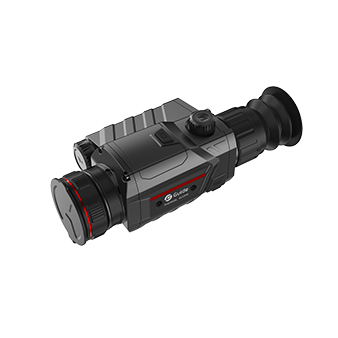
When you prepare for a nocturnal outdoor session, the first point of discussion for many enthusiasts is thermal monocular vs night vision which is better for hunting. While both technologies open up the night, they function on distinct principles. Thermal imaging detects the infrared heat signatures radiated by living beings, allowing you to see targets regardless of light levels, while night vision amplifies available ambient light to provide a detailed view of the environment. Choosing between them depends on whether your priority is the rapid detection of heat signatures or the high-resolution identification of targets and terrain features.
The Superiority of Thermal Detection
Thermal imaging is the preferred tool for wide-area scanning and detection. Because it is a passive system that ignores visible light, it remains effective in complete darkness, fog, and light smoke. A warm-blooded animal will appear as a glowing heat signature against a cooler background, making it virtually impossible for game to hide. This provides a massive advantage for hunters and wildlife observers, allowing you to identify the presence of wildlife long before they get within range of other optics. By focusing on heat rather than light, you gain 24/7 capability for monitoring your land.
Navigating the Forest with Thermal Clips
When you are tracking wildlife in challenging, low-light environments, using a thermal clip on for wildlife tracking in dense forest can significantly enhance your observational capabilities. Dense woodlands often create a complex web of branches, leaves, and shadows that can baffle traditional optics. A thermal clip-on attaches directly to your existing scope, providing a heat-sensing overlay that allows you to spot targets through the small gaps in the foliage. This configuration is a game-changer for those who prefer to keep their familiar optical setup while adding the immense detection power of thermal technology.
Essential Considerations for New Observers
For those starting their journey, the comparison of digital night vision vs thermal imaging for beginners is a necessary step. Digital night vision systems are often the best starting point; they are budget-friendly, offer excellent detail for identifying specific features like coat patterns, and can even be used as daytime optics. They provide a “natural” image that is easy for the human eye to process and interpret.
Conversely, thermal imaging offers a shorter learning curve for pure detection. For a beginner, the simplicity of seeing a heat signature provides immediate feedback on where wildlife is located. Many professionals eventually adopt a hybrid workflow, carrying a thermal monocular for rapid scanning and using a high-quality night vision optic for the final identification and observation of the target.
Field Craft and Equipment Care
The effectiveness of any optical gear is tied to your ability to manage it in the field. Modern devices allow you to adjust contrast, brightness, and color palettes to match the specific temperature and humidity of the evening. In colder conditions, the contrast between an animal and the ground is usually higher, making thermal targets pop even more vividly.
Proper maintenance is equally critical. Keep your lenses clean, ensure you have a reliable power source, and consider keeping your batteries warm in an insulated pocket during cold-weather excursions. By understanding the nuances of your chosen technology and applying consistent field craft, you will turn every nocturnal outing into a productive experience. Respect for the environment and an understanding of animal behavior remain the foundation of successful and ethical observation, with your optics serving as the final link in your ability to witness the mysteries of the wild.