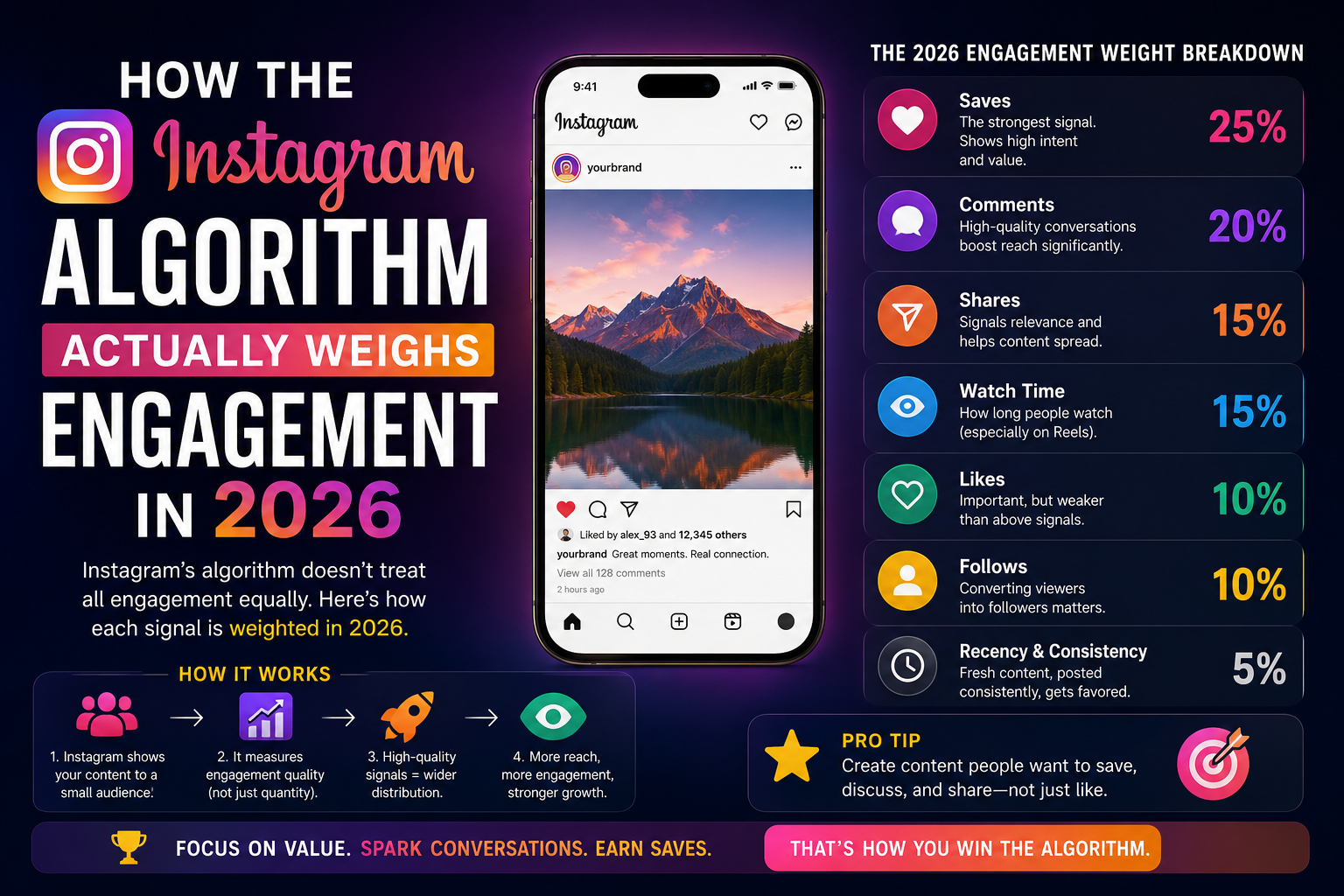
Most advice about the Instagram algorithm is either years out of date or built on guesswork. The reality in 2026 is both simpler and more nuanced than the “post at 9 a.m. and use 30 hashtags” tips that still circulate. Instagram doesn’t run one algorithm it runs several, one for each surface, and each weighs engagement differently.
If you create content for a living, or you’re growing a brand account, understanding which engagement signals matter and which are noise is the difference between content that compounds and content that disappears. Here’s how it actually works.
Instagram Doesn’t Have One Algorithm
The single most useful thing to internalize: there is no master “Instagram algorithm.” Feed, Stories, Reels, and Explore each rank content using their own mix of signals, because user intent differs on each. Someone scrolling Reels wants to be entertained by strangers; someone opening Stories wants updates from accounts they already follow.
That means the same engagement action carries different weight depending on where it happens. A save on a Feed post is a strong signal. A quick tap-through on a Story is a weak one. Treating “engagement” as a single number is the first mistake most creators make.
The Engagement Signals That Carry the Most Weight
Saves and shares. When someone saves your post or sends it to a friend in DMs, they’re telling Instagram the content has lasting or social value. These are weighted heavily because they’re harder to fake and strongly correlate with quality. If you optimize for one metric in 2026, make it shares.
Comments and replies. A comment costs more effort than a like, so it signals genuine interest. Comments that spark back-and-forth replies are even better, because Instagram reads sustained conversation as a sign the content is worth surfacing to more people.
Watch time and completion (Reels and video). For video, how long people watch and whether they rewatch often outweighs likes entirely. A Reel with a lower like count but high completion rate can outperform a “viral-looking” post with lots of likes and quick exits.
Likes. Still a signal, but a comparatively weak one in 2026. Likes are easy and low-intent, so the algorithm treats them as a soft vote rather than strong proof of value.
What “Engagement Rate” Really Means Now?
Engagement rate is simply your total engagement divided by either your follower count or your reach. The catch is that the denominator matters enormously.
If your follower count grows but your likes, comments, and shares don’t keep pace, your engagement rate drops and a falling engagement rate can soften your reach over time. This is why chasing follower count in isolation backfires. A 5,000-follower account with strong, active engagement will routinely out-reach a 50,000-follower account where most followers are inactive.
The practical takeaway: follower count and engagement need to move together. Growth in one without the other distorts your ratios and can work against you.
The Myths Worth Dropping in 2026
- “Shadowbans are random.” Reach drops are almost always tied to content performance, posting patterns flagged as spammy, or policy issues not a mysterious hidden penalty applied at random.
- “More hashtags = more reach.” Instagram has steadily de-emphasized hashtags as a discovery mechanism in favor of content understanding. A handful of relevant ones is fine; thirty is pointless.
- “Post at exactly 9 a.m.” Timing helps only because your followers are online then. There’s no universal magic hour your own audience insights beat any generic chart.
- “The algorithm hates you.” It doesn’t have intent. It’s a relevance-prediction system. If reach falls, it’s predicting your content is less relevant to your audience that’s a content signal, not a vendetta.
How to Actually Earn More Reach?
1. Design posts for saves and shares. Ask yourself before publishing: would someone save this for later or send it to a friend? Tutorials, checklists, relatable observations, and genuinely useful tips earn these actions far more than polished-but-empty content.
2. Reply to every early comment. The first 30–60 minutes after posting matter. Active replies extend the conversation, and sustained comments signal to Instagram that the post is worth pushing further. Be present right after you publish.
3. Solve the cold-start problem honestly. New and small accounts face a real chicken-and-egg issue: the algorithm needs engagement to predict relevance, but you need reach to get engagement. The durable fix is consistent, save-worthy content plus genuine community interaction over time. Some creators try to shortcut the very earliest stage of credibility by building an early follower base for social proof, but it’s worth being clear-eyed about this: purchased followers don’t engage, can be removed by Instagram, and buying them runs against Instagram’s terms of service. If used at all, it’s a cosmetic starting nudge never a substitute for the content and engagement that actually drive reach.
The Instagram algorithm in 2026 rewards the same thing it’s been moving toward for years: content that real people find valuable enough to save, share, and talk about. High-intent engagement beats vanity metrics, watch time beats likes for video, and your engagement rate matters more than your raw follower number.
Stop optimizing for the algorithm as if it were a puzzle to crack. Optimize for the humans it’s trying to serve the system is built to notice when you get that right.