Construction sites are rarely neat. Between temporary power setups, lighting systems, communication lines, heavy machinery, and ongoing electrical installations, cables tend to spread everywhere if they’re not managed properly.
One large construction company in the UAE learned this the hard way during a high-rise commercial project in Dubai. What initially seemed like a minor organisational issue gradually started affecting efficiency, safety, and even project timelines. Surprisingly, the solution wasn’t expensive machinery or a complete system redesign. It came down to something much simpler: upgrading to premium cable ties.
At first glance, cable ties don’t seem like a product worth discussing in detail. Most people see them as basic accessories tossed into toolboxes and forgotten after installation. But on large-scale construction projects, the quality of cable management materials can influence everything from worker safety to maintenance speed.
For this company, better cable management became more than just an organisational improvement—it became a practical operational advantage.
The Cable Management Problem No One Expected
The project involved multiple subcontractors working simultaneously across different floors. Electrical teams were running temporary cables alongside permanent installations while HVAC technicians, security system installers, and networking contractors added their own wiring.
Within weeks, the site became difficult to manage.
Loose cables cluttered walkways, temporary wiring sagged from support structures, and maintenance teams struggled to trace specific lines during inspections. Cheap cable ties used during the early phases started snapping under heat exposure and tension, especially in outdoor sections exposed to the UAE sun.
The company’s site supervisor noticed a growing pattern. Workers were spending extra time reorganising cables, replacing broken ties, and troubleshooting preventable issues.
What seemed like a small inconvenience started affecting productivity.
Why Cheap Cable Ties Often Fail on Construction Sites
Many contractors buy cable ties in bulk without thinking much about material quality. On paper, one cable tie may look similar to another. In reality, there’s a major difference between low-grade plastic ties and industrial-grade products designed for demanding environments.
The original ties used on the site weren’t built for prolonged UV exposure or high temperatures. Under direct sunlight, some became brittle within weeks. Others loosened under vibration or failed under heavier cable loads.
Construction environments in the UAE are particularly demanding because of:
- Extreme outdoor temperatures
- Dust and sand exposure
- Heavy equipment vibration
- Continuous cable movement
- Long project durations
When cable management products fail repeatedly, the labour cost of replacing them quickly outweighs the savings from purchasing cheaper materials.
That realisation pushed the company to rethink its approach.
The Shift to Premium Cable Ties
Instead of continuing with low-cost alternatives, the procurement team partnered with an experienced cable tie supplier in UAE specialising in industrial-grade fastening and cable management solutions.
The difference became obvious almost immediately.
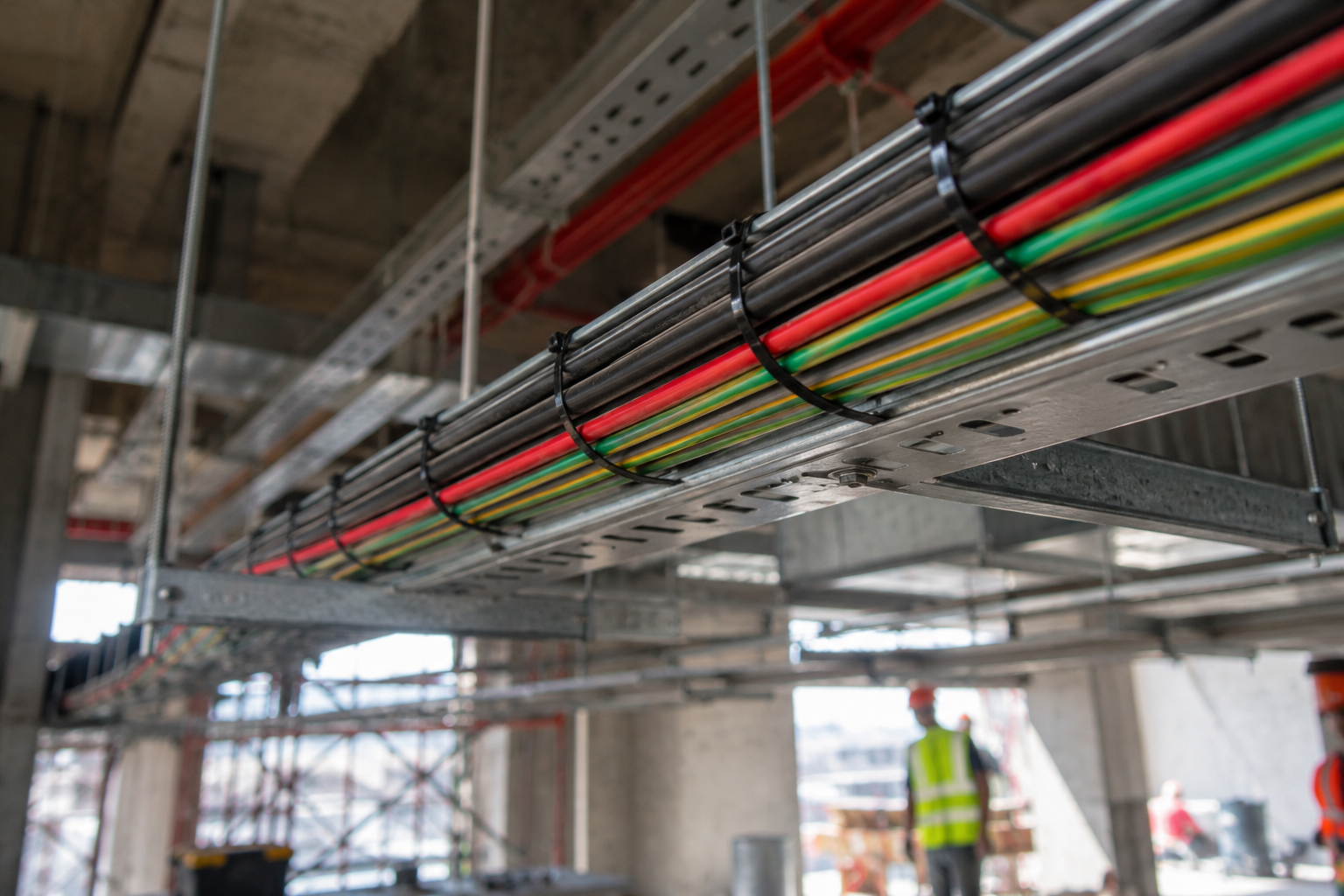
The upgraded cable ties offered stronger tensile strength, improved heat resistance, and UV-stabilised materials suitable for outdoor construction environments. More importantly, they maintained secure fastening even under continuous stress and movement.
The electrical team also introduced a more structured cable routing system using colour-coded ties for different applications. Temporary power lines, communication cables, and safety systems could now be identified much faster during inspections or emergency troubleshooting.
What had once looked chaotic became noticeably more organised.
Small Improvements That Delivered Bigger Results
One of the most interesting outcomes was how quickly efficiency improved once cable management became consistent.
Technicians spent less time untangling or tracing cables. Safety officers reported fewer tripping hazards around active work areas. Maintenance crews could access wiring faster during routine checks.
The project manager later explained that cable organisation also improved coordination between subcontractors. When systems are visually cleaner and easier to identify, communication problems decrease naturally.
There was another unexpected benefit: the site itself started looking more professional during client visits and inspections.
That matters more than many companies realise.
On large UAE construction projects, presentation often reflects operational discipline. Organised installations create confidence among consultants, clients, and project stakeholders.
Why Quality Cable Management Matters Long-Term
Cable ties may seem insignificant compared to major electrical components, but they directly affect infrastructure reliability over time.
Poorly secured cables can experience excessive bending, abrasion, or vibration damage. In temporary setups, loose cables create safety risks that increase the chance of accidents or operational delays.
Premium cable management products help prevent those problems before they develop.
Experienced contractors understand that durability matters most in environments where systems remain exposed for months or years. This is why many project managers now prefer working with a trusted cable tie supplier in the UAE rather than relying on generic imported products with inconsistent quality standards.
Reliable suppliers also provide guidance on selecting the correct tie material, size, and application type based on project conditions.
More Than Just Organization
There’s also a psychological side to organised cable management that rarely gets discussed.
Clean installations encourage better work habits. When crews operate in structured environments, they’re more likely to follow safety procedures and maintain higher installation standards overall.
Messy cable routing often signals rushed work or weak supervision. Organized systems create the opposite impression.
In the case of this UAE construction company, management eventually standardized premium cable ties across future projects because the operational benefits became too noticeable to ignore.
Frequently Asked Questions
Why are premium cable ties better for construction projects?
Premium cable ties offer stronger tensile strength, better heat resistance, UV protection, and longer durability under harsh site conditions.
Do cable ties really affect project efficiency?
Yes. Organised cable management reduces maintenance time, improves safety, and helps teams identify wiring systems more quickly during installation or troubleshooting.
What should contractors look for in a cable tie supplier?
Contractors should prioritise product quality, industrial certifications, UV resistance, temperature ratings, and supplier reliability.
Are UV-resistant cable ties necessary in the UAE?
Absolutely. Continuous sun exposure and high temperatures can weaken standard plastic ties quickly, especially on outdoor construction sites.
Final Thoughts
Construction projects succeed through attention to details most people never notice. Cable ties fall into that category.
They don’t attract attention when everything works properly, but poor-quality cable management products can quietly create delays, safety risks, and unnecessary maintenance problems behind the scenes.
For this UAE construction company, upgrading to premium cable ties solved more than a simple organizational issue. It improved workflow, strengthened safety standards, and reduced avoidable interruptions across the project.
Sometimes, the smartest operational improvements don’t come from major investments. They come from choosing better fundamentals from the start.