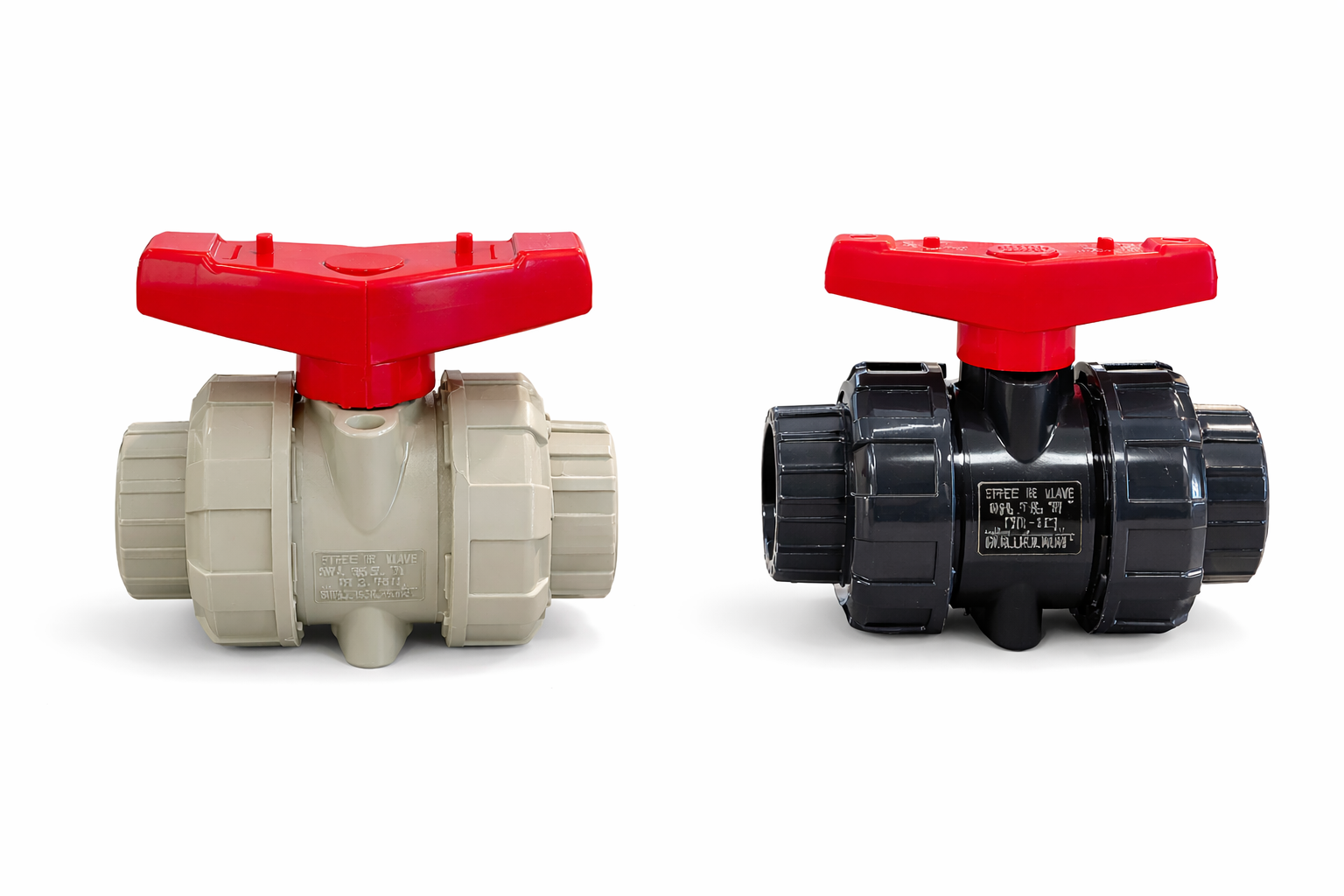
Industrial piping systems require reliable valves that can handle fluid control efficiently while offering durability and low maintenance. Among the many valve options available in the market, UPVC Ball Valves have become one of the most preferred choices for industrial applications. Their lightweight construction, corrosion resistance, affordability, and excellent sealing performance make them ideal for a wide range of industries.
From chemical processing plants to water treatment facilities, UPVC Ball Valves are widely used because they deliver long-lasting performance with minimal operational issues. Industries today demand efficient flow control solutions that reduce maintenance costs and improve pipeline reliability, and these valves meet those requirements perfectly.
What Are UPVC Ball Valves?
UPVC Ball Valves are quarter-turn valves made from Unplasticized Polyvinyl Chloride (UPVC), a strong and rigid thermoplastic material. These valves use a rotating ball with a bore to control the flow of liquids and gases. When the handle is turned, the ball rotates to either allow or block fluid flow.
Unlike metal valves, UPVC valves are resistant to rust, scaling, and chemical corrosion. This makes them highly suitable for handling water, chemicals, acids, and industrial fluids in demanding environments.
Key Benefits of UPVC Ball Valves
1. Excellent Corrosion Resistance
One of the biggest advantages of UPVC Ball Valves is their superior corrosion resistance. Industrial pipelines often transport chemicals, acids, and corrosive fluids that can damage metal valves over time. UPVC material does not rust or corrode, ensuring long service life even in aggressive environments.
This makes these valves ideal for:
- Chemical processing plants
- Water treatment facilities
- Effluent treatment systems
- Acid handling applications
- Fertilizer industries
Because of their corrosion resistance, industries can significantly reduce replacement and maintenance costs.
2. Lightweight and Easy Installation
Compared to metal valves, UPVC Ball Valves are lightweight and easy to handle. Their reduced weight simplifies transportation, installation, and maintenance work. This also reduces labor costs during pipeline setup.
The lightweight structure is especially useful in large industrial projects where hundreds of valves may be installed across extensive piping systems.
3. Leak-Proof Performance
Industrial operations require reliable sealing to prevent fluid leakage and maintain process efficiency. UPVC Ball Valves provide excellent shutoff performance due to their precision-engineered ball and sealing mechanism.
Leak-proof operation helps industries:
- Prevent product wastage
- Improve safety standards
- Reduce operational losses
- Maintain consistent pressure levels
The tight sealing capability also makes these valves suitable for water distribution and chemical transfer systems.
4. Low Maintenance Requirements
Another major benefit of UPVC Ball Valves is their low maintenance requirement. Since UPVC does not corrode or scale internally, the valves continue operating smoothly for long periods.
Industries prefer these valves because they:
- Require minimal servicing
- Have fewer operational failures
- Reduce downtime
- Lower maintenance expenses
This makes them a cost-effective solution for industrial fluid handling systems.
5. High Chemical Resistance
Chemical compatibility is extremely important in industrial pipelines. UPVC Ball Valves can handle a wide range of chemicals, including acids, alkalis, and corrosive liquids.
Industries such as pharmaceuticals, chemical manufacturing, and wastewater treatment rely on these valves because they can safely control aggressive fluids without material degradation.
6. Smooth Flow Control
The internal design of UPVC Ball Valves allows smooth and unrestricted flow of fluids. The full-port design minimizes pressure drop and improves flow efficiency.
This helps industries achieve:
- Better process control
- Reduced energy consumption
- Improved system performance
- Efficient fluid transportation
Smooth operation also reduces wear and extends valve lifespan.
7. Cost-Effective Solution
Compared to stainless steel and other metal valves, UPVC Ball Valves are more affordable while still delivering excellent performance. Their long lifespan and low maintenance further increase cost savings over time.
Industries looking for economical yet reliable valve solutions often choose UPVC valves for their pipeline systems.
Uses of UPVC Ball Valves in Industrial Pipelines
Water Treatment Plants
Water treatment facilities extensively use UPVC Ball Valves for controlling water flow in filtration, purification, and distribution systems. Their corrosion resistance makes them ideal for handling treated and untreated water.
These valves are commonly installed in:
- RO plants
- Water filtration systems
- Municipal water pipelines
- Swimming pool systems
Chemical Processing Industries
Chemical plants require valves capable of handling corrosive media safely. UPVC Ball Valves are widely used for transporting chemicals, acids, and solvents due to their high chemical resistance.
Their leak-proof sealing helps maintain operational safety in hazardous environments.
Irrigation Systems
Agricultural and irrigation systems use UPVC Ball Valves for water flow control. Their lightweight design and affordability make them suitable for large irrigation networks.
Farmers and irrigation contractors prefer these valves because they are easy to install and highly durable.
Pharmaceutical Industries
Pharmaceutical plants demand clean and contamination-free flow control solutions. UPVC Ball Valves are suitable for pharmaceutical applications because they resist chemical reactions and maintain fluid purity.
These valves help ensure reliable fluid transfer during manufacturing processes.
Effluent Treatment Plants
Effluent treatment plants handle wastewater and chemically contaminated fluids. UPVC Ball Valves are ideal for these applications because they resist corrosion caused by aggressive chemicals and waste materials.
They help maintain safe and efficient wastewater management systems.
Food & Beverage Industries
In food processing applications, UPVC Ball Valves are used for handling water and non-aggressive fluids. Their smooth internal surface minimizes contamination risks and supports hygienic operations.
HVAC and Cooling Systems
HVAC systems often require durable valves for water circulation and cooling applications. UPVC Ball Valves provide efficient flow control while resisting scaling and corrosion.
Their lightweight design also simplifies installation in HVAC piping networks.
Why Industries Prefer UPVC Ball Valves
Industries worldwide prefer UPVC Ball Valves because they combine durability, affordability, and performance in a single solution. Their ability to resist chemicals, provide leak-proof operation, and reduce maintenance makes them highly dependable for industrial pipeline systems.
Modern industries are increasingly shifting toward non-metallic piping solutions, and UPVC valves are playing a major role in this transition. With growing focus on operational efficiency and cost reduction, these valves continue to gain popularity across multiple industrial sectors.
Conclusion
UPVC Ball Valves have become an essential component in industrial pipelines due to their outstanding benefits and versatile applications. Their corrosion resistance, lightweight structure, low maintenance, and reliable sealing performance make them ideal for handling water, chemicals, and industrial fluids.
From water treatment plants to chemical industries, these valves provide efficient and long-lasting flow control solutions. As industries continue to seek cost-effective and durable pipeline components, UPVC Ball Valve remain one of the best choices for modern industrial systems.