Buildings and infrastructure face continuous stress due to aging, environmental exposure, heavy usage, poor construction quality, seismic activity, and changing load requirements. Many structures that were built decades ago are no longer capable of handling modern safety expectations. This is where Retrofitting becomes essential. Structural strengthening improves the durability, stability, and performance of existing buildings without requiring complete demolition or reconstruction. It helps property owners extend structural life while maintaining operational continuity and reducing overall costs. Across India, the demand for Structural Retrofitting Services in India has increased significantly in commercial buildings, factories, bridges, residential towers, parking structures, hospitals, and industrial facilities. Rapid urbanization, increased awareness of seismic safety, and aging infrastructure have created a strong need for reliable retrofitting solutions. Property owners now prefer repair and strengthening solutions that minimize downtime and restore structural performance effectively while ensuring long-term durability and safety standards.
What is Structural Retrofitting?
Structural Retrofitting is the process of modifying and strengthening existing structures to improve their load-carrying capacity, seismic resistance, durability, and overall safety. It involves repairing damaged structural elements and enhancing their performance using advanced engineering methods and modern materials. Retrofitting can be applied to reinforced concrete structures, steel structures, bridges, industrial plants, heritage buildings, and residential properties that show signs of structural deterioration or weakness.
The main objective of retrofitting is to restore structural integrity while improving the building’s ability to withstand future stress conditions. Common retrofitting methods include carbon fiber wrapping, steel jacketing, concrete jacketing, epoxy injection, foundation strengthening, beam strengthening, and column strengthening. These solutions are selected based on structural analysis, damage assessment, load conditions, and environmental exposure. Proper retrofitting increases the lifespan of structures and reduces the risks associated with structural failure.
Why Structural Retrofitting is Important in India
India has a large number of aging buildings and infrastructure systems that require immediate structural attention. Many structures were constructed using outdated design standards or poor-quality materials, making them vulnerable to cracks, corrosion, water damage, and seismic impacts. Additionally, increasing urban loads, equipment additions, and building modifications place extra stress on existing structures. Building Retrofitting Services help improve safety and maintain structural performance without complete reconstruction.
Several regions in India are located in seismic zones where earthquake resistance is a major concern. Buildings that were not originally designed for seismic loads may become unsafe over time. Seismic Retrofitting improves the structural behavior of buildings during earthquakes by enhancing flexibility, load distribution, and energy absorption capacity. Industrial facilities, commercial complexes, schools, hospitals, and residential buildings benefit significantly from professionally executed retrofitting solutions designed for Indian environmental and structural conditions.
Signs That a Building Needs Retrofitting
Visible structural distress is one of the biggest indicators that retrofitting may be required. Cracks in beams, columns, slabs, and walls often indicate stress concentration, settlement, or reinforcement corrosion. Water leakage, exposed reinforcement, concrete spalling, uneven flooring, vibration issues, and structural deflection are additional warning signs. Ignoring these problems can lead to major structural failures, safety risks, and expensive reconstruction requirements in the future.
Buildings may also require retrofitting when their functional usage changes. For example, converting a residential property into a commercial facility increases structural load demand significantly. Installation of heavy machinery, vertical expansion, floor additions, and modifications in industrial facilities also require structural strengthening. Concrete Repair and Retrofitting solutions ensure that the structure can safely support the new load conditions while complying with engineering safety standards and long-term operational requirements.
Common Structural Retrofitting Techniques
Carbon Fiber Wrapping
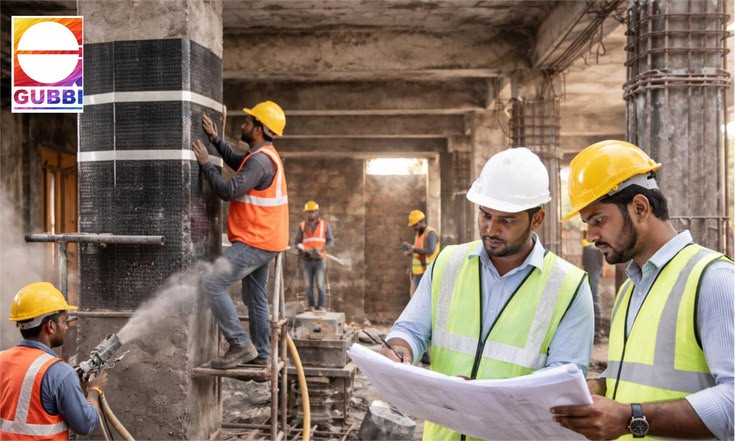
Carbon Fiber Reinforced Polymer (CFRP) Wrapping is one of the most advanced strengthening techniques used in modern retrofitting projects. Carbon fiber sheets are applied externally to structural members like beams, columns, and slabs to improve strength and ductility. This method is lightweight, corrosion-resistant, and highly effective for seismic strengthening. Carbon fiber wrapping is commonly used in bridges, industrial structures, parking buildings, and high-rise commercial properties where rapid strengthening is required.
Concrete Jacketing
Concrete Jacketing involves increasing the size of existing structural members by adding reinforced concrete layers around them. This technique improves load-carrying capacity, stiffness, and durability. It is commonly used for strengthening damaged columns, beams, and foundations. Concrete jacketing is widely preferred in buildings experiencing structural weakness due to overloading, aging, or poor construction quality. It provides a long-lasting and economical strengthening solution for critical structural components.
Steel Jacketing
Steel Jacketing is used when immediate strengthening and high load resistance are required. Steel plates or steel sections are attached around structural elements to improve strength and stability. This method is commonly used in industrial facilities, bridges, warehouses, and heavy-load structures. Steel jacketing enhances confinement and improves the ability of columns and beams to resist seismic and operational loads while maintaining structural reliability in demanding environments.
Epoxy Injection
Epoxy Injection Repair is a highly effective method for repairing cracks in reinforced concrete structures. The process involves injecting epoxy resin into cracks to restore monolithic behavior and prevent water penetration. This technique improves durability and structural continuity while preventing further deterioration caused by corrosion and environmental exposure. Epoxy injection is commonly used in basements, water-retaining structures, parking decks, industrial plants, and residential buildings facing structural cracking problems.
Seismic Retrofitting for Earthquake Resistance
India’s seismic vulnerability makes Earthquake Retrofitting extremely important for older buildings and infrastructure systems. Structures constructed before modern seismic design codes often lack the flexibility and reinforcement needed to withstand earthquake forces. Seismic retrofitting improves the structural behavior of buildings by strengthening critical load paths, joints, columns, and foundations. These modifications reduce the risk of collapse and enhance occupant safety during seismic events.
Advanced seismic retrofitting solutions include shear wall additions, steel bracing systems, base isolation systems, and fiber-reinforced strengthening techniques. These methods help redistribute seismic forces more effectively throughout the structure. Hospitals, schools, industrial plants, government buildings, and residential towers are increasingly adopting seismic strengthening solutions. Proper seismic retrofitting not only imrproves safety but also minimizes economic losses caused by earthquake-related structural damage and operational interruptions.
Industrial Retrofitting Solutions
Industrial structures are exposed to continuous vibration, chemical exposure, heavy machinery loads, and operational stress. Over time, these factors lead to structural deterioration and reduced performance. Industrial Structural Repair and retrofitting solutions help restore safety and operational efficiency in factories, manufacturing plants, warehouses, refineries, and process industries. Structural strengthening allows industries to continue operations without the high costs associated with complete reconstruction.
Common industrial retrofitting services include machine foundation strengthening, corrosion repair, slab strengthening, steel structure repair, chimney retrofitting, and vibration control solutions. Industrial facilities often require customized engineering solutions based on operational conditions and load requirements. Proper planning, material selection, and execution are critical for achieving long-term structural performance while minimizing downtime during repair and strengthening activities.
Benefits of Structural Retrofitting
One of the biggest advantages of retrofitting is cost savings compared to complete rebuilding. Retrofitting improves structural performance while preserving existing infrastructure, making it a practical and economical solution for property owners. It reduces downtime, avoids demolition expenses, and extends the usable life of buildings. Structural Strengthening Solutions also help property owners comply with updated safety standards and building regulations without major reconstruction work.
Retrofitting also improves safety, durability, and asset value. Strengthened structures perform better under environmental stress, seismic activity, and operational loads. Modern retrofitting materials provide corrosion resistance, crack control, and enhanced structural stability. Commercial property owners benefit from improved tenant confidence, operational continuity, and long-term maintenance reduction. Residential property owners gain better safety and durability while protecting their investment from structural deterioration and future repair costs.
How Professional Retrofitting Services Work
Professional retrofitting begins with a detailed structural assessment and condition evaluation. Engineers analyze structural drawings, load conditions, material properties, crack patterns, corrosion levels, and foundation performance. Non-destructive testing methods are often used to identify hidden structural problems. Based on the findings, engineers prepare customized strengthening solutions designed to restore performance and improve structural safety according to project requirements.
The execution phase includes surface preparation, repair work, strengthening installation, quality checks, and performance monitoring. Proper supervision is essential to ensure the retrofitting system performs effectively under real operational conditions. Material quality, workmanship, and engineering accuracy directly impact the long-term success of the project. Experienced retrofitting specialists ensure minimal disruption during execution while maintaining strict safety and structural quality standards throughout the strengthening process.
Choosing the Right Retrofitting Company
Selecting the right retrofitting contractor is critical for achieving durable and safe structural performance. A professional retrofitting company should have expertise in structural analysis, repair techniques, strengthening materials, and project execution. Experience with industrial, commercial, and residential structures is essential because every project requires different engineering approaches based on load conditions, damage severity, and environmental exposure.
Clients should evaluate technical capabilities, project experience, quality standards, and engineering expertise before selecting a service provider. Advanced repair technologies, proper testing methods, and skilled execution teams contribute significantly to project success. Reliable companies provide complete solutions from structural assessment to final strengthening implementation. Gubbi Civil Engineers Limited delivers advanced retrofitting and structural strengthening solutions designed to improve durability, safety, and long-term structural performance across various infrastructure sectors.
Future of Structural Retrofitting in India
The future of Structural Retrofitting Services in India is expected to grow rapidly due to infrastructure aging, urban expansion, and increasing safety awareness. Governments, industries, and property owners are investing more in rehabilitation and strengthening projects to improve structural reliability and extend infrastructure lifespan. Sustainable construction practices are also encouraging retrofitting because strengthening existing structures reduces demolition waste and environmental impact. Technological advancements are transforming the retrofitting industry with better materials, faster installation methods, and improved structural monitoring systems. Carbon fiber composites, smart monitoring technologies, advanced repair mortars, and seismic strengthening systems are improving the efficiency of structural rehabilitation projects. As India continues to modernize its infrastructure, retrofitting will remain a critical engineering solution for maintaining safe, durable, and high-performing structures across residential, commercial, and industrial sectors.
Retrofitting plays a vital role in preserving structural safety, improving performance, and extending the life of existing buildings and infrastructure. From seismic strengthening and industrial repair to carbon fiber wrapping and concrete jacketing, modern retrofitting solutions address a wide range of structural challenges effectively. Property owners increasingly prefer strengthening solutions because they are cost-effective, sustainable, and capable of improving long-term structural reliability without complete reconstruction.
With growing infrastructure demands and aging buildings across the country, the need for Structural Retrofitting Services in India will continue to increase. Proper structural assessment, advanced engineering methods, and professional execution are essential for achieving durable and safe retrofitting outcomes. Investing in timely structural strengthening not only protects buildings and infrastructure but also ensures operational safety, reduced maintenance costs, and improved structural performance for years to come.