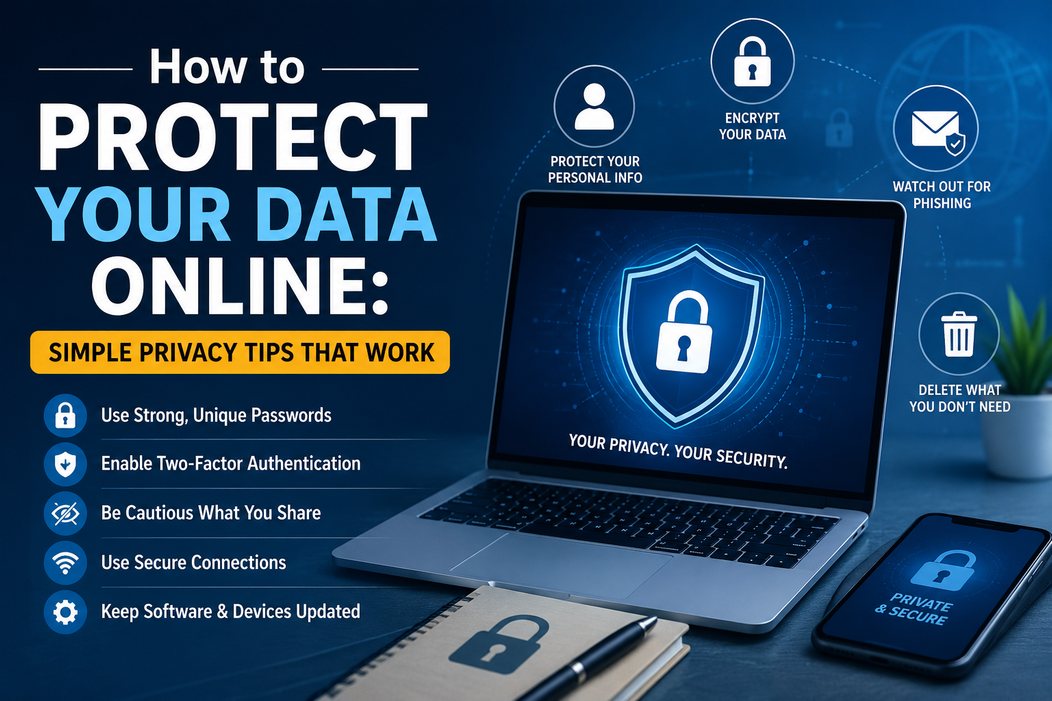
In the highly digitized modern world, it becomes very important for people to protect themselves online. Every single piece of information, from small to big, is available online for others to see and access, and a wrong click or access can result in dire issues for people, which is why it is essential to ensure that you and your data are protected online.
Whether you are using social media, websites, or chatting applications, protecting your online privacy becomes very important, which is why in this blog, we will tell you how to protect your online privacy.
1. Strengthen your basics
Before you start looking for any complex methods, it is very important to ensure that your basics are protected properly. This includes all your accounts, as you need to make sure that they have a strong and unique password for every platform. Additionally, you should also enable 2FA, which is two-factor authentication that makes it even more difficult for unauthorized users to access your data.
2. Use Encrypted communication
Stick to messaging apps with end-to-end encryption for your private talks. That way, only you and the person you’re chatting with can actually read what’s sent. Just keep in mind, even if your messages are safe, things like who you talk to and when you talked can still show up as metadata.
And don’t back up sensitive chats to the cloud unless you know those backups are encrypted. Otherwise, you’re just handing your data over.
3. Learn how to spot phishing attacks and scams
Not every attack or threat comes from hackers trying to break into your device; some rely on tricking you. There are numerous phishing attempts that often appear as simple emails and messages, and once you click on them or open them, your sensitive information can be accessed by people. If you see something that feels off, there is a high chance that it is.
4. Decide which information is the most important
Not every piece of data is equally important, as your financial data, personal messages, and sensitive documents require more protection. You need to decide which data is more crucial for you, and then prioritize to secure it. This step will ensure that you are investing time and effort into a place where it actually is important.
5. Reduce application tracking
Applications on your mobile phone can track a large amount of personal data, from your contacts to your location and even your information. This is the main reason why you should review your phone and delete applications that you do not use. In case you need a particular feature, you should use a web browser, as these browsers have less access to your data.
6. Limit ad tracking and data collection
A lot of apps and websites love tracking what you do just to serve you more ads. Go into your settings on Google, Apple, and your social accounts, and turn off ad personalization. Delete old activity, like your search or browsing history, to cut down your digital trail.
Sure, you can’t dodge tracking completely, but these steps really reduce how much companies collect about you. Visit Datarecovee website to know more about online privacy.