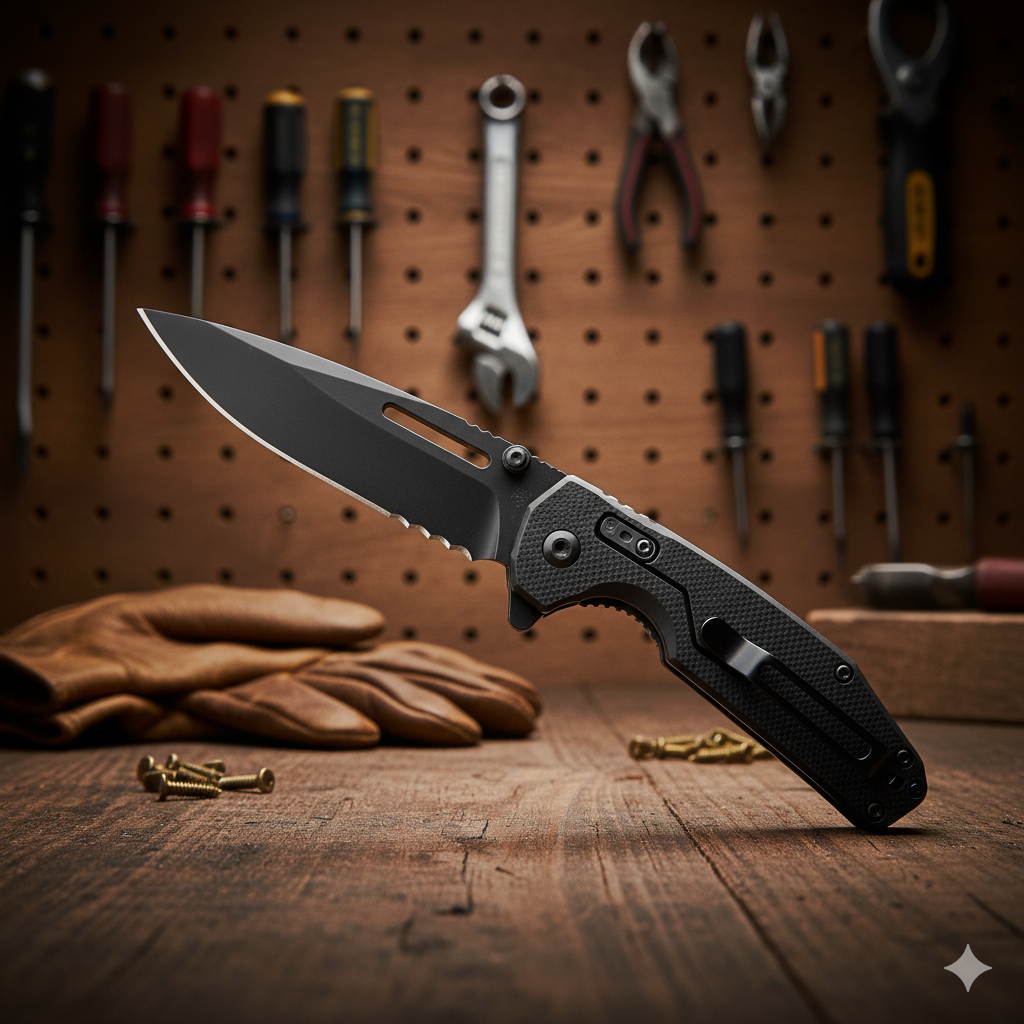
In an increasingly unpredictable world, personal safety has become a priority for individuals from all walks of life. Whether you are a late-night commuter, an avid hiker, or someone who simply wants to feel more secure during daily errands, the question of which self-defense tool to carry is a significant one. Two of the most popular choices are the traditional pocket knife and the modern stun gun (or Taser-style device).
Both tools offer unique advantages, but they operate on entirely different philosophies of self-defense. One is a multi-tool with ancient roots, while the other is a high-tech deterrent designed to incapacitate without necessarily causing permanent harm. In this comprehensive guide, we will break down the pros, cons, and legal considerations of both to help you decide which is right for your lifestyle.
The Versatile Defender: The Case for the Pocket Knife
The pocket knife is perhaps the oldest tool in human history. In a modern context, it serves a dual purpose: a practical utility tool for everyday tasks and a last-resort defensive weapon.
Utility Meets Security
The primary argument for carrying a pocket knife is its versatility. On any given day, you are far more likely to use a knife to open a package, cut a seatbelt in an emergency, or trim a loose thread than you are to use it in a physical altercation. This “Everyday Carry” (EDC) appeal makes it a seamless addition to your pocket.
Tactical Advantages
From a defensive standpoint, a knife never runs out of batteries. It is a mechanical tool that is always ready. In a close-quarters struggle where an assailant has already grabbed you, a small, sharp blade can provide the leverage needed to escape the hold. Furthermore, knives are generally compact and easy to conceal, making them a discreet choice for those who value low-profile security.
The Downside: Physical Proximity and Skill
The most significant drawback of a knife for self-defense is that it requires you to be within arm’s reach of an attacker. This eliminates the “reactionary gap”—the space between you and a threat. Furthermore, using a knife effectively in a high-stress situation requires significant training. Without proper technique, a knife can easily be turned against the user.
The High-Tech Deterrent: The Case for Stun Guns and Tasers
For those who are uncomfortable with the idea of using a blade, electronic control devices offer a compelling alternative. These tools are designed to provide “stopping power” by disrupting the body’s neuromuscular system.
Non-Lethal Force
The primary appeal of a Taser gun or stun device is that it is designed to be non-lethal. The goal is to incapacitate the attacker—causing intense involuntary muscle contractions—giving you enough time to flee and call for help. For many, the psychological ease of carrying a tool that doesn’t involve “lethal force” makes them more likely to actually use it when threatened.
The Power of Deterrence
Often, the mere sight and sound of a stun gun are enough to end a confrontation. The loud, intimidating “crack” of electricity jumping between electrodes acts as a powerful psychological deterrent. Many attackers are looking for an easy target; once they realize you are armed with a high-voltage device, they are likely to retreat.
Distance and Safety
While traditional stun guns require physical contact, many modern “shoot-out” models allow you to deploy probes from a distance. This allows you to neutralize a threat before they ever reach you, which is the gold standard of personal safety.
Comparative Analysis: Which Should You Choose?
Deciding between these two tools requires an honest assessment of your environment, your physical capabilities, and your local laws.
1. Ease of Use
A stun gun is generally easier for a novice to use effectively. You point and press a button. A pocket knife, while simple in design, requires a specific mindset and physical dexterity to use as a defensive tool.
2. Legal Considerations
This is the most critical factor. In many jurisdictions, stun guns are strictly regulated or outright banned. Conversely, pocket knives are legal in most places, though there are often restrictions on blade length and opening mechanisms (such as gravity knives or switchblades). Always check your local and regional laws before purchasing.
3. Maintenance
Knives require sharpening and occasional oiling to prevent rust. Stun guns require battery management. If you choose an electronic device, you must be diligent about keeping it charged; a dead stun gun is nothing more than a plastic paperweight in an emergency.
Training and Mindset: The “Software” Behind the “Hardware”
Regardless of which tool you choose, the most important aspect of self-defense is your mindset. Having a tool in your pocket does not make you safe; knowing how to use it and, more importantly, knowing how to avoid conflict, does.
Situational Awareness: The best self-defense is never having to use a weapon. Keeping your head up, staying off your phone in public, and trusting your gut feeling when a situation “feels wrong” are your primary lines of defense.
Practice: If you buy a pocket knife, practice opening it one-handed until the motion is muscle memory. If you buy a stun device, familiarize yourself with the safety switch and the trigger pull so you aren’t fumbling in the dark during a crisis.
Conclusion
The choice between a pocket knife and a stun gun isn’t necessarily about which tool is “better,” but which tool fits your life. If you want a multi-purpose tool that is legal in most areas and never needs a battery, a high-quality pocket knife is an excellent choice. If you prefer a dedicated self-defense tool that can stop an attacker from a distance or through psychological deterrence without lethal intent, a stun gun or Taser-style device is the superior option.
Ultimately, personal safety is a layered approach. Some people choose to carry both—a knife for utility and a stun device for protection. Whichever path you take, ensure you are informed, trained, and legally compliant.
Frequently Asked Questions (FAQ)
1. Is it legal to carry a stun gun in my pocket?
Legal status varies significantly by country and state. In some regions, they are considered prohibited weapons, while in others, they are legal for civilian carry with or without a permit. Always consult your local police department or legal websites before carrying one.
2. Can a stun gun work through thick clothing?
Most high-voltage stun guns are designed to pass through several layers of clothing, including heavy jackets. However, the effectiveness is always highest with direct skin contact or thin clothing. Shoot-out models use probes that are designed to hook into clothing to deliver the charge.
3. What is the best blade length for a defensive pocket knife?
For most civilians, a blade length between 2.5 and 3.5 inches is the “sweet spot.” It is long enough to be effective for both utility and defense but short enough to remain legal in many jurisdictions and easy to carry comfortably.
4. Do I need special training to use a Taser-style device?
While these devices are designed to be user-friendly, basic training is highly recommended. Understanding the effective range, how to aim under pressure, and how to maintain the battery is crucial for the device to work when you need it most.
5. Can I take my pocket knife or stun gun on an airplane?
No. Both pocket knives and stun guns are strictly prohibited in carry-on luggage globally. They must be packed in checked baggage, and even then, you should check the local laws of your destination to ensure you aren’t transporting an illegal item into that country or state.
6. Will I accidentally shock myself if the attacker grabs me while I’m using a stun gun?
No. The electrical charge is absorbed by the attacker’s localized muscle tissue. Even if you are touching the person being shocked, the current will not pass back into you.