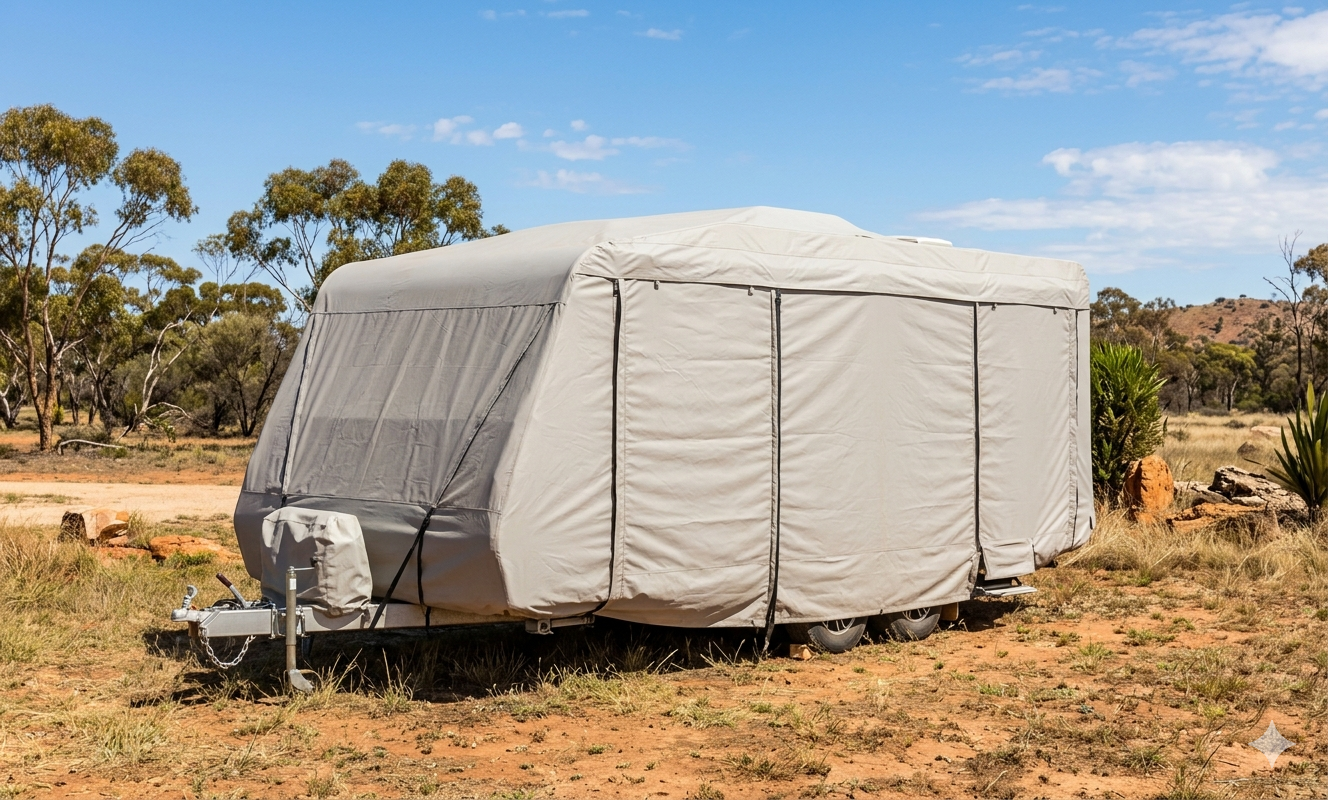
Australia is a land of extremes. One day you’re parked in the scorching outback heat, and the next you’re sheltering from coastal winds and heavy rain. If you own a caravan or camper trailer, you already know how quickly the elements can take their toll.
A good caravan cover is one of the smartest investments you can make. But not every cover is built for Australian conditions. Here’s everything you need to know before you buy.
Why Australian Weather Demands More From a Cover
Most caravan owners make the mistake of buying a generic cover and assuming it’ll do the job. It often doesn’t.
Australia’s climate is unlike anywhere else. UV radiation here is among the highest in the world. Summers bring intense heat that can warp surfaces and fade paintwork. Coastal areas deal with salt air, moisture, and strong winds. Inland regions face dust storms, extreme heat, and dramatic temperature swings.
A cover that works well in mild European conditions will fall apart quickly under these pressures. You need something specifically designed to handle what Australian weather throws at it.
What to Look for in a Caravan Cover
1. UV Protection
UV damage is one of the biggest threats to your caravan’s exterior. Prolonged sun exposure can fade decals, crack rubber seals, and degrade the outer surface of your van.
Look for caravan covers made with UV-resistant fabric. The cover should block the majority of UV rays, not just reduce them slightly. If the product doesn’t mention UV protection in its specifications, that’s a red flag.
2. Waterproofing and Breathability
This is where many covers fail. A cover that’s fully waterproof but not breathable will trap moisture underneath. That moisture leads to mould, mildew, and long-term surface damage.
The best camper trailer covers and caravan covers use a breathable yet water-resistant fabric. This means rain and dew are kept out, while any moisture that does build up underneath can escape. Look for covers that specifically mention breathable construction or a micro-porous membrane.
3. Durability and Material Weight
Thin, cheap covers may look fine in the shop but won’t survive a season outdoors. Check the GSM (grams per square metre) rating of the fabric. A higher GSM generally means a heavier, more durable material.
For Australian conditions, a medium to heavy-weight fabric is recommended. This gives the cover enough strength to resist tearing in wind without becoming too heavy to handle on your own.
4. Wind Resistance and Fit
A cover that doesn’t fit properly is almost useless. It flaps around in the wind, scratches your caravan surface, and can blow off entirely.
Good camper trailer cover designs include elasticated hems, adjustable straps, and buckle systems that keep the cover snug and secure. Some covers also have air vents built in to reduce wind buffeting and prevent the cover from acting like a sail in a storm.
Choosing the Right Size
Getting the right size is critical. A cover that’s too small won’t fit, and one that’s too large will sag, pool water, and move around.
Most covers come in specific size ranges measured by length. Always measure your caravan or camper trailer from the front to the rear, including any tow bars, spare wheels mounted on the back, or external racks.
It’s also worth considering the height and width if you have an unusual profile, such as a pop-top or a high-roof annex. Some manufacturers offer sizing guides, and it’s worth taking a few minutes to compare your measurements before purchasing.
Types of Camper Trailer Covers Available
Not all rigs are the same, and neither are the covers made for them.
Standard caravan covers fit traditional full-size caravans. They usually cover the entire length and drop down to protect the sides as well.
Camper trailer covers are shaped to suit the lower, folding profile of a camper trailer. These are particularly useful because camper trailers have canvas sections and exposed hinges that are vulnerable to UV and weather damage.
Half covers or front covers are also available if you only want to protect a specific section, such as the front cap or the tow hitch area.
Think about where your rig spends most of its time. If it’s parked outdoors year-round, a full-coverage weatherproof option is the smart choice.
Storage vs. Travel: When Should You Use a Cover?
Covers are mainly designed for storage, not travel. Driving at highway speeds with a cover on can cause serious damage — both to the cover and your caravan.
However, if you’re leaving your caravan parked for an extended period — even just a few weeks — a cover is worth putting on. UV damage and moisture can begin to cause problems even in short timeframes.
For those who only use their caravan a few times a year, a quality cover can significantly extend the life of the van and reduce the cost of maintenance over time.
Extra Features Worth Considering
When comparing caravan covers, a few extra features can make a big difference in day-to-day use.
Carry bag: A good cover should come with a carry bag for easy storage when not in use. After all, a cover that’s awkward to fold and store is one you’ll be tempted not to use.
Door and hatch access: Some covers have zippered panels that allow you to access the caravan’s door or vents without removing the entire cover. This is a great feature if you need to air out the van occasionally while it’s in storage.
Reinforced corners and seams: The corners and edges take the most stress from wind and movement. Double-stitched seams and reinforced corner patches add years to the life of a cover.
Reflective or light colour: Lighter-coloured covers reflect more heat than dark ones. In Australian summers, a silver or light grey cover can keep temperatures underneath significantly lower, protecting rubber, plastic, and interior fittings from heat-related damage.
How to Look After Your Caravan Cover
Buying a quality cover is only half the job. Looking after it properly will make it last much longer.
Clean the cover regularly using mild soap and water. Avoid harsh chemicals or bleach, which can degrade the UV-resistant coating over time.
Allow the cover to dry completely before folding and storing it. Storing a damp cover leads to mould growth, which can stain both the cover and the caravan surface beneath it.
Inspect the cover periodically for any small tears or worn areas. Small repairs done early prevent large failures down the track.
Final Thoughts
Choosing the right caravan cover or camper trailer cover for Australian conditions isn’t complicated — but it does require attention to the right details. UV protection, breathability, a secure fit, and durable materials are the four things that matter most.
Australia’s climate is tough. A cover that’s built to handle it will pay for itself many times over by keeping your van in better condition, reducing cleaning time, and protecting your investment for years to come.
If you’re looking for covers designed specifically for Australian caravans and camper trailers, explore the range of caravan covers and camper trailer covers available at Trailer Camper Australia — purpose-built options suited to the demands of the Australian outdoors.