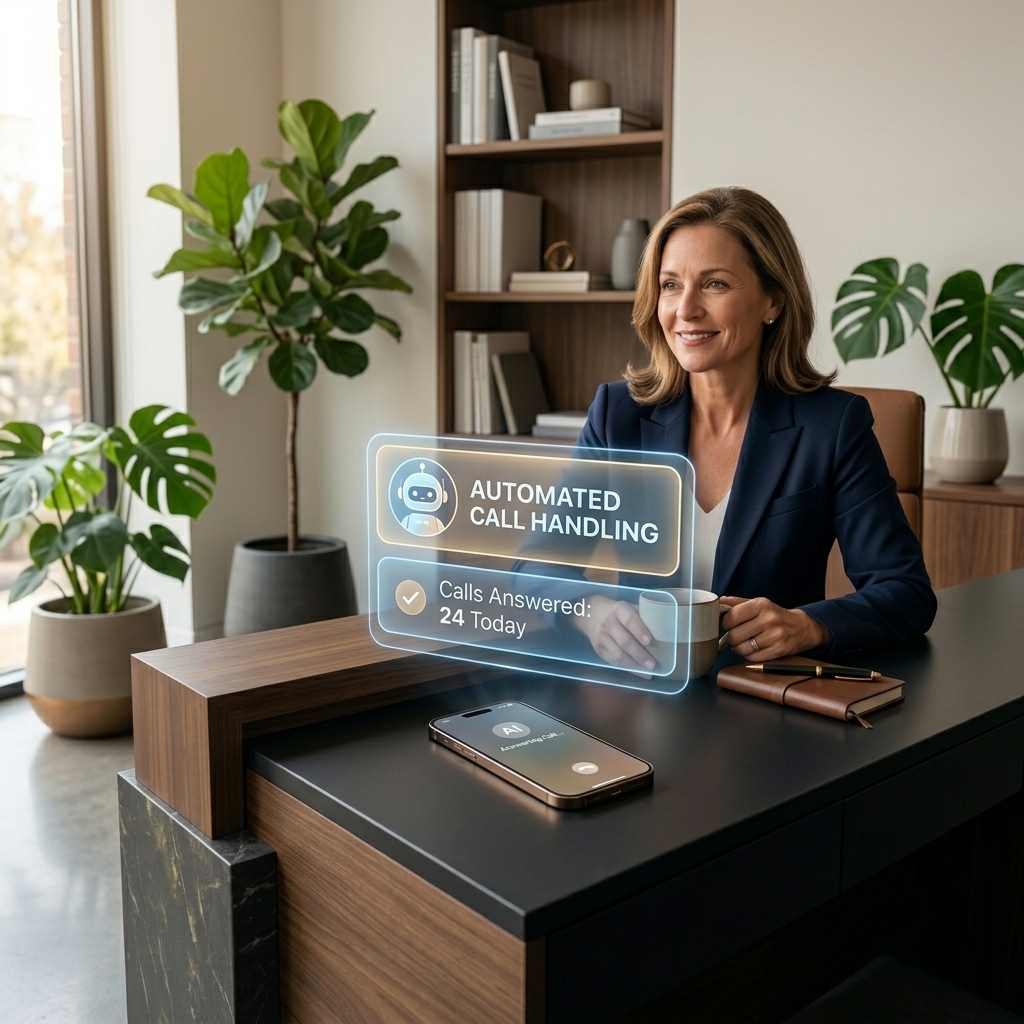
There is a moment every small business owner knows well. You are with a customer, in the middle of something that cannot wait, and the phone rings. You cannot answer it. It goes to voicemail. And nine times out of ten, that caller does not leave a message — they just hang up and call someone else. That moment, repeated dozens of times a week, is quietly one of the most expensive things happening in your business. Most owners never quantify it. They assume missed calls are just part of running a small operation. But when you start doing the math — average job value, call volume, percentage of unanswered calls — the number that comes out is usually uncomfortable. For many small businesses, missed calls represent tens of thousands of dollars in lost revenue every single year. Not from bad marketing or poor service. Simply from not picking up the phone.
The Voicemail Problem Is Worse Than It Looks
Voicemail was a reasonable solution for a different era. When customers had fewer options and more patience, leaving a message and waiting for a callback was acceptable. That dynamic has shifted completely. Research across multiple industries shows that the majority of callers who reach voicemail do not leave a message at all. They move on immediately. The ones who do leave a message expect a callback within minutes, not hours. When a small business gets back to someone three hours later, or the next morning, the lead is often already gone. The caller found someone who answered, got a quote, and booked the job. The window to convert an inbound call into paying work is genuinely short, and voicemail does not come close to meeting that window. Small business owners are not ignoring their phones on purpose. They are just busy doing the actual work. A plumber cannot answer calls while under a sink. A salon owner cannot step away from a client to take a booking. A clinic front desk gets overwhelmed when three patients arrive at the same time the phone starts ringing. These are not failures of effort — they are structural limitations of running a lean operation.
What AI Call Answering Actually Changes
An AI Voice Agent does not solve this problem by adding staff or extending hours manually. It solves it by removing the limitation entirely. The phone gets answered every single time, regardless of what else is happening, regardless of the hour, and regardless of how many calls come in simultaneously. This is different from an answering service that takes a message and passes it along. A modern AI call answering system holds a full conversation. It understands the caller’s need, asks the right follow-up questions, provides accurate information about the business, books appointments directly into the calendar, and captures every relevant detail — all in real time, without any human involvement on the business side. For a small business, this changes the math in a very direct way. Calls that used to end in voicemail now end in booked appointments. Leads that used to go cold overnight now get a response within seconds of calling. The revenue that was walking out the door every time the phone went unanswered starts staying inside the business instead.
Why Small Businesses Are Adopting This Faster Than Expected
A few years ago, AI call answering was something only large enterprises could afford or configure. The technology required significant technical investment and still sounded robotic enough that customers noticed and complained. Neither of those things is true anymore. Current AI voice systems are accessible at a price point that makes sense even for a business with a handful of employees. Setup has become straightforward enough that most small business owners can get a system running without bringing in outside technical help. And the voice quality, conversation handling, and natural language understanding have improved to the point where callers routinely complete entire interactions without suspecting they are not speaking with a person. The businesses seeing the clearest results are not the ones with the biggest marketing budgets or the most sophisticated operations. They are the ones who were consistently losing calls before and are now consistently answering them. The improvement in conversion is immediate and measurable.
Healthcare Practices and Why the Fit Is Particularly Strong
Every small business benefits from answering its phones reliably. But certain industries feel the impact more sharply than others, and healthcare is at the top of that list. A medical or dental practice runs on appointments. The entire revenue model depends on keeping the schedule full, minimizing no-shows, and converting new patient inquiries quickly enough that the person does not call the next practice on their list. Front desk staff at most practices are good at their jobs, but they are also doing ten other things at any given moment — checking patients in, verifying insurance, handling billing questions, managing walk-ins. The phone does not always get the attention it deserves. An AI Voice Agent for Healthcare Practices handles the call volume that front desk staff cannot reliably absorb during peak hours and after the office closes. New patient calls get answered and converted into scheduled appointments rather than sent to a voicemail that may not get returned until the next business day. Existing patients calling to reschedule or confirm get an immediate, helpful response rather than being put on hold or asked to leave a message. After-hours coverage is where this becomes especially valuable. A patient who calls at 7 PM with a question about their appointment tomorrow, or a new patient who finally found a moment to call after their own work day ended, reaches a system that can actually help them rather than a recording. For practices trying to grow their patient base, that availability is a meaningful competitive difference. Beyond answering calls, AI systems built for healthcare can handle appointment reminders automatically, reducing no-show rates without requiring staff time. They can manage prescription refill request intake, collect basic intake information from new patients before their first visit, and answer common questions about services, hours, insurance, and location. Each of these tasks takes a small amount of time individually but adds up to a significant portion of the front desk workload across a full day.
The Concern About Patient Experience
Healthcare practice owners often raise a specific concern when AI call handling comes up. They worry that patients — especially older ones — will feel dismissed or frustrated by talking to a machine. It is a legitimate thing to think through, and the answer depends entirely on how the system is implemented. A poorly configured AI that forces patients through rigid menus or fails to understand basic questions will absolutely damage the patient relationship. That is not what current well-built systems do. A properly trained AI voice agent for a healthcare setting handles calls conversationally, confirms details back to the patient, and transfers to a human staff member whenever the situation calls for it. Patients with urgent concerns, complex questions, or clear frustration get routed to a person immediately. The experience of reaching a calm, available, knowledgeable voice on the first ring — even at 8 PM — is almost always better than reaching a voicemail box. For most patients, the practical result matters more than whether the voice belongs to a human. What they want is to be helped promptly, and that is exactly what a well-deployed system delivers.
Connecting AI Call Answering to the Rest of the Business
The full value of AI call answering goes beyond the individual call. Every interaction generates data — who called, when, what they needed, what was scheduled, what questions came up repeatedly. For a small business that has never had a systematic way to track this, the visibility alone is useful. When the AI system connects to the scheduling software, the CRM, and in healthcare settings, the practice management platform, the workflow becomes genuinely seamless. A new patient call results in a scheduled appointment, a patient record started, and a reminder automatically queued — without anyone on staff touching any of it. The front desk team starts the day with a full schedule and accurate information rather than a pile of voicemails to return and gaps to fill. This kind of automation does not replace the human element of running a good small business. It removes the administrative friction that gets in the way of it. Staff spend less time on repetitive phone tasks and more time on the parts of their work that actually require a person.
What the Transition Looks Like in Practice
Most small businesses that adopt AI call answering go through a similar experience. The first week or two involves some adjustment — setting the right information in the system, refining how certain questions get handled, deciding which call types should transfer to a human versus be handled fully by the AI. After that initial period, the system runs largely on its own. The feedback from customers tends to be positive, mostly because the alternative they are being compared to is not a warm human voice — it is a voicemail box, a busy signal, or a long hold. Against that baseline, an AI that answers immediately, sounds natural, and actually resolves the reason for the call comes across well. For practice owners and small business managers, the most common reaction after a few months of running with AI call answering is surprise at how much call volume was being lost before. The data makes it visible in a way that was not possible when missed calls just disappeared into the void.
Conclusion
Voicemail was never really a solution. It was a way of deferring a problem — the problem of not being able to answer every call that comes in. For small businesses, that deferred problem has a direct cost that shows up in lost bookings, cold leads, and customers who found someone else by the time a callback happened. AI call answering in 2026 is practical, affordable, and effective in a way that makes the old approach hard to justify. For healthcare practices in particular, where the schedule is the business and patient experience starts with that first phone call, the case for making the switch is especially clear. The calls are coming in either way. The only question is whether your business is answering them.