Email continues to be one of the most effective marketing channels for building customer relationships and driving conversions. However, inboxes are more crowded than ever, and customers have become increasingly selective about the content they engage with.
Generic email campaigns that rely on broad messaging and static segmentation often struggle to capture attention. Modern consumers expect brands to deliver communication that feels relevant, timely, and tailored to their interests.
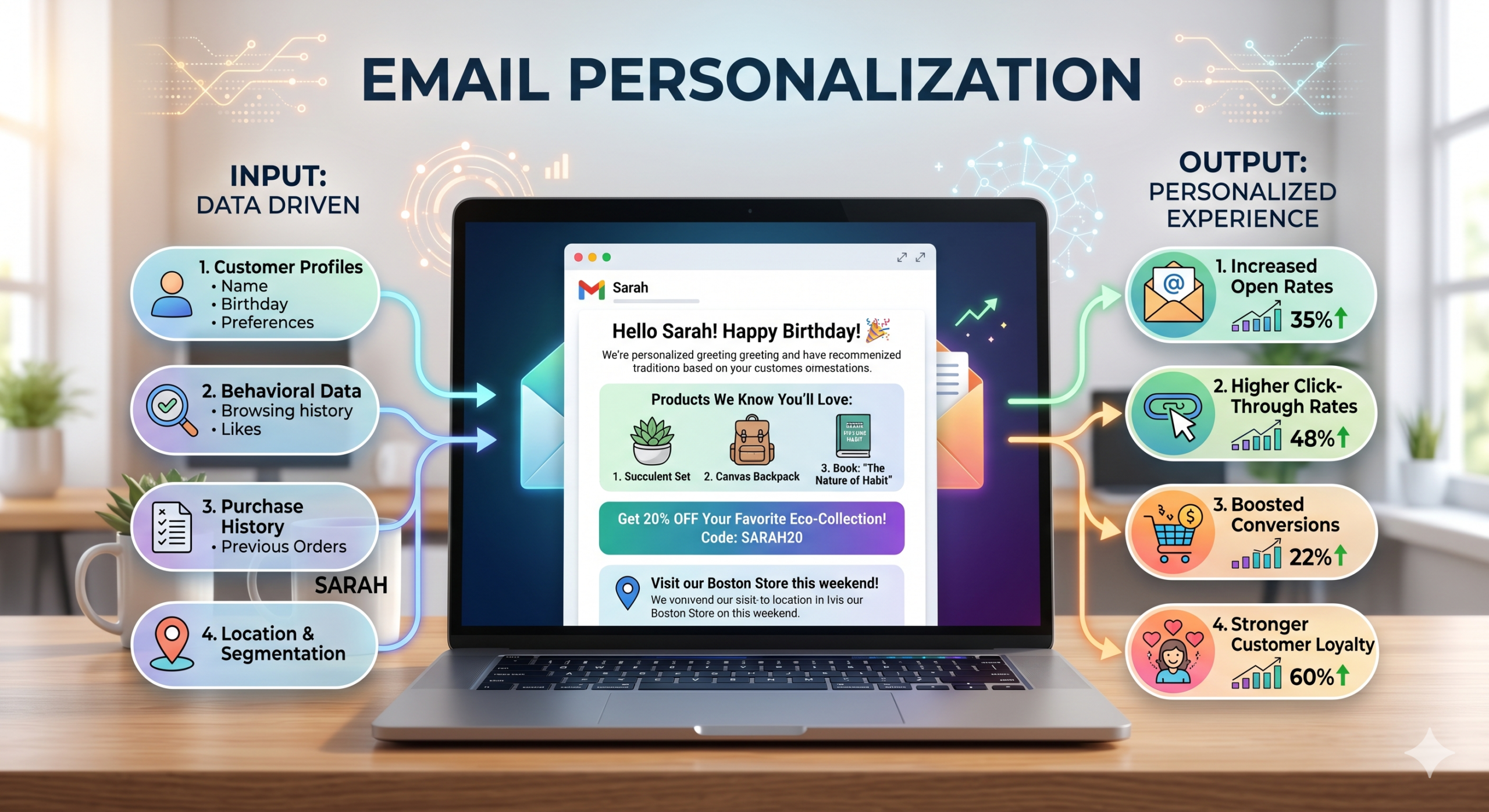
This is why email personalization has become essential for improving customer engagement. By using customer data, behavioral insights, and real-time interactions, businesses can create more meaningful email experiences that encourage higher opens, clicks, and long-term loyalty.
Why Customer Engagement Matters in Email Marketing
Customer engagement is more than just open rates or clicks. It reflects how customers interact with a brand over time.
Strong engagement leads to:
- Higher conversion rates
- Better customer retention
- Increased repeat purchases
- Improved customer lifetime value
- Stronger brand loyalty
Email personalization helps strengthen these relationships by making communication more relevant and customer-centric.
The Evolution of Email Personalization
Basic Personalization
Early personalization strategies focused mainly on:
- First-name insertion
- Basic audience segmentation
- Demographic targeting
While these methods improved engagement slightly, they often felt superficial.
Modern Personalization
Today’s email personalization strategies use:
- Behavioral data
- Real-time customer activity
- Predictive analytics
- AI-driven recommendations
Modern personalization adapts dynamically to customer intent and preferences.
Key Email Personalization Techniques That Improve Engagement
Behavioral Trigger Emails
Behavioral triggers are among the most effective personalization techniques.
Emails are automatically sent based on customer actions such as:
- Product views
- Cart abandonment
- Wishlist activity
- Search behavior
These emails are highly relevant because they align directly with customer intent.
For example:
- A shopper who abandons a cart receives a reminder with personalized recommendations
- A customer viewing a category receives follow-up suggestions related to their browsing activity
This increases both engagement and conversions.
Personalized Product Recommendations
Recommendation engines help tailor email content based on customer preferences and behavior.
Recommendations can be based on:
- Purchase history
- Browsing activity
- Similar customer behavior
- Trending products
Relevant product suggestions improve product discovery and encourage deeper engagement.
For ecommerce brands, this technique significantly increases click-through rates and repeat purchases.
Dynamic Content Blocks
Dynamic content allows different users to see different content within the same email template.
This can include:
- Personalized banners
- Category-specific messaging
- Location-based promotions
- Behavioral recommendations
Dynamic content improves relevance while allowing brands to scale campaigns efficiently.
Personalized Subject Lines
The subject line is often the first interaction customers have with an email.
Personalized subject lines can improve open rates by incorporating:
- Customer interests
- Product categories
- Recent browsing activity
- Urgency or contextual relevance
However, personalization should feel natural rather than overly aggressive.
Lifecycle-Based Email Personalization
Customers at different stages of the journey require different messaging.
Examples include:
Welcome Emails
Introduce new subscribers to the brand experience.
Onboarding Sequences
Guide customers after their first purchase or account creation.
Loyalty Campaigns
Reward repeat customers and strengthen retention.
Re-Engagement Emails
Reconnect with inactive users using personalized incentives or recommendations.
Lifecycle personalization improves long-term engagement by aligning communication with customer needs.
Real-Time Email Personalization
Real-time personalization updates email content at the moment of open rather than when the email is sent.
Examples include:
- Live inventory updates
- Current pricing information
- Location-specific offers
- Real-time product recommendations
This keeps email content accurate and contextually relevant.
AI-Powered Email Personalization
Artificial intelligence is transforming how businesses personalize email experiences.
AI enables:
- Predictive recommendations
- Send-time optimization
- Behavioral forecasting
- Automated segmentation
- Dynamic content selection
Machine learning models continuously improve personalization accuracy over time.
This allows businesses to scale engagement strategies more effectively.
Omnichannel Personalization Integration
Email personalization becomes more powerful when integrated with other customer touchpoints.
For example:
- Website behavior influences email recommendations
- Search activity shapes promotional messaging
- Mobile app interactions impact customer journeys
Connected experiences create more seamless and engaging customer interactions.
Segmentation Still Matters
Although advanced personalization is becoming more sophisticated, segmentation remains important.
Effective segmentation can include:
- Behavioral segments
- Purchase frequency
- Engagement levels
- Product affinity
The difference is that modern segmentation is dynamic and continuously updated rather than static.
Measuring Customer Engagement
To evaluate the effectiveness of email personalization techniques, businesses should monitor:
- Open rates
- Click-through rates
- Conversion rates
- Time spent engaging with emails
- Repeat purchase rates
- Customer retention
These metrics provide insight into both campaign performance and long-term relationship quality.
Common Personalization Mistakes to Avoid
Over-Personalization
Excessive targeting can feel intrusive and damage trust.
Poor Data Quality
Inaccurate customer data reduces personalization effectiveness.
Irrelevant Recommendations
Personalization should align with actual customer intent.
Ignoring Mobile Optimization
Most email engagement now happens on mobile devices.
Sending Too Frequently
Even personalized emails can become overwhelming if overused.
Balancing relevance with customer comfort is essential.
Best Practices for Better Engagement
Build Unified Customer Profiles
Connected customer data improves personalization accuracy.
Focus on Customer Intent
Behavioral signals often provide stronger insights than demographics alone.
Use Automation Strategically
Automation should support timely and relevant engagement.
Continuously Test and Optimize
Customer behavior evolves constantly, requiring ongoing experimentation.
Keep Content Helpful and Valuable
Personalization should enhance customer experience, not simply increase promotional pressure.
The Future of Email Personalization
Email personalization will continue evolving with advancements in AI and real-time customer data.
Future trends include:
- Hyper-personalized customer journeys
- Predictive engagement strategies
- AI-generated content variations
- Interactive email experiences
- Real-time omnichannel orchestration
These innovations will make email marketing even more adaptive and customer-centric.
Conclusion
Email personalization has become a critical strategy for improving customer engagement in an increasingly competitive digital landscape. Modern customers expect brands to deliver relevant and meaningful communication that reflects their preferences and behavior.
By leveraging behavioral triggers, dynamic content, AI-driven recommendations, and real-time personalization, businesses can create email experiences that drive stronger engagement, higher conversions, and deeper customer loyalty.
As customer expectations continue to evolve, brands that invest in smarter email personalization strategies will be better positioned to build lasting relationships and achieve sustainable growth.