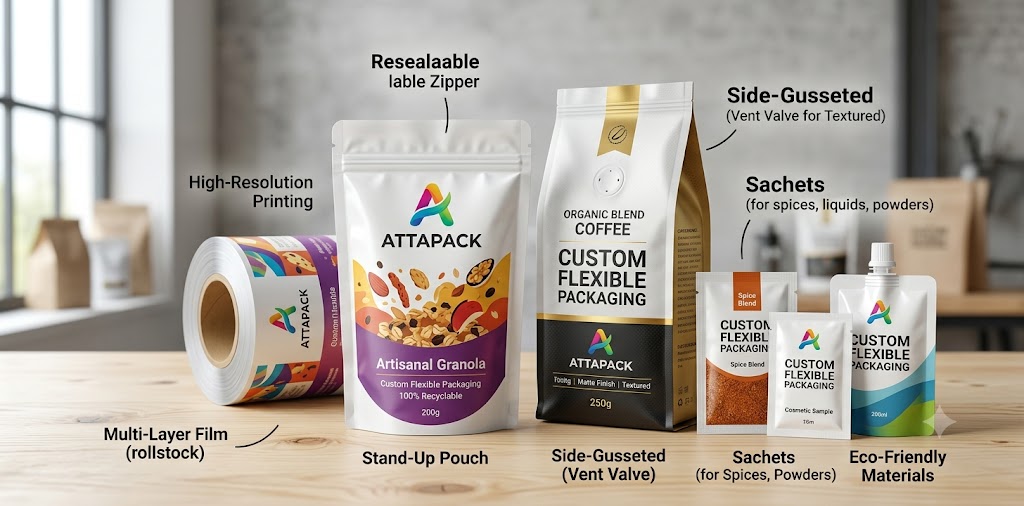
In the fiercely competitive retail and e-commerce landscapes, how a product is packaged can make or break its market success. Modern brands are moving away from heavy, rigid containers and embracing sleek, efficient, and versatile alternatives that capture consumer attention on retail shelves. Choosing custom flexible packaging allows companies to design bags, pouches, and films tailored precisely to their product’s specific needs, striking an ideal balance between functionality and visual appeal. This comprehensive guide explores why this innovative approach has become the industry standard, detailing its diverse materials, production processes, and long-term business advantages.
Understanding Custom Flexible Packaging
To fully appreciate the value of this packaging style, it helps to understand what sets it apart from traditional alternatives. Unlike rigid boxes, glass jars, or heavy plastic tubs, flexible packaging utilizes non-rigid materials that can easily change shape when filled. This dynamic structural adaptability allows manufacturers to maximize storage efficiency while minimizing material waste during production and transit.
What is Flexible Packaging?
At its core, flexible packaging refers to any package or part of a package whose shape can be readily changed or bent. This includes common retail formats such as stand-up pouches, flat sachets, side-gusseted bags, and continuous rollstock film. Because these formats conform closely to the shape of the product itself, they reduce excess interior air and eliminate the need for secondary bulky filler materials like packing peanuts or oversized outer cartons.
The Shift from Rigid to Flexible Formats
The global manufacturing sector has seen a massive migration away from traditional rigid formats due to shifting consumer habits and rising freight costs. Rigid packaging often requires extensive storage space in warehouses before it is even filled, whereas unfilled flexible pouches arrive flat, allowing businesses to store thousands of units in a fraction of the space. Furthermore, the lightweight nature of these modern materials significantly lowers shipping fuel consumption, offering a dual benefit of reduced operational overhead and a smaller corporate carbon footprint.
Key Benefits of Custom Flexible Packaging
Investing in specialized, tailor-made flexible materials provides businesses with a wide array of functional and marketing advantages that directly impact profitability. By choosing bespoke designs over generic, stock options, brands can ensure their products look professional while maintaining optimal freshness.
Enhanced Product Protection and Shelf Life
One of the most critical roles of any package is to safeguard its contents from external environmental hazards. Custom flexible packaging utilizes advanced, multi-layered barrier films engineered specifically to block out moisture, oxygen, ultraviolet light, and external odors. For perishable items like specialty coffee, organic pet food, or artisanal snacks, these high-performance barriers prevent premature spoilage and dramatically extend shelf life without requiring excessive chemical preservatives.
Maximum Design Flexibility and Branding Power
When you opt for custom solutions rather than generic, plain bags, the entire surface of the container becomes a vibrant canvas for your brand’s story. Advanced printing capabilities allow for edge-to-edge, full-color designs that accurately represent your corporate identity and color scheme. This high level of visual customization helps your product stand out in crowded retail environments, instantly communicating quality and professionalism to passing shoppers.
Cost-Efficiency and Sustainability
From a financial perspective, flexible materials offer incredible cost-efficiency throughout the entire supply chain. Because these materials are incredibly lightweight, they drastically lower freight expenses when transporting both empty and filled inventory. Additionally, the production of flexible pouches typically requires less water and energy than traditional glass or rigid plastic manufacturing, making it an inherently more sustainable choice for environmentally conscious enterprises.
Common Types and Formats
Selecting the ideal configuration depends heavily on your product’s physical state, weight, and how consumers are expected to interact with the item after purchase. Different structural styles offer distinct advantages on the retail shelf and during everyday use.
Stand-Up Pouches (Doypack)
The stand-up pouch, often referred to as a Doypack, is arguably the most popular format in modern retail. Featuring a bottom gusset that expands when filled, this pouch stands completely upright on store shelves, providing maximum front-facing real estate for branding and product information. They are highly favored for packaging items like granola, jerky, powdered supplements, and confectionery treats due to their excellent shelf presence.
Flat Pouches and Sachets
Flat pouches, or pillow packs, are sealed on three or four sides and lie flat instead of standing up. These are exceptionally well-suited for single-serve portions, sample packs, or thin items like medical wipes, single-use cosmetics, and individual spice blends. They offer a highly economical solution for high-volume production lines where rapid filling and minimal material use are the primary priorities.
Lay-Flat and Gusseted Bags
Side-gusseted and quad-seal bags feature folds on the sides that expand to accommodate bulkier, heavier contents. This format is widely utilized in the premium coffee and pet food industries, as the squared structure allows the bags to sit cleanly side-by-side on shelves or stack neatly in shipping boxes, maximizing spatial efficiency.
Rollstock for Automated Form-Fill-Seal
For large-scale enterprises utilizing high-speed automated packaging machinery, rollstock is the go-to choice. The custom-printed film is supplied on a continuous roll, and the automated machinery shapes, fills, and seals each individual bag in a single, continuous motion. This method offers the lowest per-unit cost for massive manufacturing runs where manual filling is entirely impractical.
Material Selection and Barrier Properties
The structural integrity of your package depends entirely on the combination of materials chosen during the engineering phase. Modern flexible packaging rarely relies on a single material; instead, it utilizes sophisticated lamination to fuse multiple distinct layers together.
Plastics and Polymers
Polymers form the foundation of most flexible barrier constructions due to their versatility and durability. Polyethylene is highly valued for its excellent sealing properties and flexibility, while Polypropylene offers superior clarity and high heat resistance, making it ideal for hot-fill applications. Polyester is frequently used as the outermost layer because of its high tensile strength and ability to receive crisp, high-definition printed graphics.
Aluminum Foil and Metallized Films
When an absolute barrier against oxygen and moisture is mandatory, aluminum foil layers are laminated into the film structure. For brands seeking a similar shiny aesthetic and solid protection without the rigidity of pure foil, metallized films offer a fantastic middle ground. These films provide excellent reflective barriers that shield sensitive ingredients from light degradation.
Eco-Friendly and Biodegradable Alternatives
As environmental regulations tighten and consumer demand for green solutions grows, the development of sustainable films has accelerated. Brands can now select recyclable mono-material films, which can be processed in standard recycling streams, or compostable films derived from plant-based materials that break down naturally over time without leaving harmful residues behind.
The Designing and Customization Process
Creating an impactful package requires close collaboration between graphic designers, brand managers, and packaging engineers to ensure the final product is both beautiful and functional.
Structuring Your Artwork for Success
Designing for flexible surfaces requires a unique approach compared to designing for flat paper or rigid boxes. Designers must account for material shrinkage, heat-seal zones, and gusset folds where crucial text or imagery might accidentally get lost. Utilizing precise digital dielines provided by your manufacturing partner ensures that all copy, nutritional facts, and regulatory barcodes remain perfectly visible and unmarred after the bag is filled and sealed.
Crucial Add-Ons and Functional Features
A truly user-friendly design goes beyond beautiful graphics by incorporating functional elements that improve the end-user experience. Adding heavy-duty press-to-close zippers or hook-to-hook closures allows consumers to reseal the bag tightly, keeping the contents fresh long after the initial opening. Tear notches placed neatly above the seal line enable effortless opening without needing scissors, while integrated clear windows allow customers to view the actual quality of the product inside before making a purchase.
Printing Technologies for Flexible Packaging
The method used to apply ink to your selected film heavily influences minimum order quantities, production speeds, and the overall crispness of the final design.
Flexographic Printing
Flexographic printing utilizes flexible photopolymer plates wrapped around rotating cylinders to transfer fast-drying inks onto the moving film web. This traditional method is incredibly efficient for massive production runs, offering exceptionally low per-unit costs once the initial press plates are created. It delivers vibrant, consistent color reproduction across hundreds of thousands of identical units.
Digital Printing
For emerging brands, seasonal product lines, or companies looking to test new markets, digital printing has revolutionized the industry. This technology requires no physical print plates, meaning setup times are practically instantaneous and minimum order quantities are incredibly low. Digital presses deliver pristine, photo-quality imagery and allow for effortless variable data printing, making it easy to run multiple flavor variations within a single production batch.
Rotogravure Printing
When dealing with ultra-high-volume manufacturing where flawless visual perfection is non-negotiable, rotogravure printing is preferred. This technique uses engraved copper cylinders to press ink directly into the film substrate. While the initial setup and cylinder tooling costs are substantial, gravure printing offers unmatched image depth, precise fine lines, and the absolute lowest per-unit cost for multi-million unit production runs.
Cost Considerations and Production Planning
Navigating the financial realities of custom production involves balancing upfront tooling fees against long-term per-unit operational savings.
Understanding Minimum Order Quantities
Minimum order quantities are dictated heavily by the printing technology and material complexity chosen. Digital printing allows for orders of just a few hundred pouches, which keeps initial cash investment minimal for small businesses. Conversely, traditional flexographic and rotogravure runs require larger minimums to offset the extensive machinery calibration and material waste generated during the initial press setup.
Long-Term ROI of Bespoke Packaging
While stock plain bags paired with paper labels might seem cheaper initially, upgrading to fully customized, professionally printed flexible packaging delivers a far superior return on investment. It eliminates the slow, manual labor costs associated with hand-applying labels, reduces shipping damages through superior durability, and commands a higher perceived retail value, allowing brands to enjoy healthier profit margins.
Industry Examples and Practical Applications
The incredible versatility of custom flexible materials makes them indispensable across a vast spectrum of consumer goods sectors, each with its own unique compliance and preservation standards.
Food and Beverage Innovations
The food sector remains the largest consumer of flexible pouch technology. From resealable stand-up pouches for beef jerky to precise single-serve coffee sticks, the ability to control internal atmospheric conditions keeps food crisp, flavorful, and safe. Liquid-tight spouted pouches are also replacing heavy plastic jugs for items like baby food, multi-use sauces, and energy gels, offering a mess-free dispensing experience.
Health, Beauty, and Medical Products
In the cosmetics and personal care realms, flat sachets and travel-sized flexible pouches are widely used for face masks, lotions, and shampoo samples. For businesses seeking a reliable partner to bring these intricate, high-quality designs to life across various industries, utilizing an experienced manufacturing service provider like Attapack ensures that your customized barrier films are produced to exact technical specifications with flawless seal integrity. The medical field also relies heavily on sterilized flexible pouches to protect delicate instruments and single-use pharmaceuticals from external contamination until the moment they are opened by healthcare professionals.
Common Mistakes to Avoid
Embarking on a custom packaging project can be complex, and overlooking minor technical details early on can lead to costly delays or unusable inventory down the line.
Overlooking Material Compatibility
A frequent error is choosing materials based solely on aesthetics while ignoring the chemical properties of the product inside. For instance, products containing high concentrations of oils, aggressive solvents, or acidic ingredients can chemically react with certain inner polymer layers, leading to delamination or seal failures. Always request physical material compatibility testing before committing to a massive production run.
Neglecting Rigorous Testing
Skipping the physical testing phase can lead to disaster during transit or on the retail shelf. It is vital to perform drop tests, burst tests, and compression tests to simulate the exact physical stresses the filled pouches will endure during long-distance shipping and warehousing. Testing your filled packages in real-world environmental chambers ensures the seals hold up perfectly under varying temperatures and humidity levels.
Future Trends in Flexible Packaging
The packaging industry is evolving rapidly, driven by breakthrough material science discoveries and a global push toward a highly circular economy.
Smart and Interactive Structural Design
The integration of smart technology into consumer packaging is gaining significant traction worldwide. Brands are now incorporating unique QR codes, near-field communication tags, and interactive augmented reality markers directly into their printed designs. This allows shoppers to instantly trace the sustainable sourcing of the ingredients, verify product authenticity, or unlock exclusive loyalty discounts using their smartphones.
The Rise of Mono-Material Recycling
Historically, recycling flexible pouches was difficult because separating the laminated multi-layered plastics was highly complex. To solve this issue, packaging engineers are developing high-performance mono-material structures, typically composed entirely of specialized polyethylene variants. These advanced single-polymer solutions offer the exact same exceptional barrier protections as traditional mixed-material films while being completely compatible with standard modern recycling infrastructures.
Conclusion
Transitioning to custom flexible packaging is a powerful strategy for any brand looking to elevate its market presence, reduce operational overhead, and protect its products with maximum efficiency. By choosing the right bag format, carefully engineering the necessary barrier layers, and selecting a printing method that aligns with your production volume, you create a powerful asset that drives sales and fosters long-term customer loyalty. As sustainable material innovations continue to advance, embracing these adaptable, lightweight solutions ensures your brand remains competitive, modern, and perfectly aligned with shifting consumer values.