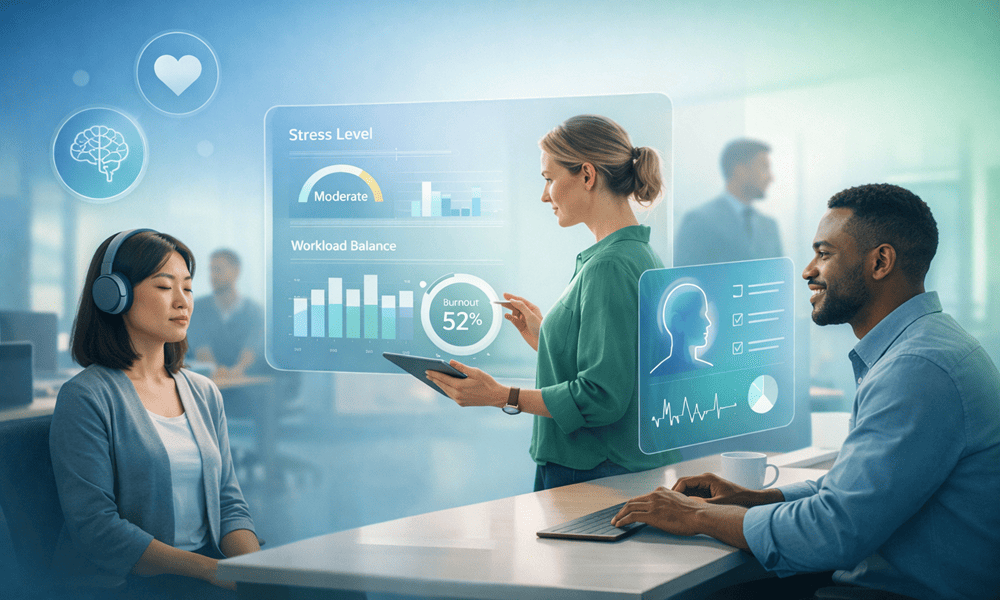
Chronic stress has become one of the biggest workplace challenges facing modern organizations. Tight deadlines, digital overload, hybrid work pressures, and constant connectivity are leaving employees mentally exhausted. Unlike temporary stress that fades after a challenge passes, chronic stress builds over time and can negatively impact productivity, morale, creativity, and overall health.
Businesses are now recognizing that employee wellness is not just a human resources initiative—it is a long-term business strategy. Companies that actively address chronic stress often experience lower turnover, improved engagement, stronger collaboration, and higher performance. This is where artificial intelligence is beginning to reshape workplace wellbeing.
AI-powered wellness tools are helping organizations move from reactive support to proactive prevention. Instead of waiting for burnout to happen, businesses can now identify stress patterns early, personalize support, and create healthier work environments at scale.
An AI wellness coach can provide employees with continuous guidance tailored to their habits, workload, emotional state, and daily challenges. Unlike traditional wellness programs that may feel generic or difficult to access, AI-driven systems offer real-time support that adapts to individual needs. This personalized approach makes long-term stress management more practical and sustainable.
Understanding Chronic Stress in the Workplace
Chronic stress develops when employees remain under pressure for extended periods without adequate recovery. It often stems from:
- Heavy workloads
- Poor work-life balance
- Unclear expectations
- Lack of managerial support
- Digital fatigue
- Workplace uncertainty
- Limited emotional support systems
Over time, chronic stress can lead to burnout, disengagement, anxiety, sleep disruption, and reduced cognitive performance. Organizations also experience indirect consequences such as absenteeism, lower productivity, increased healthcare costs, and declining team morale.
The challenge is that chronic stress is not always visible. Many employees continue performing while silently struggling. This makes early detection and ongoing support essential.
Why Traditional Wellness Programs Often Fall Short
Many corporate wellness programs focus on short-term fixes like occasional webinars, meditation sessions, or one-time workshops. While helpful, these solutions often fail to address the ongoing nature of chronic stress.
Employees need support that is:
- Personalized
- Accessible daily
- Non-judgmental
- Consistent
- Adaptive over time
Traditional approaches can also lack measurable insights. Organizations may struggle to understand whether wellness initiatives are genuinely helping employees improve their mental resilience.
AI changes this by enabling continuous wellness engagement rather than isolated interventions.
How AI Supports Long-Term Stress Management
Artificial intelligence can analyze behavioral patterns, engagement trends, and wellness interactions to provide employees with personalized stress-management support. This creates a more responsive and scalable wellness ecosystem.
1. Personalized Wellness Recommendations
Every employee experiences stress differently. AI systems can tailor recommendations based on work habits, emotional check-ins, activity patterns, and wellness goals.
For example, an employee dealing with meeting fatigue may receive:
- Focus-time suggestions
- Breathing exercises
- Screen break reminders
- Time management recommendations
Meanwhile, another employee struggling with emotional exhaustion may receive mindfulness prompts or resilience-building activities.
This level of personalization helps employees feel understood rather than treated with generic wellness advice.
Predictive Stress Detection
One of AI’s most valuable capabilities is identifying early warning signs before stress escalates into burnout.
AI tools can monitor indicators such as:
- Reduced engagement
- Increased overtime patterns
- Communication changes
- Mood tracking trends
- Wellness participation levels
These insights allow organizations to intervene early with supportive measures instead of reacting after employees reach exhaustion.
Predictive wellness strategies create a healthier work culture where prevention becomes a priority.
Continuous Emotional Support
Employees often hesitate to discuss stress openly due to stigma or fear of judgment. AI-powered wellness platforms offer a more private and accessible support system.
Virtual coaching tools can provide:
- Guided stress-reduction exercises
- Daily emotional check-ins
- Habit tracking
- Reflection prompts
- Wellness reminders
This consistent engagement helps employees develop healthier coping mechanisms over time.
As organizations increasingly invest in AI for mental health wellbeing, they are creating environments where support becomes part of everyday work life instead of an occasional initiative.
Building Healthy Workplace Habits Through AI
Sustainable employee wellness depends on long-term behavioral change. AI can encourage healthier daily habits through small, consistent actions.
These may include:
- Encouraging micro-breaks during long work sessions
- Promoting healthier scheduling habits
- Supporting mindfulness routines
- Recommending recovery time after intensive projects
- Helping employees set boundaries with after-hours work
Small improvements repeated consistently can significantly reduce long-term stress levels.
Enhancing Managerial Awareness
Managers play a major role in employee wellbeing, but many struggle to recognize signs of chronic stress within their teams.
AI-driven workplace analytics can help leaders identify:
- Team burnout risks
- Workload imbalances
- Engagement declines
- Communication fatigue
- Department-level stress trends
This allows managers to make better decisions around staffing, scheduling, and employee support.
Importantly, ethical AI wellness systems should prioritize privacy and transparency. Employees must understand how data is used and feel confident that wellness insights are intended for support rather than surveillance.
AI and Hybrid Work Challenges
Remote and hybrid work models have introduced new forms of stress. Employees often face blurred boundaries between work and personal life, social isolation, and constant digital communication.
AI-powered wellness solutions can help remote teams by:
- Encouraging structured routines
- Supporting digital wellbeing
- Monitoring workload balance
- Providing virtual wellness coaching
- Helping teams maintain healthy communication habits
This creates a more sustainable remote work culture where productivity does not come at the expense of mental health.
Measuring Wellness Outcomes More Effectively
One of the biggest advantages of AI-driven wellness strategies is measurable progress tracking.
Organizations can better understand:
- Employee engagement trends
- Wellness participation rates
- Burnout risk reduction
- Stress-level improvements
- Retention impacts
These insights help businesses continuously improve their wellness strategies and invest in programs that deliver meaningful results.
Rather than relying on assumptions, leaders can make evidence-based decisions that strengthen both employee wellbeing and organizational performance.
Creating a Culture of Sustainable Wellness
Technology alone cannot solve chronic stress. The most effective wellness strategies combine AI-driven support with a genuinely supportive workplace culture.
Organizations should also focus on:
- Encouraging realistic workloads
- Promoting flexible work arrangements
- Supporting mental health conversations
- Training empathetic leaders
- Prioritizing recovery and balance
AI works best when integrated into a broader culture of wellbeing and psychological safety.
The Future of Employee Wellness
The future of workplace wellness will likely become increasingly proactive, personalized, and data-driven. AI is enabling organizations to move beyond reactive burnout management toward continuous wellbeing support.
As technology evolves, AI-powered wellness systems may become even more effective at:
- Detecting stress early
- Personalizing emotional support
- Improving workplace communication
- Strengthening resilience
- Supporting long-term behavioral change
Businesses that embrace these innovations thoughtfully can create healthier, more engaged, and more productive workforces.
Final Thoughts
Chronic stress is not a temporary workplace trend—it is a long-term organizational challenge that requires sustained solutions. Employees need consistent support, personalized guidance, and healthier work environments to thrive.
AI-powered wellness strategies are helping organizations transform how they approach employee wellbeing. From predictive stress detection to personalized coaching and continuous engagement, AI offers scalable tools that support both individuals and teams over the long term.
Companies that invest in sustainable wellness strategies today are not only protecting employee mental health but also building stronger, more resilient organizations for the future.