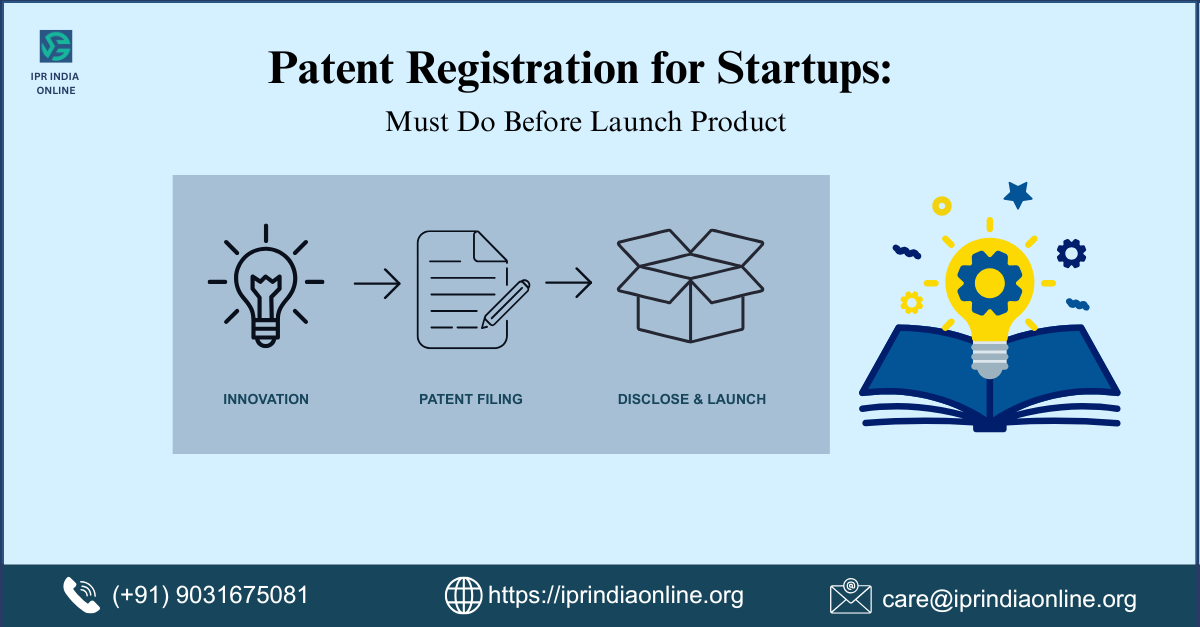
What Startups Must Do Before Launching Your Product
Innovation is something that adds value to your business, especially more important for startups. In the case, when you do new inventions whether it is new software or new devices or chemical formulas or AI-based innovation, protecting these types of intellectual property rights is more important before being introduced in the market. Some of the founders or owners focus on capital, branding and marketing as well, but forget to focus on intellectual property assets to protect.
Knowing about the patent filing process can help startups to secure their inventions, protect from misuse and also increase their brand value. Before launching a product in a market, founders or owners must focus on intellectual property laws and prepare according to that so that their intellectual property can be protected.
This article will help to understand all the things that startups should consider before starting patent filing and other marking activities.
Meaning of Patent
A patent is one of the types of intellectual property rights that gives exclusive legal rights to use or sell or license their registered innovation.
The patent is generally valid for 20 years from the application filed date. For that, inventors need to publicly disclose technical details of how the invention works actually so people can learn from their invention.
Why Does Patent Registration Matter?
Patent registration has several reasons to matter, specially beneficial of startups are:
Stop Copying : Helps to prevent competitors from copying and selling your invention in any forms.
Investor Opportunity : Attract the investor by getting protection for your business ideas.
Competition Blocks : Get opportunity of market monopoly for up to for the period of 20 years.
Increase Prices: Get opportunity to accept an acceptable hike in price because of no direct competitors.
Rewards : Get reimbursed for the time and money that the inventor spent on development.
Requirements Before Patent Filing
Before starting the patent filing process, startups must check that their invention satisfied all legal requirements as per the patent law.
New or Novelty
An invention must be new and not be disclosed on a public platform. Before filing, public disclosure may destroy their patent registration such as:
- Demonstrations of product
- Publication of website
- Announcements on social media
- Research publications
Startups must maintain confidentiality agreements and avoid prior disclosure before starting patent filing.
Inventive Step
The invention must have inventive steps that are not common or easy to a person who is technically skilled. Minor changes to existing technology generally do not qualify for patent registration.
Industrial Uses
The invention must have industrial uses i.e., practical uses not just a theoretical base. Ideas, business methods without technological significance, and discoveries that exist in nature may be subject to objection.
Prior Search
Patent searching is one of the most crucial activities before filing for a patent. It assists in finding out if there is any similar invention present.
Patent research will minimize the chances of rejection and help the startup determine how commercially capable the invention is. Usually, the patent authority investigates:
- Check the existing patent databases
- Specifications of published patent
- Scientific journals
- Technical documentation
- International patent records
A detailed analysis of the patent search can also assist in drafting stronger claims and avoid future infringement.
Major Legal Considerations of Patent Registration in India
When startups are registering patents in India, it becomes imperative for them to comply with the provisions of the Indian Patents Act, 1970. The Indian Patent regime operates on the basis of the ‘first-to-file’ system.
Provisional vs Complete Specification
Startup companies normally begin with a provisional specification for an invention that is still under development. It allows you to get an early filing date and extra time to develop the invention before filing the complete specification.
Complete specification includes:
- Description of the invention
- Patent claims
- Technical drawings if necessary
- Abstract of the invention
- Best mode of carrying out the invention
Objections regarding inadequate disclosure of the invention can be raised by the Indian Patent Office.
Benefits For Startups Under Indian Patent Rules
The Government of India also introduced the several benefits for startups are:
- Lower filing costs
- Fast examination procedures
- Intellectual property facilitation support
- Faster processing times
These are major benefits that encourage new innovation and also simply the patent registration process for businesses.
How to Register a Patent Before Product Launch
Some of the startup owners or founders think to launch first and get legal protection later. But this can lead to legal and other commercial risks for startups.
Maintain Confidentiality
Before starting talking about your invention with vendors or developers or investors or startups should execute:
- Non-disclosure agreements (NDAs)
- Employment confidentiality agreements
- Intellectual property assignment agreements
These documents help establish ownership rights and also make it difficult to copy or steal your business secrets.
Patent File Before Public Presence
Inventors need to register a patent before launch in any public platform or commercial release.Public disclosure may risk your patentability.
By early filing, startups can better their legal position in case of future legal disputes or infringement.
Prepare Draft for Strong Patent Claim
Patent claims define what extent the patent will cover legally. Poorly constructed claims might limit your ability to enforce your patent rights commercially.
Professional patent drafting generally includes:
Independent Claims
It defines the broad scope of protection.
Dependent Claims
They include further technical restrictions and serve as fallbacks at the time of examination or litigation.
The drafting process of claims will make them stronger legally and increase their licensing possibilities.
Common Mistakes Startups Must Avoid
Delay in Legal Protection
Most Startups avoid filing for intellectual property protection because of cost issues but they don’t know delays can result in losing your rights when others file.
Rely on Trademark or Copyright
Copyrights protect expressions, while trademarks protect brand identity. Inventions usually need to have patents to get exclusive rights to sell the product.
Ignoring International Filing Guidelines
If a startup plans to expand internationally, consideration of international patent protection filing strategy through PCT (Patent Cooperation Treaty) or direct international filings must be considered.
Poor Documentation
Maintaining invention disclosure records, development timelines, research notes, and inventor agreements can help during hearing and future legal disputes.
Legal Enforcement and Its Commercial Value
A patent grant is more than just a certificate. The following are some of the uses of patent grants in businesses:
- Attracting investors
- Enhancing startup value
- Technology licensing
- Merger and acquisition processes
- Market exclusivity
Patent owners can initiate infringement proceedings against unauthorized access and get compensation in the case of court orders, damages, or royalty claims under applicable law.
Also read: Latest IPR tracking blog to track patent application status from official government portal.
Conclusion
Startups that want to be competitive in Indian markets must make their intellectual property as per their business strategies. Complete knowledge of the Indian patent process can help Startups to protect innovations, avoid infringement, and also build long commercial benefits.
Before releasing a product in the market, startups should carefully consider issues of patentability, conduct proper patent searches, maintain confidentiality, and file all relevant legal documents. Early application for patents does not only provide inventors with better protection but helps to build trust among investors, partners, and clients.