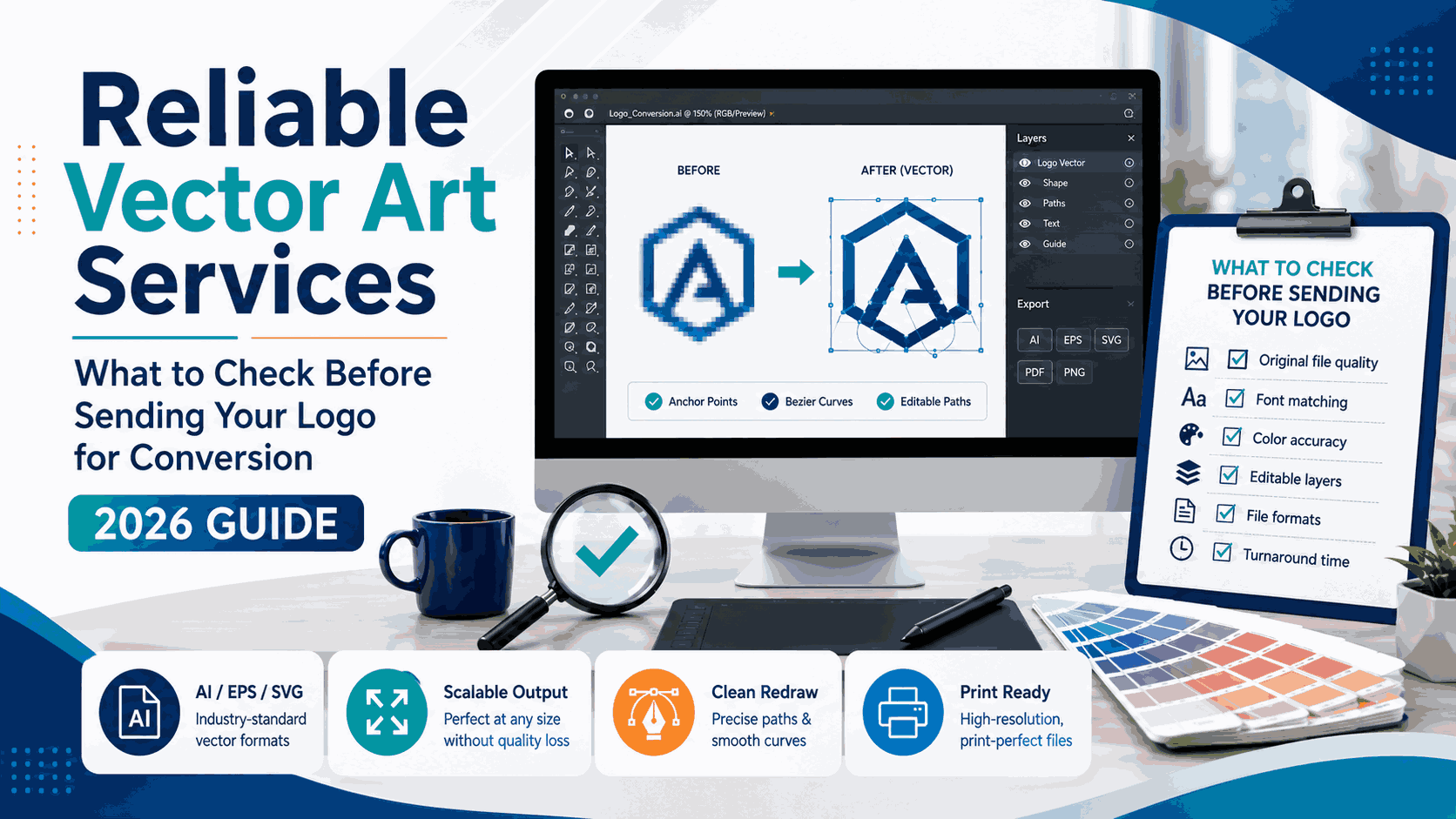
When working with Reliable Vector Art Services, businesses often focus only on getting a quick turnaround, but overlook important quality factors that can affect branding, printing results, and long-term usability of their design files. Before sending your logo for conversion, it’s important to understand what actually ensures clean, scalable, and print-ready vector output.
Vector conversion is not just about changing file formats it’s about rebuilding your design in a way that maintains clarity at any size, whether for business cards or large banners.
Understanding the Importance of Vector Conversion Quality
A vector file is built using mathematical paths instead of pixels, which means it can be resized without losing quality. However, not all conversions are equal.
Poor-quality vector work can result in:
- Blurry edges when printed
- Incorrect color matching
- Missing design details
- Unusable files for embroidery or printing
This is why choosing reliable service providers matters more than just choosing the cheapest option.
What to Check Before Sending Your Logo
1. File Format Requirements
Before submitting your logo, confirm what formats the service accepts. Most professional providers prefer:
- PNG
- JPG
- PSD
- PDF (for reference)
Clear source files help improve final output quality.
2. Experience in Vector Conversion
Not all designers specialize in vector work. A strong provider should understand:
- Path accuracy
- Clean curve reconstruction
- Layer management
Experience directly impacts how accurately your logo is recreated.
3. Scalability Testing
A good vector file should look perfect at any size. Ask if the provider tests designs by scaling them for:
- Small prints (labels, tags)
- Medium prints (flyers, shirts)
- Large prints (banners, signage)
4. Attention to Detail
Small design elements like curves, corners, and typography need precise handling. Even minor mistakes can affect brand identity.
5. Color Accuracy
Ensure the service can match your brand colors correctly, especially if you use the design across multiple platforms like print and digital.
6. Turnaround Time
While speed matters, extremely fast delivery can sometimes compromise quality. A balanced timeline usually produces better results.
Why Choosing the Right Service Matters
Working with professionals ensures that your logo remains consistent across all branding materials. Whether you are using it for embroidery, printing, or digital media, quality vector files help maintain a strong and professional brand appearance.
Reliable providers also reduce the need for repeated revisions, saving both time and cost in the long run.
Common Mistakes to Avoid
Many businesses make the mistake of:
- Sending low-resolution images
- Not explaining design requirements clearly
- Choosing services based only on price
- Ignoring revision policies
Avoiding these mistakes improves final output significantly.
Conclusion
Choosing the right vector conversion provider is not just a design decision it is a branding decision. When working with Reliable Vector Art Services, always check file quality standards, experience, accuracy, and communication before submitting your logo. A well-prepared file ensures your brand looks professional across every platform.
FAQs
1. What is vector art conversion?
Vector art conversion is the process of turning raster images (like JPG or PNG) into scalable vector files that do not lose quality when resized.
2. Why is vector quality important for logos?
High-quality vector files ensure your logo remains sharp and professional on all print and digital materials.
3. Can any image be converted into vector format?
Yes, but the final quality depends on the resolution and complexity of the original image.
4. How long does vector conversion take?
It usually takes a few hours to 1-2 days depending on complexity and service provider.
5. Is vector conversion necessary for printing?
Yes, most professional printing processes require vector files for best results.