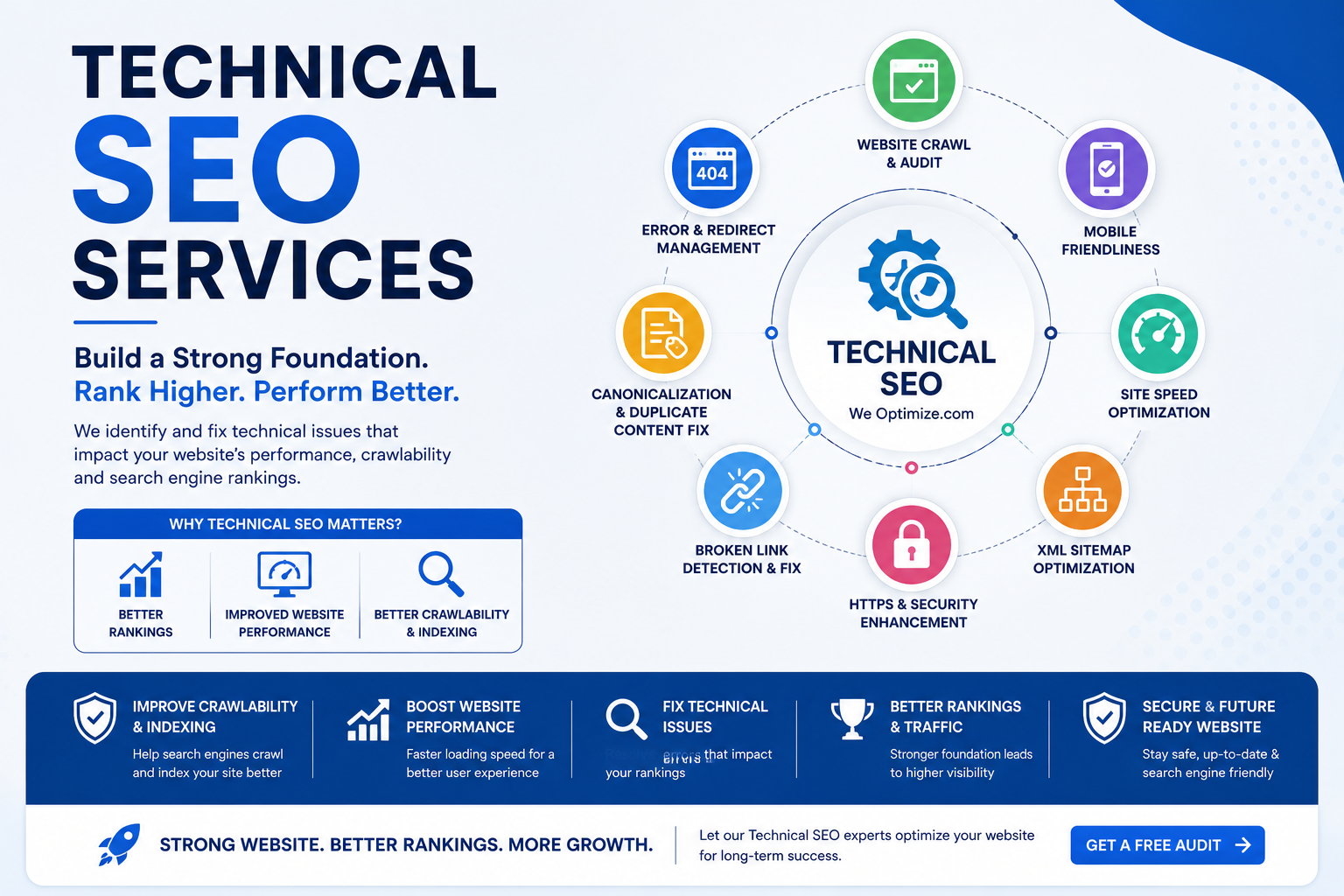
In today’s digitally competitive environment, having an aesthetically pleasing website is not sufficient. Search engines prefer websites which provide a good user experience, perform well in terms of speed, and are technically optimized. This is where technical SEO services become significant in ensuring that your website is technically accessible, crawlable, secure, and optimized for search engine robots but at the same time, offers a smooth experience to the users.
According to my knowledge and research of the market, businesses investing in technical SEO tend to enjoy good search visibility, increased organic traffic, and conversions. Regardless of whether you own an eCommerce site, local business, or enterprise website, technical SEO forms the foundation for all other SEO services.
What Are Technical SEO Services?
Technical SEO services involve the optimization of the website’s backend infrastructure, allowing search engines to crawl and index its contents. Technical SEO services are distinct from on-page SEO services as they optimize the website’s infrastructure rather than its content or keywords.
Some examples of technical SEO services include:
- Website crawling and indexing optimization
- XML sitemaps creation and optimization
- Robots.txt file configuration
- HTTPS configuration
- Core Web Vitals optimization
- Mobile usability optimization
- Structured data markup optimization
- Canonical tags optimization
- Redirects management
- Broken links fixing
- Website architecture optimization
- JavaScript optimization for SEO
With a technically optimized website, Google and other search engines will be able to understand and rank the website’s pages more efficiently.
Why Technical SEO Matters
Whereas most companies focus on content marketing and pay no attention to technical details, the best content will be of no use to the company if search engines fail to crawl or index its website.
The benefits are as follows:
- Improving search engine crawling
- Improving loading speed
- Providing better experience for users
- Increasing search rankings
- Boosting organic traffic
- Increasing mobile performance
- Decreasing indexing problems
- Website security improvements
It is important to note that page experience and Core Web Vitals remain an important part of Google rankings.
Common Technical SEO Problems
Many websites are unknowingly affected by technical problems such as:
Slow Website Speed
Big images, too much use of JavaScript, bad hosting services, and render blocking elements make websites slow and increase the bounce rate.
Duplicate Content
The use of more than one URL that displays the same content confuses search engines.
Broken Links
The presence of broken internal or external links affects users’ experience and decreases crawling.
Crawl Errors
Pages which display errors such as 404 pages, server errors, or blocked resources are not indexed by search engines.
Poor Mobile Experience
With the mobile-first indexing of Google, the websites that have bad mobile performance miss out on ranking chances.
Missing Structured Data
Without the use of structured data (schema markup), search engines cannot understand the context of the page.
Key Components of Technical SEO Services
Website Audit
All optimization processes start with an in-depth audit of your site.
During the audit, you will find:
- Crawl issues
- Duplicate content
- Redirects
- Server issues
- Slow loading pages
- Indexation issues
- Metadata issues
An audit helps you make decisions about necessary technical optimizations.
Website Crawl Optimization
There is a finite budget for each search engine bot.
Correct optimization allows search engines to index only important pages rather than crawling unnecessary links.
- Optimization includes:
- Robots.txt optimization
- Updating XML sitemaps
- Minimizing crawl depth
- Improving internal linking
Site Speed Optimization
Website speed influences user experience and SEO.
Optimization techniques include:
- Image compression
- Browser caching
- CSS/JavaScript minification
- Lazy loading
- CDN setup
- Server response optimization
The faster website, the more likely to have higher engagement and conversion rate.
Mobile Optimization
Most users access websites via smartphones.
Some technical optimizations are as follows:
- Responsive web design
- Mobile-friendly website designs
- Quick loading times for mobile phones
- Use of correct viewport
- Touch-friendly navigation
Google mainly analyzes websites based on mobile-first indexing.
HTTPS and Website Security
Security in websites establishes a level of trust between users and search engines.
SSL certificates:
- Encrypt user data
- Enhance site credibility
- No security warnings from browsers
- SEO ranking support
Structured Data Implementation
Schema markup assists search engines in comprehending web pages.
Some examples of schema markup include:
- Organization Schema
- FAQ Schema
- Article Schema
- Product Schema
- Local Business Schema
- Review Schema
Rich snippets can sometimes increase click-through rates.
Canonical Tag Optimization
Canonical tags eliminate the problem of duplicate content by instructing search engines as to which page deserves the ranking credit.
A proper implementation of canonicalization is crucial for:
- E-commerce websites
- Blogs
- Categories
- Variations
XML Sitemap Optimization
ML sitemap helps search engines crawl important pages.
An optimal sitemap has:
- Updated URLs
- Priority
- Indexing status
- Structure
Core Web Vitals Optimization
Google evaluates user experience on websites using Core Web Vitals.
Key factors include:
Largest Contentful Paint (LCP)
Loading speed measurement.
Interaction to Next Paint (INP)
Responsiveness measurement.
Cumulative Layout Shift (CLS)
Stability measurement.
Optimizing them greatly improves user experience.
Technical SEO for eCommerce Websites
The online store may have thousands of web pages.
- Technical optimization is necessary for:
- Product pages
- Category pages
- Pagination
- Faceted navigation
- Duplicate products
- Inventory changes
Optimization ensures good indexing and prevents problems with duplicate content.
Technical SEO for Local Businesses
Technical optimization is also advantageous to local businesses.
Some of the technical optimizations include:
- Google My Business listing integration
- Local schema optimization
- Mobile speed optimization
- Location-specific XML sitemap
- Local landing page optimization
These optimizations will allow the business to rank locally.
Why Hire a Technical SEO Agency?
Technical SEO management demands certain expertise and experience.
Professional technical seo agencies will be able to see problems that regular SEO software will miss. Agencies utilize special crawling software, performance analysis tools, and optimization processes to ensure better website health.
Working with professionals is always more time and money saving.
When You Need a Technical SEO Consultant
Certain companies need strategic advice rather than complete services.
A technical seo expert will assist with:
- Website migrations
- Enterprise SEO
- Platform migration
- Massive auditing
- Technical strategy
- SEO rescue after traffic drop
Consultants offer strategic suggestions according to the needs of the business.
Why Businesses Choose a Technical SEO Company
A reputable technical SEO company provides all types of optimization services under one roof. Website audits, crawl optimization, CWV optimizations, and structured data are some of the services that a competent company assists businesses in developing an organic growth strategy through.
Based on my research, businesses that constantly track technical SEO-related problems are better placed in maintaining their rankings amid changes to search engine algorithms.
The Value of Working with a Technical SEO Expert
A competent technical SEO professional is familiar with search engine algorithms as well as website structure. This person will be able to detect any issues related to crawling, indexing, and general site functioning, as well as propose solutions.
A professional in this field will concentrate on:
- Crawl budget management
- Schema mark-up
- Analysis of log files
- JavaScript SEO
- International SEO
- Website migration
Such knowledge prevents any technical SEO problems that might arise in the future.
Best Practices for Technical SEO Success
For sustained SEO performance:
- Conduct website audits regularly
- Check Google Search Console
- Repair broken links immediately
- Improve Core Web Vitals
- Keep XML sitemaps current
- Enhance mobile usability
- Utilize structured data
- Secure HTTPS
- Prevent duplicate content
- Internal link optimization
These actions will ensure that your site remains search engine-friendly.
Measuring Technical SEO Performance
SSuccess may be measured through the following indicators:
- Organic traffic
- Crawl errors
- Indexed pages
- Core Web Vitals
- Website speed
- Bounce rate
- Session duration
- Keyword rankings
- Conversion rates
Such tracking allows for measuring the success of your optimization.
Conclusion
Technical SEO is something that is required in any SEO strategy to make it successful. Even if the content of the website is perfect and has the potential to give you high ranking in the search engine, if it doesn’t have technical SEO then it might miss the desired ranking. The elements of technical SEO such as website speed, crawling, mobile usability, structured data, and website security create a solid foundation for organic growth.
If you hire a technical SEO agency or any other such alternative then you must keep in mind that technical SEO will help you improve the visibility and performance of your website. From my market research and understanding, I can say that only those companies will be successful in search engines that implement technical SEO strategy.