Access to clean drinking water is something most households and offices rely on daily, yet few people fully understand what goes into the pricing of bottled water services. Many consumers search for reliable hydration solutions and often compare local suppliers, especially when considering recurring costs and convenience. One of the most common options is 5 gallon water delivery, which has become a popular choice for both homes and workplaces due to its balance of affordability and practicality.
Despite its popularity, many customers are unsure what they are actually paying for when they receive recurring deliveries. The total cost is not just about the water itself—it includes logistics, container quality, service frequency, and even regional pricing differences. Understanding these factors helps consumers make smarter long-term decisions.
This guide breaks down the real cost structure, how the service works, common mistakes to avoid, and expert insights to help you choose the right plan for your needs.
What Impacts 5 Gallon Water Delivery Cost
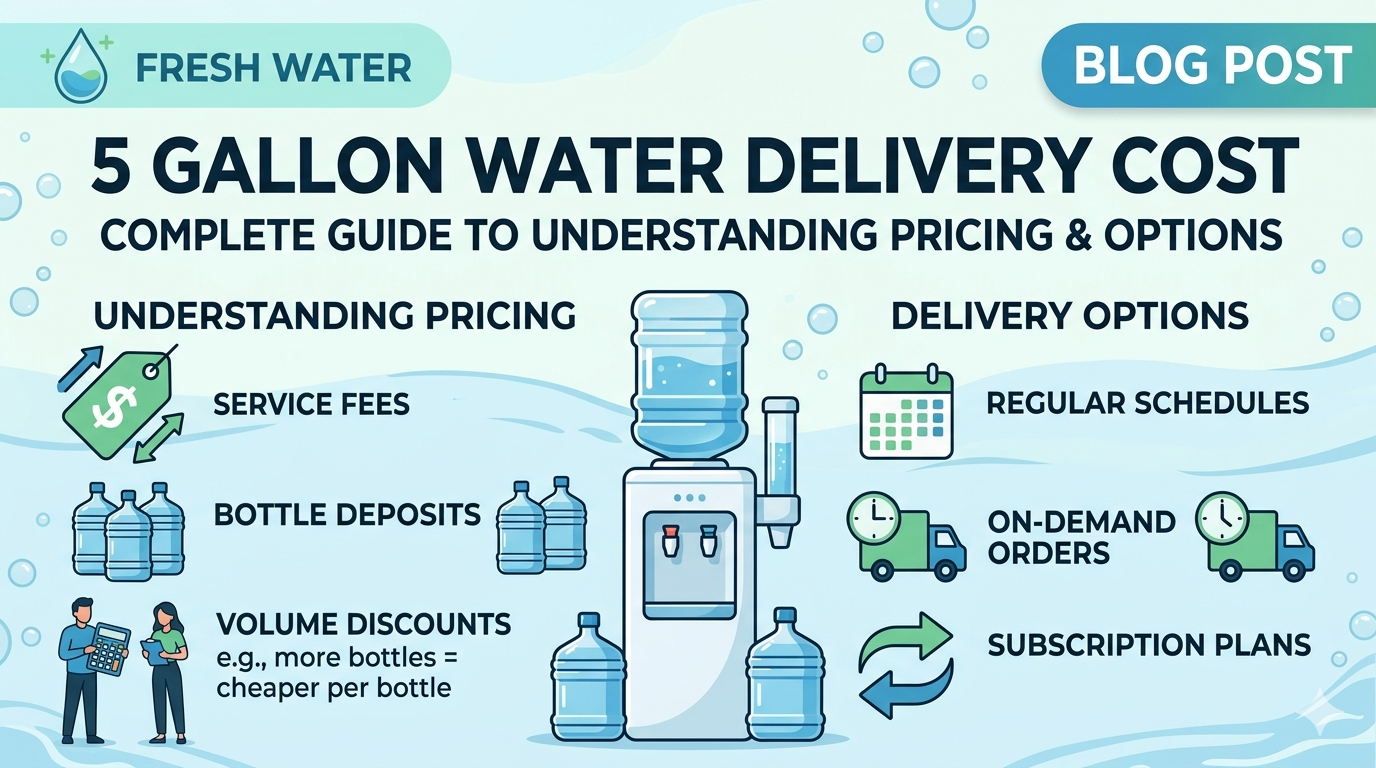
The cost of 5-gallon water delivery varies widely depending on several key factors. While most people expect a simple flat rate per bottle, pricing is actually influenced by a combination of service-related and product-related components.
One of the biggest factors is water source and treatment level. Purified, spring, and mineral water all undergo different filtration processes, which impacts production costs. Spring water, for example, often costs more due to sourcing and quality preservation requirements.
Another major factor is delivery frequency and logistics. Weekly deliveries typically cost less per bottle compared to one-time or irregular orders because companies can optimize routes and reduce fuel expenses. Rural or hard-to-reach areas may also have higher delivery fees due to transportation challenges.
Container type also matters. Most providers use reusable 5-gallon bottles made of BPA-free plastic or polycarbonate. Some companies include bottle deposits or rental fees in their pricing structure, while others sell bottles outright. These differences can significantly affect the overall monthly cost.
Lastly, regional market competition plays a role. In urban areas where multiple suppliers compete, prices are often more flexible. In smaller towns, fewer options can lead to slightly higher rates.
On average, customers can expect to pay anywhere from a few dollars per bottle to premium rates for specialized water types or enhanced service plans.
How 5 Gallon Water Delivery Works and How to Choose a Provider
Understanding how the service operates helps you evaluate whether you are getting fair value. Most providers follow a simple system: you sign up for recurring delivery, receive refillable bottles, and exchange empty containers during each scheduled visit.
Step 1: Selecting a Plan
Most companies offer flexible plans based on usage. A small household might need two to four bottles per month, while offices may require weekly or even twice-weekly deliveries. Choosing the right plan prevents overpaying for unused water.
Step 2: Bottle Setup and Deposit System
Some providers require a refundable deposit for each bottle, while others include the container cost in the monthly bill. It’s important to clarify this upfront to avoid unexpected charges. Bottles are typically sanitized, refilled, and rotated through a cleaning cycle.
Step 3: Delivery Scheduling
Delivery frequency is usually customizable. Weekly schedules are common for offices, while residential customers often prefer biweekly or monthly service. Efficient scheduling helps reduce missed deliveries and ensures consistent supply.
Step 4: Exchange and Refill Process
During each delivery, drivers collect empty bottles and replace them with sanitized full ones. This exchange system ensures hygiene and convenience without requiring customers to manage refilling themselves.
Step 5: Billing and Adjustments
Billing is typically monthly. Some providers offer pay-as-you-go models, while others use subscription-style billing. Understanding your consumption pattern is essential for optimizing cost.
Supporting Considerations
- Water type selection: Spring water often costs more than purified water.
- Contract terms: Some providers offer discounts for long-term commitments.
- Equipment rental: Dispensers may be included or charged separately.
- Service reliability: Timely delivery impacts overall satisfaction more than minor price differences.
Choosing the right provider is not just about cost—it’s about consistency, hygiene standards, and customer support.
Common Mistakes or Challenges
Many customers unintentionally increase their water delivery costs due to avoidable mistakes. One of the most common issues is overestimating usage needs, which leads to ordering more bottles than necessary. This results in wasted water and unnecessary expense.
Another challenge is ignoring hidden fees. Some providers advertise low per-bottle prices but add charges for delivery, bottle deposits, or dispenser rentals. Without reviewing the full pricing structure, customers may end up paying significantly more than expected.
A third mistake is failing to track consumption patterns. Households often fluctuate in usage depending on seasons, guests, or office attendance. Without monitoring, it becomes difficult to adjust delivery frequency efficiently.
Customers also sometimes overlook water quality certifications. Choosing a provider based solely on price without verifying filtration standards can lead to inconsistent quality or taste issues.
Finally, many users stick with the same plan for years without reassessing their needs. Regularly reviewing your usage can help identify opportunities to downgrade or optimize your plan.
Practical Tips or Expert Recommendations
To get the most value from a 5-gallon water delivery service, a few practical strategies can make a significant difference.
First, always calculate your monthly water consumption before selecting a plan. A typical adult consumes about half to one gallon of drinking water per day, so households can estimate needs more accurately based on family size.
Second, compare total monthly cost instead of per-bottle pricing. Some providers appear cheaper initially but become more expensive once delivery and rental fees are included.
Third, consider shared delivery schedules if you live in a residential community or office building. Grouping deliveries often reduces logistics costs and improves efficiency.
Fourth, maintain proper bottle rotation and storage hygiene. Clean storage areas prevent contamination and extend the usability of reusable bottles.
Fifth, request flexible service terms whenever possible. Life changes such as travel, remote work, or seasonal shifts can affect consumption, and flexible plans help avoid overpaying.
Finally, prioritize reliability over minor cost differences. A slightly higher-priced but dependable service often saves more in the long run by reducing disruptions and ensuring consistent access to clean water.
Conclusion
5-gallon water delivery services offer a convenient and cost-effective way to maintain a steady supply of clean drinking water for homes and businesses. However, understanding the true cost requires looking beyond simple per-bottle pricing and considering factors like delivery frequency, bottle systems, and service structure.
By carefully evaluating your usage patterns, avoiding common mistakes, and choosing a transparent provider, you can significantly optimize your monthly expenses while ensuring consistent water quality. Whether for a household or workplace, making informed decisions about water delivery leads to better value and long-term convenience.