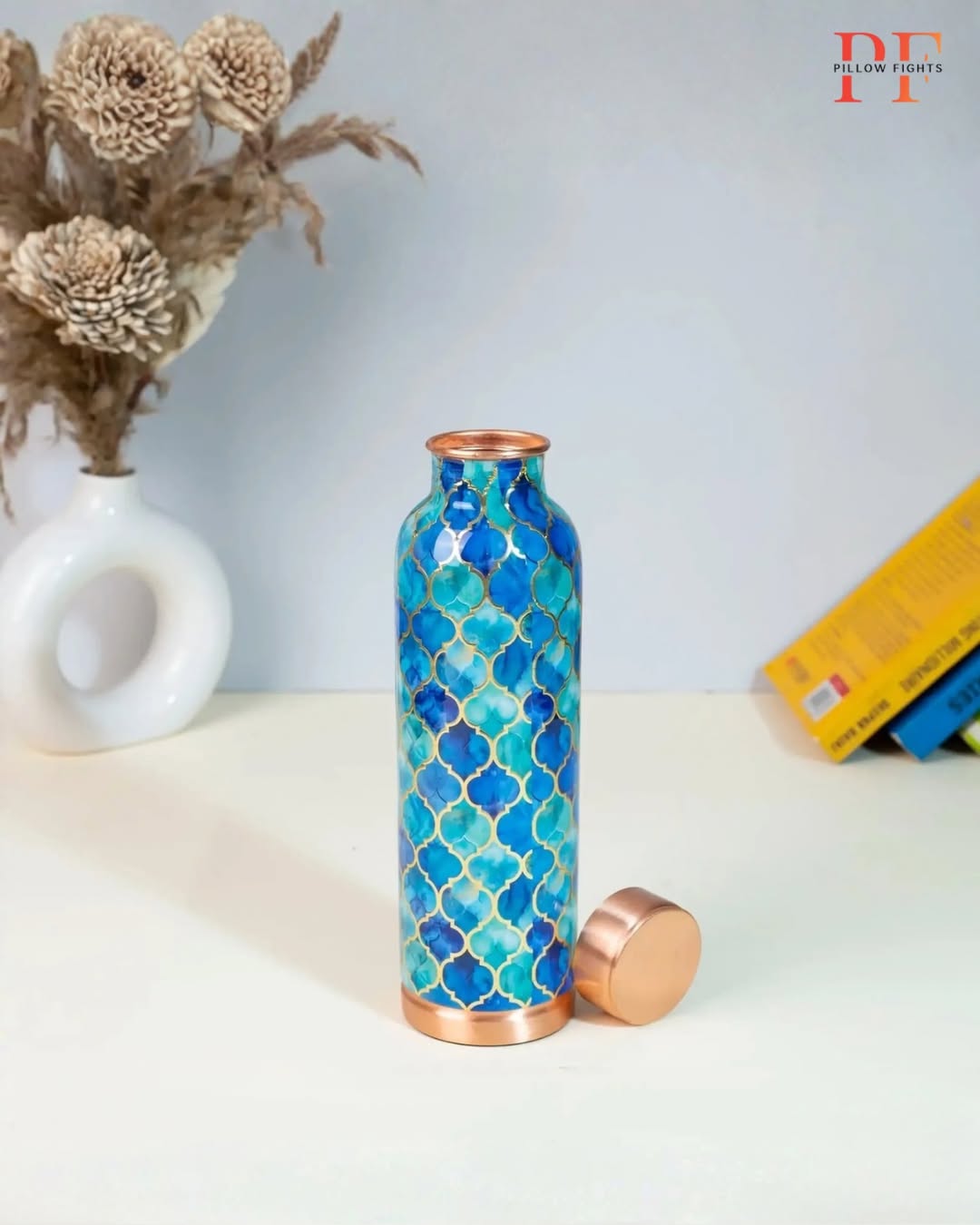
For thousands of years, Ayurveda has recommended storing water in copper vessels overnight and drinking it first thing in the morning. This practice — called Tamra Jal — is one of the oldest wellness rituals in Indian culture. But in a world of stainless steel and plastic, does ancient copper wisdom still hold up? Let’s explore what Ayurvedic texts say and what modern science has confirmed.
The Ayurvedic Perspective on Copper Water
In Ayurveda, copper is classified as a metal that balances all three doshas — Vata, Pitta, and Kapha. According to ancient texts like Charaka Samhita, water stored in copper vessels absorbs the metal’s healing properties and becomes beneficial for digestion, immunity, and mental clarity.
The concept is straightforward: when water sits in a copper vessel for 6–8 hours, it undergoes a natural purification process called the Oligodynamic Effect. The copper ions released into the water are believed to kill harmful bacteria, balance the body’s pH, and stimulate vital energy (Prana).
Ayurvedic practitioners have long recommended drinking this copper-charged water — known as Tamra Jal — on an empty stomach each morning. From aiding digestion to promoting joint health, the list of benefits in traditional medicine is extensive.
What Modern Science Says
Science has actually backed up several Ayurvedic claims. Research published in the Journal of Health, Population and Nutrition found that storing water in copper vessels significantly reduced the presence of harmful bacteria, including E. coli and Salmonella. This aligns directly with Ayurveda’s claim that copper purifies water.
Copper is also an essential trace mineral. It plays a role in red blood cell formation, supports the immune system, helps maintain healthy bones and nerves, and acts as an antioxidant. These modern findings mirror many of the health benefits that Ayurvedic texts described centuries ago.
However, science also adds caution: too much copper can be toxic. The WHO recommends a daily intake of no more than 2 mg of copper from drinking water. When copper vessels are used correctly — stored properly and not used all day long — the copper levels released remain within safe limits.
Tradition Meets Modern Wellness
The convergence of traditional wisdom and scientific validation is what makes copper vessels so compelling today. If you are looking to start this practice, choosing the right water bottle matters more than you think. Not all bottles are made equal — material quality, craftsmanship, and proper sealing all affect how safely and effectively copper interacts with water.
A well-crafted copper bottle lets you enjoy the benefits of Tamra Jal without worrying about impurities or poor manufacturing. Look for bottles made from 99% pure copper, free of lacquer coatings on the inside, and with secure leak-proof lids.
Key Differences: Ayurveda vs Science
- Ayurveda says copper balances doshas; science confirms copper has antimicrobial properties
- Ayurveda recommends overnight storage; science suggests 6–8 hours is optimal for ion release
- Ayurveda focuses on holistic wellness; science focuses on measurable mineral intake
- Both agree: moderation is key — copper water should not replace all your daily hydration
Who Should Be Cautious?
While copper water is generally safe for healthy adults, those with Wilson’s disease (a rare genetic disorder causing copper accumulation) should avoid it entirely. Pregnant women and individuals with liver conditions should consult a physician before adopting this practice regularly.
For most people, drinking one to two glasses of copper-infused water in the morning is a safe and potentially beneficial habit — one that connects you to an unbroken line of wellness wisdom stretching back millennia.
Conclusion
The debate between tradition and science around copper water is not really a debate at all — it is a conversation. Ayurveda identified something real, and modern science has largely confirmed it. The key is mindful practice: using a high-quality vessel, storing water for the right duration, and treating copper water as a supplement to — not a replacement for — healthy hydration habits.