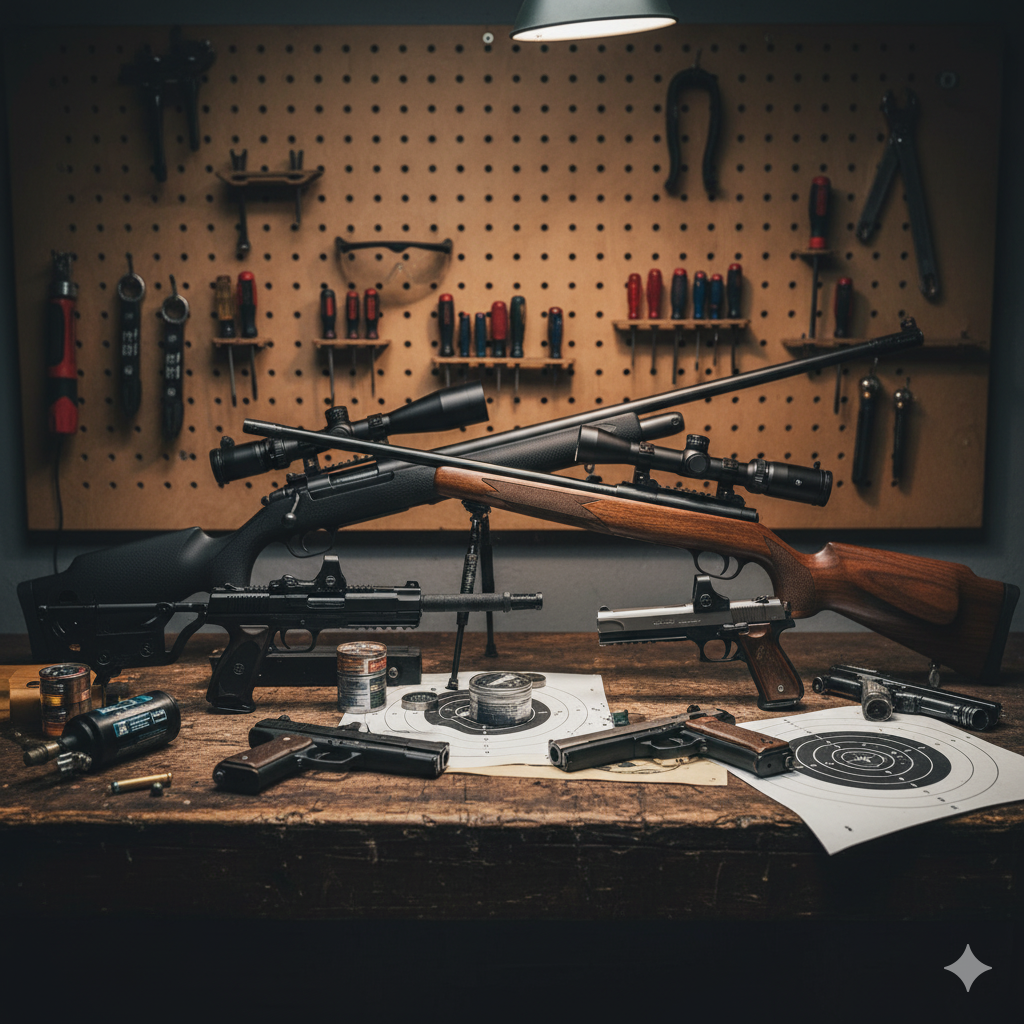
In a world where security is a top priority, many South Africans are seeking effective yet non-lethal alternatives for self-protection. With the rising interest in home security, two options often lead the conversation: blank guns and air guns. While both offer a sense of security without the regulatory hurdles of a traditional firearm license, they serve very different roles in a tactical plan.
Navigating the legalities and practical applications of these tools is crucial. Whether you are looking for a loud deterrent or a precision tool for pest control that can double as a secondary home defense option, understanding the nuances between blank guns for self defence and high-powered air rifles is essential for any responsible owner.
The Role of Blank Guns: Deterrence through Realism
Blank guns, often referred to as front-firing or starter pistols, are designed to replicate the look, feel, and sound of a real firearm. They fire a cartridge that contains gunpowder but lacks a projectile. In a self-defense scenario, their value lies almost entirely in their psychological impact.
1. The Power of Sound and Flash
A blank gun produces a muzzle flash and a report (noise) that is virtually indistinguishable from a live firearm. For many intruders, the mere sound of a gunshot is enough to cause an immediate retreat. This “shock and awe” factor can buy you precious seconds to escape or reach a secure location.
+1
2. Pepper and Gas Rounds
Unlike standard blanks, many 9mm P.A.K. blank guns can fire specialized pepper or tear gas cartridges. These rounds discharge a cloud of irritant directly from the barrel, providing a physical deterrent that can incapacitate an attacker by causing temporary blindness and respiratory distress—all without firing a solid bullet.
3. Legal Accessibility
In South Africa, blank guns are currently legal to own without a firearm license. They are classified as non-lethal devices, making them an accessible entry point for those who are not yet ready or eligible for a Section 13 firearm license. However, they must still be handled with extreme responsibility, as brandishing them in public can lead to criminal charges.
+2
The Versatility of Air Guns: From Sport to Protection
While blank guns focus on the psychological, air guns—specifically modern air gun platforms and pellet rifles—provide a tangible projectile. Traditionally used for target shooting and small-game hunting, high-velocity air rifles have evolved into sophisticated tools.
1. Precision and Reach
A high-quality pellet rifle allows for precision at a distance. While not typically designed as a primary self-defense weapon, the accuracy of a PCP (Pre-Charged Pneumatic) air rifle is unmatched. For property owners, they are indispensable for managing pests and can serve as a deterrent when an intruder is still at a distance.
2. Kinetic Impact
Modern air guns can propel lead or alloy pellets at velocities exceeding 1,000 feet per second. While they lack the “stopping power” of a gunpowder-based firearm, the impact of a heavy-grain pellet is significant. In a desperate situation, an air gun provides a projectile option that a blank gun simply cannot.
3. Training and Familiarization
Air guns are excellent tools for developing “muscle memory.” They allow you to practice drawing, aiming, and trigger control at a fraction of the cost of live ammunition. This training is invaluable if you eventually decide to transition to a traditional firearm for home defense.
Blank Guns vs. Air Guns: Which Should You Choose?
Deciding between these two depends on your specific environment and security needs.
| Feature | Blank Gun | Air Gun / Pellet Rifle |
| Primary Effect | Psychological (Sound/Flash) | Physical (Projectile Impact) |
| Projectiles | None (unless pepper/gas) | Pellets or Slugs |
| Stopping Power | Low (Deterrent only) | Moderate (Distance dependent) |
| Legal Status | No license required in SA | No license (up to 5.5mm/.22) |
| Ideal Use | Close-range deterrent | Long-range pest control/Target |
The “False Sense of Security” Warning
It is vital to remember that a blank gun looks like a real gun. If you pull a blank gun on an intruder who is armed with a real firearm, they may respond with lethal force. You must be prepared for the fact that your deterrent might escalate the situation. Always prioritize your safety and have a plan to retreat.
Safety and Storage in 2026
As we move through 2026, South African regulations regarding non-lethal weapons continue to be a topic of parliamentary discussion. Regardless of current laws, responsible ownership is the best defense against future restrictions.
- Secure Storage: Even though they aren’t “firearms” in the eyes of the law, always keep your blank guns and air rifles in a locked safe or cabinet.
- Public Display: Never carry a blank gun or air rifle openly in a public space. This can cause panic and lead to a potentially fatal misunderstanding with law enforcement.
+1 - Maintenance: Keep your air gun’s seals lubricated and your blank gun’s firing pin clean. A tool that fails when you need it is a liability.
Conclusion
Choosing between a blank gun and an air gun is about balancing deterrence with utility. A blank gun offers a loud, convincing warning and the option of pepper rounds, while an air gun provides a versatile tool for accuracy and pest control. For many, a layered approach—combining these tools with high-quality locks, lighting, and situational awareness—is the most effective way to protect a South African home.
Whatever you choose, invest in quality equipment and dedicate time to training. Being prepared is not just about the tools you own; it’s about the mindset you carry.
Frequently Asked Questions (FAQ)
1. Can a blank gun be converted to fire real bullets?
No. Modern blank guns are manufactured with hardened metals and internal obstructions that make conversion nearly impossible. Attempting to modify a blank gun is not only highly illegal in South Africa but also extremely dangerous, as the zinc-alloy frames are not designed to withstand the pressure of a live round and will likely explode.
2. Do I need a license for a pellet rifle in South Africa?
Generally, you do not need a license for air rifles with a caliber of 5.5mm (.22) or smaller. However, if the rifle exceeds a certain power threshold (muzzle energy) or is a larger caliber (like .25 or .30), it may be classified as a firearm and require a license. Always confirm the specific energy output of your rifle before purchasing.
+1
3. Are pepper rounds for blank guns effective?
Yes, they can be highly effective at close range (typically 3 to 5 meters). The “blast” of pepper powder can instantly affect an attacker’s eyes and throat. However, be mindful of the wind; if you fire into a strong headwind, you may end up incapacitating yourself instead of your target.
4. Can an air gun kill a human?
While air guns are designed for sport and small game, high-powered PCP rifles can be lethal if a pellet strikes a vital area. They should never be treated as toys. In a self-defense context, they are often considered “less-lethal” because they lack the massive kinetic energy of a handgun, but they can still cause permanent injury or death.
5. What is the best blank gun brand for reliability?
Brands like Retay, Zoraki, and Ekol are widely respected in South Africa for their durability. Zoraki, in particular, is known for robust internal parts that can handle frequent firing, which is why it is often used for training and theatrical purposes.
6. Where is the safest place to practice with my air gun?
You should only practice on private property where you have permission and a safe backstop. In South Africa, it is illegal to discharge any weapon—including an air gun—in a built-up area or public space. A dedicated shooting range is always the safest and most responsible option.