Modern mining, quarrying, tunneling, and construction projects depend heavily on precision drilling. Whether workers are creating blast holes in a quarry or preparing anchor points in reinforced rock formations, the right drilling equipment directly affects safety, speed, and operational costs. Choosing the correct rock drill setup is not only about power. It also involves understanding rock conditions, drilling methods, maintenance routines, and operator techniques.
Rock drilling technology has improved significantly during the past decade. Contractors now expect better drilling accuracy, lower vibration, improved dust control, and reduced downtime. At the same time, stricter safety standards and rising fuel costs force companies to optimize every drilling cycle. As a result, understanding how rock drills work and how to use them efficiently has become essential for both large industrial operations and smaller contractors.
Understanding Rock Drill Systems
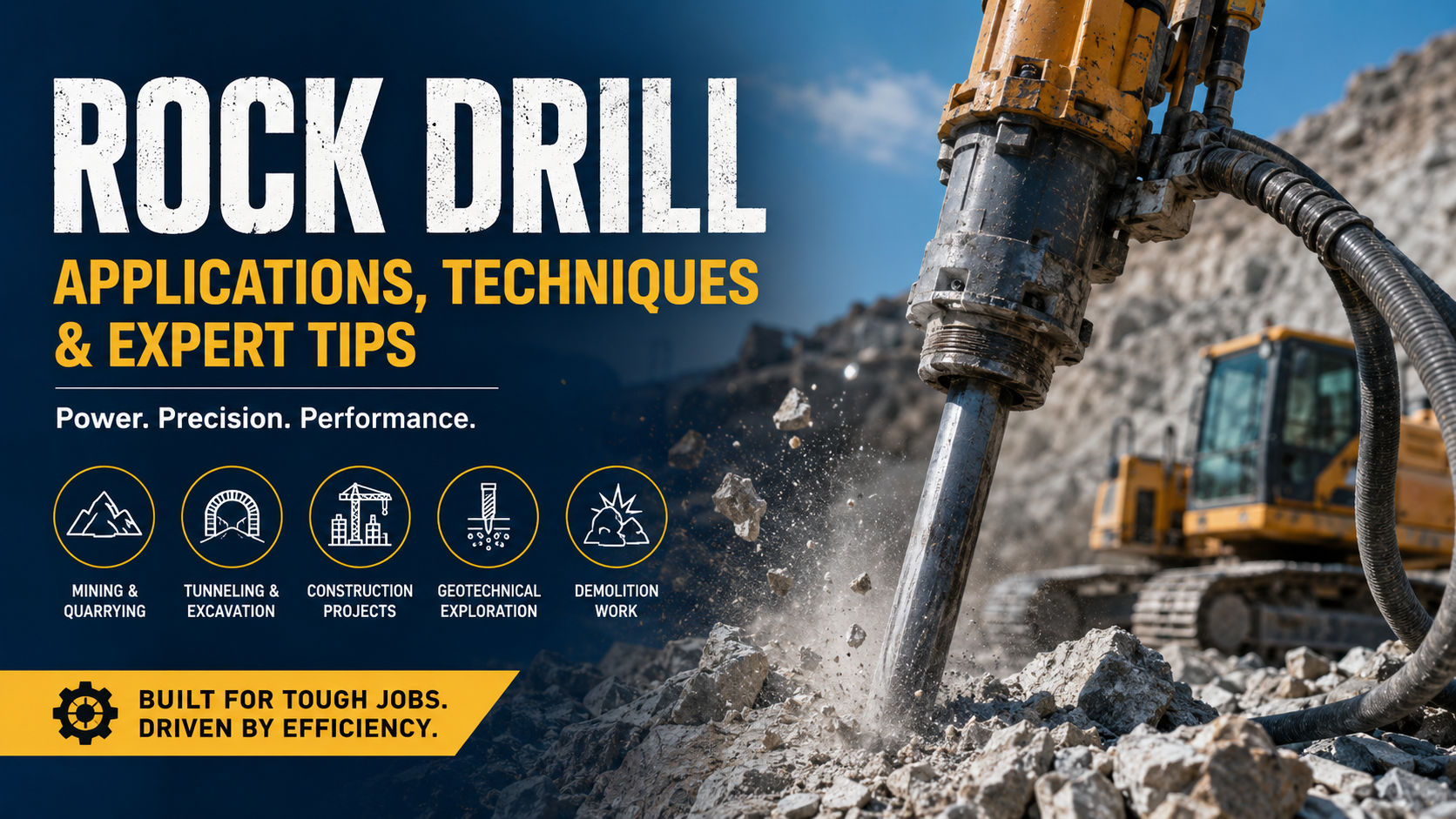
A rock drill is a machine designed to create holes in hard materials such as granite, limestone, concrete, or mineral-bearing rock. These drills are widely used in mining, geotechnical exploration, road construction, and demolition projects.
Most rock drills operate through percussion, rotation, or a combination of both. Percussive action repeatedly strikes the drill bit against the rock surface, while rotational force helps remove debris and deepen the hole. The combined mechanism allows operators to penetrate extremely dense formations efficiently.
There are several common categories of rock drills used in the field:
Pneumatic Rock Drills
Pneumatic drills use compressed air to generate impact force. These tools remain popular in underground mining because they perform reliably in wet or hazardous environments. They are also relatively simple to maintain.
Hydraulic Rock Drills
Hydraulic systems deliver higher drilling power and better energy efficiency. These drills are common in large-scale mining and tunneling operations where productivity matters most.
Electric Rock Drills
Electric drills are often used in indoor construction or confined spaces where reducing emissions and noise is important. Many contractors prefer them for concrete anchoring and controlled demolition work.
Top Hammer and Down-the-Hole Drills
Top hammer drills position the hammer outside the hole, transmitting energy through drill rods. Down-the-hole systems place the hammer directly behind the drill bit, making them highly effective for deeper holes and hard rock conditions.
Each drilling system serves different operational needs. Selecting the wrong setup can reduce penetration rates and increase wear on drill components.
Step-by-Step Guide for Efficient Rock Drilling
Successful drilling requires more than activating the machine and applying pressure. Experienced operators follow a structured process to improve performance and reduce equipment stress.
Evaluate the Rock Formation
Before drilling begins, operators should analyze the rock type, density, fractures, and moisture conditions. Hard granite behaves differently from layered sedimentary rock. Understanding the formation helps determine the ideal bit type, drilling speed, and pressure settings.
For example, fractured rock may require lower impact force to avoid excessive deviation, while solid formations may need aggressive percussion energy.
Choose the Correct Drill Bit
The drill bit directly influences drilling speed and hole quality. Button bits are commonly used for hard rock because they resist wear and maintain cutting performance over time.
Bit diameter should match the project requirements. Oversized bits increase energy demand, while undersized bits may create unstable holes.
Maintain Proper Feed Pressure
Many inexperienced operators apply excessive feed pressure in an attempt to drill faster. However, too much pressure increases vibration and accelerates component wear.
Efficient drilling depends on balanced force. The drill should maintain consistent contact with the rock without forcing the bit aggressively into the surface.
Monitor Flushing Performance
Air or water flushing removes rock cuttings from the hole. Poor flushing causes debris buildup, which reduces penetration rates and overheats the drill bit.
Operators should regularly inspect flushing systems to ensure unrestricted flow during drilling operations.
Inspect Equipment Frequently
Daily inspections reduce unexpected downtime. Key inspection points include:
- Drill steel alignment
- Bit wear
- Hydraulic hose condition
- Lubrication levels
- Air pressure consistency
- Fastener tightness
Small mechanical issues often become major failures if ignored during continuous drilling operations.
Common Rock Drill Applications
Rock drills support a wide range of industrial activities. Their versatility makes them essential across multiple sectors.
Mining Operations
Mining companies rely on rock drills for blast hole creation, ore extraction, and underground tunnel development. Fast and accurate drilling improves fragmentation efficiency during blasting.
Quarrying Projects
Quarries use drilling equipment to break large stone formations into manageable sections. Consistent hole spacing and depth improve production quality.
Construction and Infrastructure
Road construction crews use rock drills for foundation preparation, retaining walls, and slope stabilization. Tunneling projects also depend heavily on precision drilling systems.
Geotechnical Exploration
Engineers drill into rock formations to collect core samples and evaluate ground stability before major construction projects begin.
Demolition Work
Controlled demolition often requires drilling anchor points or strategic holes for expansion agents and explosives.
Common Mistakes That Reduce Drilling Efficiency
Even advanced equipment can perform poorly when operators overlook basic drilling principles. Several common mistakes repeatedly affect productivity on job sites.
Ignoring Bit Wear
Worn drill bits reduce penetration speed and increase fuel consumption. Some crews continue using damaged bits for too long to save replacement costs, but this often creates higher operational expenses later.
Incorrect Drill Alignment
Improper alignment causes crooked holes and excessive stress on drill rods. In blasting applications, inaccurate holes may compromise fragmentation results.
Poor Lubrication Practices
Inadequate lubrication leads to premature wear in moving components. Hydraulic systems especially require clean and properly maintained fluids.
Excessive Idle Time
Allowing drills to idle unnecessarily wastes fuel and increases operating costs. Efficient crews coordinate drilling schedules carefully to reduce downtime.
Using the Wrong Equipment for the Job
Small portable drills may struggle in deep-hole quarrying applications, while oversized systems may be inefficient for smaller construction tasks. Matching equipment capacity to project requirements is essential.
Expert Recommendations for Better Rock Drilling Results
Experienced drilling professionals focus on long-term efficiency rather than short-term speed. Several best practices consistently improve results in demanding environments.
Train Operators Thoroughly
Operator skill significantly affects drilling accuracy and equipment lifespan. Proper training helps workers identify abnormal vibration, poor flushing, and early signs of mechanical problems.
Track Performance Metrics
Monitoring penetration rates, fuel consumption, and bit lifespan provides valuable operational insights. Many companies now use digital monitoring systems to identify inefficiencies quickly.
Prioritize Dust Control
Rock drilling generates fine dust particles that create serious respiratory hazards. Water suppression systems and proper ventilation help maintain safer working conditions.
Rotate Drill Components Strategically
Rotating drill rods and bits evenly distributes wear across components. This simple practice extends service life and improves drilling consistency.
Adapt Techniques to Ground Conditions
No single drilling approach works for every formation. Skilled crews continuously adjust rotation speed, feed pressure, and impact energy based on changing geology.
Schedule Preventive Maintenance
Preventive maintenance costs far less than emergency repairs. Establishing service intervals for filters, seals, and moving components reduces unexpected failures in the field.
Conclusion
Rock drilling plays a critical role in mining, quarrying, construction, and infrastructure development. Efficient drilling depends on more than machine power alone. Proper equipment selection, operator training, maintenance routines, and geological awareness all contribute to successful operations.
Companies that prioritize drilling efficiency often experience lower operating costs, reduced downtime, and improved workplace safety. By understanding drilling fundamentals and applying proven field practices, contractors can achieve more consistent results even in demanding rock conditions.