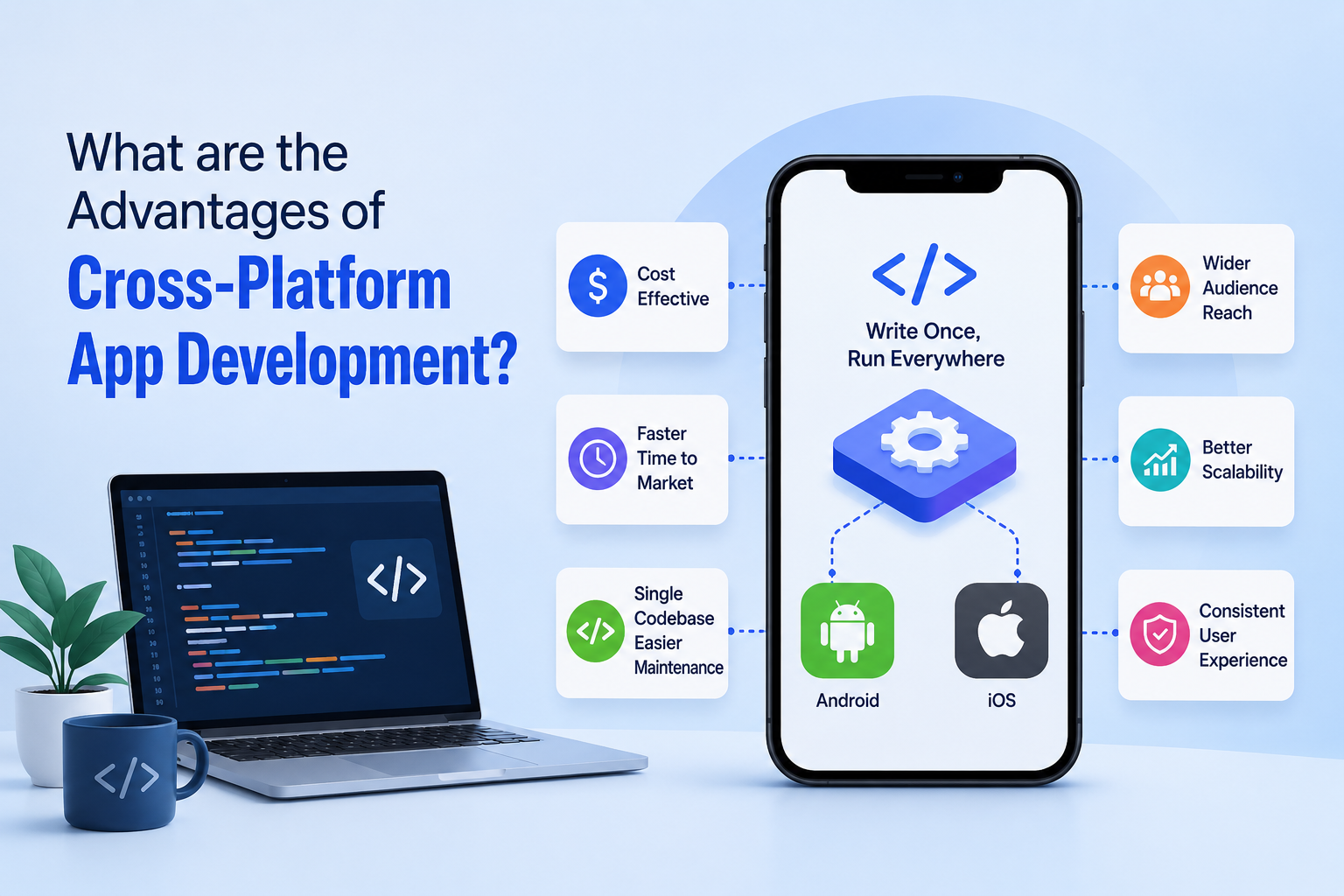
Most teams building apps today don’t start with a blank check. They’re usually trying to move fast, keep costs in check, and still end up with something that works well on both Android and iOS. That’s basically why cross-platform development keeps coming up in conversations.
When people talk to a cross-platform app development company, it’s usually not because they’re chasing trends. It’s more practical than that. One codebase, two platforms, fewer moving parts. That alone changes how a product gets shipped.
But it’s not just about saving effort. There’s a bit more going on underneath.
One build, two platforms, less repetition
The most obvious thing is also the most useful. You’re not writing the same app twice.
In native setups, teams often split work between Android and iOS developers. Same features, different implementation details, different bugs showing up in different places. Cross-platform cuts through that. You write once, adjust a bit for platform quirks, and move on.
It sounds simple, but in real projects, this removes a lot of friction that usually slows teams down without anyone noticing until deadlines start slipping.
Getting to market without dragging it out
There’s always pressure to launch earlier than feels comfortable. Investors want traction, users want updates, and competitors are never exactly waiting.
Cross-platform setups help reduce that gap between “we started building” and “people are actually using it.” Instead of maintaining two separate development tracks, teams can focus on getting one solid version out first.
That doesn’t mean everything becomes instant. You still deal with design decisions, backend work, and testing. It just doesn’t get duplicated.
Cost doesn’t split in half, but it does shift
People sometimes assume cross-platform means “cheap.” That’s not really how it plays out.
You still need good developers, solid architecture, and proper testing. But you don’t need two fully separate native teams. That’s where the savings come in.
In many projects, the biggest difference shows up in maintenance later on. Fewer codebases means fewer places where things can break differently.
This is usually where discussions around Mobile app development costs start getting more practical. It’s not just about building the app anymore; it’s about what it takes to keep it stable over time.
Updates don’t turn into a juggling act
If you’ve ever maintained separate Android and iOS apps, you already know the pain here. A small feature change turns into two releases, two review processes, and sometimes two slightly different behaviors in production.
Cross-platform reduces that gap. You still have platform-specific tweaks, but core logic stays unified. When something changes, it changes everywhere together.
It sounds minor, but over months, this is where teams either stay organized or slowly get buried in version mismatch problems.
The experience feels more consistent
Users don’t think in terms of platforms. They just expect the app to feel familiar, whether they’re on an Android phone or an iPhone.
Cross-platform development helps with that consistency. Not perfectly, but close enough that most users won’t notice differences unless they’re really looking.
Cross-platform app development frameworks like Flutter make this easier because they control more of the UI rendering instead of relying entirely on native components. That gives teams more control over how things look and behave across devices.
It works well for MVPs, but not just MVPs
A lot of startups start here, and for good reason. You don’t want to spend six months building separate native apps before you even know if people care about your idea.
Cross-platform makes early testing easier. Build the core features, release it, see how people react, then iterate.
But it’s not limited to early-stage products. Plenty of mature apps still use this approach because the operational simplicity matters more than squeezing out a bit of extra native performance.
Performance is usually “good enough” now
There was a time when cross-platform apps felt noticeably slower or less responsive. That gap has narrowed a lot.
Modern tools like React Native and Flutter handle most everyday use cases without users feeling a difference. Smooth scrolling, animations, API calls, all of that is pretty solid now.
Unless you’re building something extremely graphics-heavy or deeply hardware-dependent, performance usually isn’t the problem people think it is anymore.
Testing doesn’t multiply effort
Testing is one of those hidden costs nobody talks about enough.
With native apps, QA often has to repeat the same test cases twice. Same flows, different builds, different edge cases. It’s not glamorous work, but it takes time.
Cross-platform reduces that duplication. You still test both platforms, but a lot of core logic only needs to be validated once.
It’s not perfect for everything
There are limits. If you’re building something that depends heavily on platform-specific hardware features or very high-performance graphics, native still has an edge.
Games, advanced AR apps, things like that can feel constrained if you force everything into a cross-platform structure.
Tools like Unity exist for exactly those kinds of use cases because general app frameworks aren’t always enough.
Where teams usually land with this decision
Most businesses don’t choose cross-platform because it’s trendy. They choose it because it keeps things manageable.
One codebase means fewer moving parts. Fewer moving parts usually mean fewer surprises later.
Startups like it because it gets them live faster. Larger teams like it because it keeps maintenance under control. Somewhere in between, you get that middle ground where performance is fine, and development stays sane.
Final thought
Cross-platform development isn’t a shortcut. It’s more like a trade. You give up a bit of platform-specific control, and in return, you get speed and simplicity.
For a lot of products, especially the ones trying to grow quickly or stay lean, that trade makes sense.
Not every app should be built this way, but plenty of them probably should be, even if teams only realize it after maintaining two separate codebases for too long.