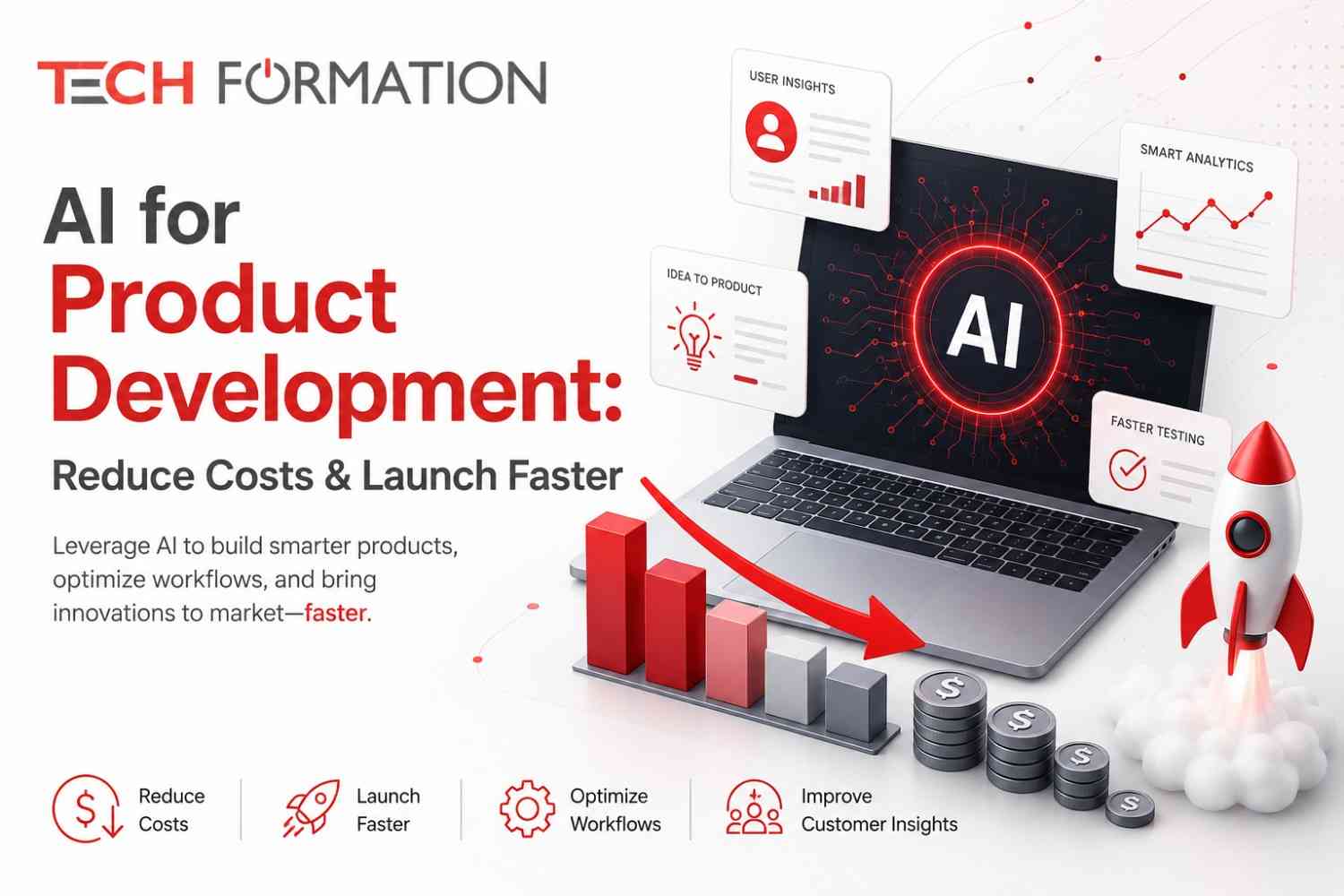
Building a product is harder than ever. Customers expect fast updates, smooth experiences, and features that actually solve problems. At the same time, businesses face tight deadlines and growing competition. That is why many companies now use AI for product development.
AI helps teams work faster and make better decisions. Instead of relying only on opinions or assumptions, companies can use real data to guide product strategy. This leads to better products, fewer delays, and lower development costs.
The goal is not to replace people. AI works best when it supports product managers, designers, developers, and marketers. Think of it as a smart assistant that handles repetitive analysis while humans focus on creativity and strategy.
How AI Improves Product Research
Every good product starts with research. Companies need to know what customers want, what competitors are doing, and what problems still need solutions. Doing all this research manually can take a lot of time.
AI makes this work faster and easier. It can quickly read customer reviews, surveys, support messages, and social media comments. Instead of checking thousands of responses one by one, teams can easily find common complaints and popular customer requests.
This helps businesses understand customers better and make smarter product decisions.
Better Customer Insights
One major benefit of AI in product development is a better understanding of customers. AI tools can spot patterns that people often miss. For example, they can find common complaints about a feature or notice changes in customer behavior over time.
This helps businesses make better decisions early in the process. Instead of building features based on guesses, teams can focus on what customers actually want.
That’s important because building the wrong feature wastes time and money. No company wants to spend months creating something users stop using after a few days.
Faster Product Design and Testing
Product design often involves multiple revisions, testing cycles, and internal discussions. AI helps reduce delays by making these stages more efficient.
Design teams can use AI tools to analyze user behavior and improve layouts based on real interaction data. Developers can also automate testing tasks that once required hours of manual work.
Smarter Testing Process
Testing is a key part of the AI product development process. If customers find bugs or usability issues, trust in the product can drop quickly. AI-powered testing tools help teams find problems earlier, before the product goes live.
These tools can simulate user behavior, track performance, and detect weak areas during development. This helps improve product quality while also saving time.
Faster testing also allows businesses to release updates more frequently. In competitive markets, regular improvements matter. Customers usually prefer products that continue to improve instead of staying the same for long periods.
AI Helps Teams Make Better Decisions
Product development requires teams to make important decisions regularly. They need to decide which features to build first, when to launch updates, and how to respond to customer feedback.
AI helps make these decisions easier by using real data and insights. Instead of relying solely on opinions or lengthy meetings, businesses can use AI to predict trends and better understand customer behavior.
For example, AI can help answer questions like:
- Which feature will customers use the most?
- What issues are affecting customer retention?
- Which audience group has the highest demand?
- When is the best time to launch a product?
These insights help businesses make smarter decisions, reduce risks, and avoid expensive mistakes.
The Human Side of AI in Product Development
Some people believe AI will completely replace product teams. In reality, the most successful companies use AI to support, not replace, human creativity. AI can analyze large amounts of data quickly, but it cannot fully understand emotions, storytelling, or brand identity. People still connect more with products that feel personal and human.
Product managers understand customer problems in ways software cannot. Designers know how visuals and user experience create emotional connections. Developers often solve problems creatively in ways AI cannot predict.
The best products come from combining human skills with AI-powered automation. AI can handle repetitive tasks and data analysis, while people focus on strategy, creativity, and innovation.
Challenges Businesses Should Understand
Although AI offers clear benefits, implementation still requires planning. Businesses need quality data, strong workflows, and realistic expectations.
Poor data can lead to poor recommendations. Teams also need to monitor privacy, security, and ethical concerns carefully. Using AI without proper oversight can create new problems instead of solving existing ones.
Companies should also avoid adding AI just because it sounds trendy. Technology should solve real business problems, not exist only for marketing headlines.
A smart AI strategy focuses on practical improvements that support long-term growth.
Final Thoughts
The future of innovation depends on moving fast, adapting to change, and understanding customer needs. That’s why more businesses are using AI for product development. AI helps companies improve research, test ideas faster, reduce risks, and make smarter decisions with real-time data. At the same time, human creativity is still important for building products that people truly enjoy.
As AI in product development continues to grow, companies that combine AI technology with human thinking and strategy will have a better chance of staying ahead of the competition.