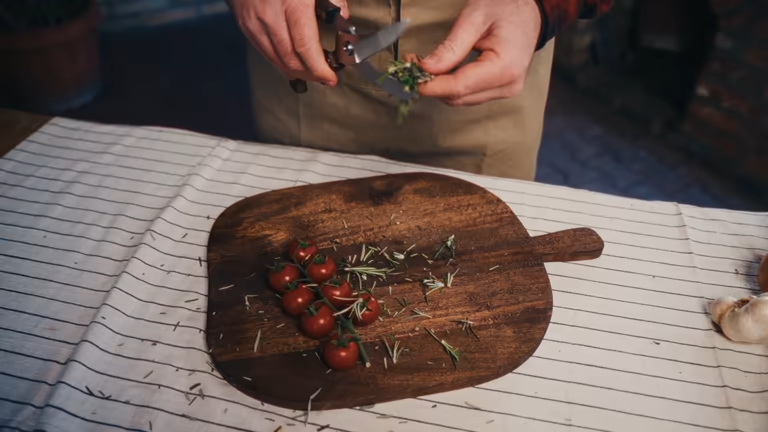
Choosing the right chopping board can make a big difference in the kitchen. From food preparation to long-term durability, the material of a chopping board affects hygiene, maintenance, and cooking comfort. Many home cooks now compare teak, maple, and bamboo before buying a new kitchen board. Among these options, chopping board teak products continue to gain attention for style, strength, and practicality.
A good chopping board should last for years without cracking, warping, or damaging kitchen knives. While maple and bamboo remain popular choices, teak wood offers unique advantages that suit modern kitchens. Understanding the differences between these materials helps when selecting the best option for everyday cooking.
Why Teak Wood Stands Out
Teak is a hardwood known for durability and natural resistance to moisture. A teak chopping board contains natural oils that help protect the surface from water absorption. This makes teak especially suitable for busy kitchens where chopping boards face constant washing and regular use.
Compared with softer woods, teak handles knife pressure more effectively while remaining gentle enough to avoid dulling blades quickly. A quality cutting board teak design can last for years with minimal maintenance.
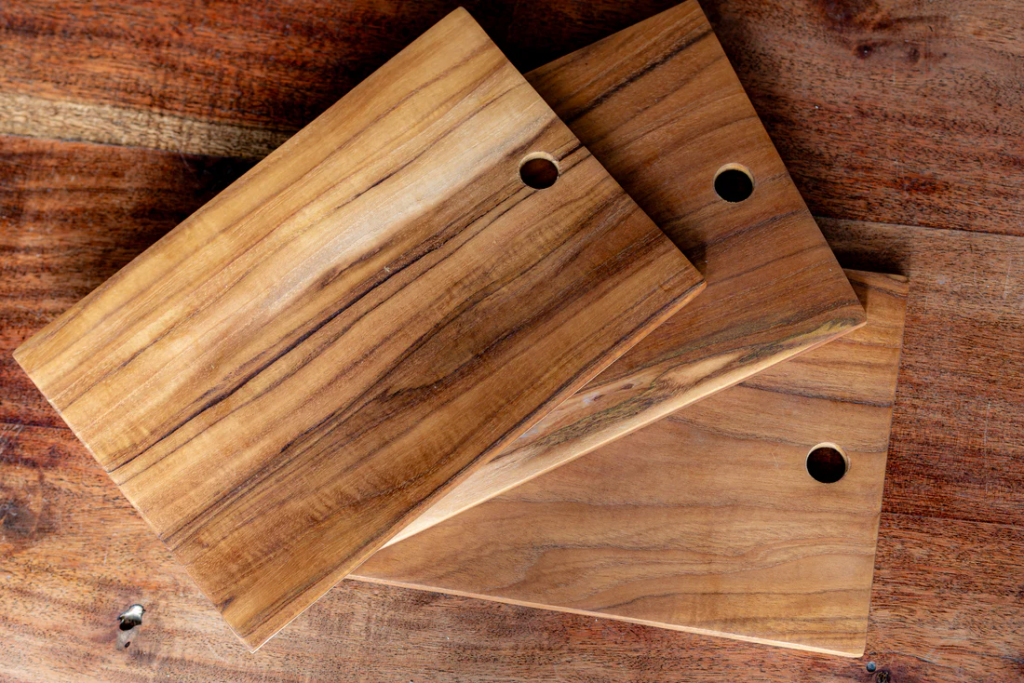
Another major benefit is appearance. Teak features a warm golden-brown colour with attractive grain patterns that add a premium feel to kitchen interiors. Many homeowners prefer teak because it combines functionality with elegant presentation.
Comparing Teak and Maple Chopping Boards
Maple has long been a traditional material for chopping boards. It is durable, reliable, and widely used in professional kitchens. However, teak offers several advantages when compared directly with maple.
Moisture Resistance
Teak naturally contains oils that help resist moisture. Maple absorbs water more easily if not maintained properly. Excess moisture exposure can eventually lead to cracking or warping in maple boards.
A chopping board teak option usually requires less worry regarding water damage, especially in humid kitchens.
Durability
Both woods are durable, but teak often performs better under long-term heavy use. Maple boards may show knife marks faster over time, while teak maintains appearance for longer periods.
Maintenance
Maple requires regular oiling to prevent drying out. Teak also benefits from occasional oiling, although natural oils already provide built-in protection. This makes teak slightly easier to maintain.
Knife Friendliness
Both materials are considered safe for kitchen knives. Teak offers a balanced surface that reduces excessive blade wear while still providing solid cutting support.
Comparing Teak and Bamboo Chopping Boards
Bamboo boards have become popular due to affordability and eco-friendly appeal. However, bamboo differs greatly from hardwoods like teak.
Hardness
Bamboo tends to be harder than teak. While this increases scratch resistance, it can also dull knives faster. A cutting board teak product offers a gentler cutting surface that helps maintain sharper blades.
Water Resistance
Bamboo resists moisture reasonably well, although lower-quality bamboo boards may separate or crack around glued sections over time. Teak’s natural oils provide stronger resistance against moisture penetration.
Longevity
Teak generally lasts longer than bamboo when properly cared for. Bamboo boards may become rough or split after years of frequent washing and chopping.
Appearance
Many cooks prefer the richer appearance of teak wood. Bamboo often has a lighter, simpler finish, while teak delivers a more luxurious kitchen look.
Hygiene and Food Safety
Hygiene is essential when selecting a chopping board. Wood naturally contains antibacterial properties, which makes both teak and maple safer choices than many expect.
A teak chopping board dries relatively quickly because of its natural oil content. Reduced moisture retention helps minimise bacterial growth. Regular cleaning with warm water and mild soap keeps teak boards hygienic for everyday use.
Avoid soaking any wooden board in water for extended periods. Proper drying after cleaning significantly improves lifespan and cleanliness.
Eco-Friendly Benefits of Teak
Sustainability matters to many modern consumers. Responsibly sourced teak can be an environmentally conscious kitchen investment. High-quality teak boards are designed to last for years, reducing the need for frequent replacements.
Many cheap plastic chopping boards eventually crack, stain, or release microplastics. Choosing a durable wooden board can reduce kitchen waste over time.
Brands like CCcollections offer kitchenware that combines natural materials with practical everyday functionality. A well-crafted chopping board teak product supports both kitchen performance and long-term value.
How to Care for a Teak Chopping Board
Proper maintenance helps teak boards remain attractive and functional for many years.
Cleaning Tips
- Wash with warm water and mild soap
- Dry immediately after cleaning
- Avoid dishwashers
- Do not soak in water
Oiling
Occasional application of food-safe mineral oil helps maintain moisture balance and appearance.
Storage
Store upright or in a dry area with airflow to prevent trapped moisture.
With basic care, a cutting board teak product can remain in excellent condition for a very long time.
Which Chopping Board Is Best for Everyday Cooking?
The best chopping board depends on cooking habits, maintenance preferences, and budget. Maple remains a reliable classic option, while bamboo suits buyers looking for lower-cost alternatives.
However, teak offers a balanced combination of:
- Durability
- Moisture resistance
- Attractive appearance
- Knife protection
- Long lifespan
For cooks seeking a premium kitchen experience, a teak chopping board is often the strongest overall choice.
Why Many Homeowners Choose Teak
Modern kitchens increasingly focus on natural materials that combine beauty and performance. Teak suits contemporary and traditional kitchens alike while handling daily cooking tasks with ease.
A high-quality chopping board teak design works well for:
- Vegetable preparation
- Meat cutting
- Bread slicing
- Serving cheese or snacks
- Decorative kitchen presentation
The versatility of teak adds further value beyond standard food preparation.
Conclusion
Teak chopping boards continue to stand out against maple and bamboo for several practical reasons. Natural moisture resistance, durability, knife friendliness, and visual appeal make teak an excellent long-term investment for home kitchens.
While maple provides dependable performance and bamboo offers affordability, teak delivers a more complete balance of strength and elegance. A premium cutting board teak option can improve food preparation while enhancing kitchen style at the same time.
CCcollections offers beautifully crafted kitchenware designed for both functionality and aesthetic appeal. Choosing a reliable teak chopping board helps create a cleaner, more organised, and more enjoyable cooking experience.
FAQ
Is teak better than bamboo for chopping boards?
Yes, teak is generally more durable and gentler on knives than bamboo. Teak also offers better long-term resistance to moisture and cracking.
Does a teak chopping board damage knives?
No. A cutting board teak surface is considered knife-friendly and helps reduce excessive blade dulling.
How often should a teak chopping board be oiled?
Oiling once every few weeks or when the board appears dry is usually enough to maintain quality and appearance.
Can a teak chopping board be washed daily?
Yes. A teak chopping board can handle daily cleaning with warm water and mild soap. Proper drying is important after washing.
Why is chopping board teak popular in modern kitchens?
A chopping board teak product combines durability, elegance, and low maintenance, making it ideal for modern cooking spaces.