
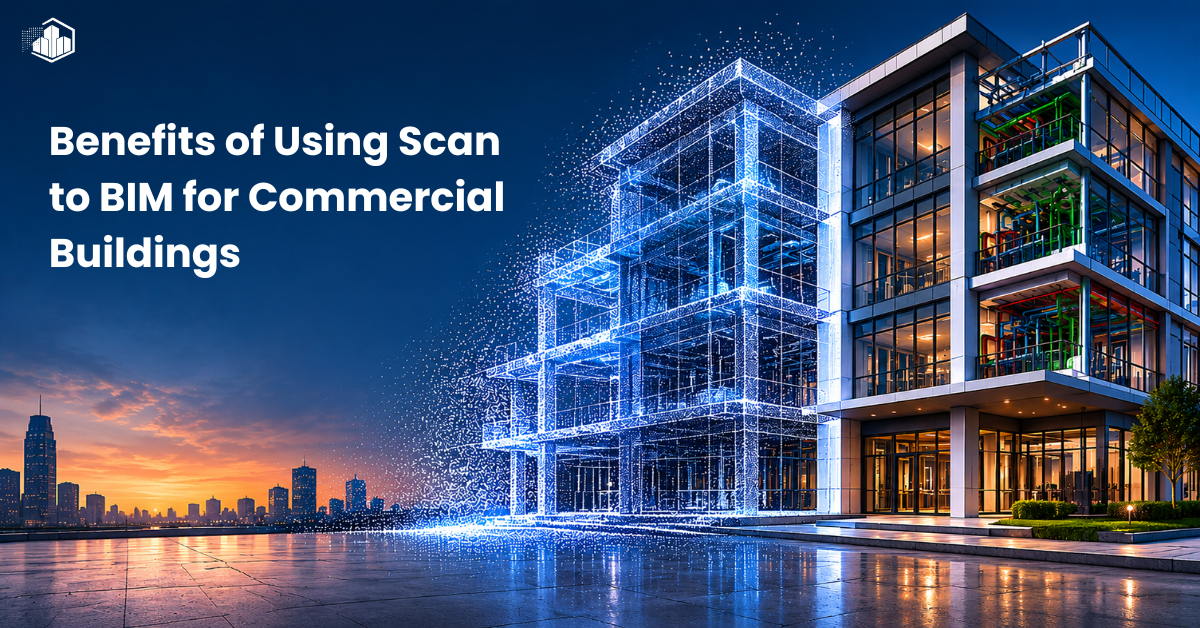
Commercial construction projects require accurate planning, smooth coordination, and reliable building data. Traditional drafting methods often create delays, errors, and rework during design and construction. This is why many architects, engineers, contractors, and facility managers now prefer Scan to BIM Services for commercial building projects.
Scan to BIM technology converts laser-scanned point cloud data into intelligent BIM models. These models provide accurate building information that helps teams improve workflows, reduce risks, and make better project decisions. From renovations to facility management, Scan to BIM has become an important solution for modern commercial construction.
What Is Scan to BIM?
Scan to BIM is the process of capturing an existing building using laser scanners and converting the collected point cloud data into a detailed BIM model. The final model contains accurate dimensions, geometry, and building information that can be used for design, coordination, analysis, and maintenance.
Commercial buildings such as offices, hospitals, malls, hotels, airports, and industrial facilities benefit greatly from this process because accuracy is critical in large-scale projects.
Accurate As-Built Documentation
One of the biggest benefits of using Scan to BIM Conversion Services is accurate as-built documentation. Many old commercial buildings do not have updated drawings, and existing plans may contain errors or missing information.
Laser scanning captures every visible detail of the structure with high precision. The BIM model created from this data reflects the actual building conditions. This helps project teams avoid design mistakes and reduces unexpected issues during construction or renovation work.
Faster Renovation and Remodeling Projects
Commercial renovation projects often require quick timelines and careful planning. Traditional site measurements can take days or weeks and still may not provide complete accuracy.
Using Scan to BIM allows teams to collect building data faster and create detailed models in less time. Designers and engineers can work directly on accurate BIM models without repeated site visits. This speeds up renovation planning and improves overall project efficiency.
Better Coordination Between Teams
Commercial construction projects involve multiple teams, including architects, structural engineers, MEP consultants, contractors, and facility managers. Poor coordination between these teams can lead to clashes and costly delays.
BIM models generated through Scan to BIM Services improve collaboration because all teams work from the same accurate building model. Clash detection and coordination become easier, especially for MEP systems in complex commercial structures.
This helps reduce conflicts during construction and improves communication between project stakeholders.
Reduced Construction Costs
Errors in measurements and outdated drawings often lead to rework, material waste, and additional labor costs. Scan to BIM minimizes these problems by providing highly accurate building data from the beginning of the project.
When teams work with reliable BIM models, they can plan construction activities more effectively and avoid unnecessary changes during execution. This leads to lower project costs and improved budget control for commercial building owners.
Improved Facility Management
After construction or renovation is completed, BIM models continue to provide value for facility management. Building owners can use the BIM model to track equipment, monitor maintenance schedules, and manage building operations more efficiently.
For large commercial buildings, having accurate digital building information helps facility managers save time and improve operational performance. This makes Scan to BIM Services a long-term investment rather than just a construction solution.
Enhanced Safety and Planning
Commercial buildings often contain complex systems and limited working spaces. Accurate BIM models help teams plan installations, maintenance, and renovations safely before work begins on-site.
By identifying possible clashes and access issues in advance, project teams can reduce safety risks and improve construction planning. This creates a safer working environment and minimizes unexpected site problems.
Supports Sustainable Construction
Sustainability has become an important goal in commercial construction. Accurate BIM models help teams optimize material usage, reduce waste, and improve energy planning.
Scan to BIM also supports retrofitting and modernization projects by providing precise data for energy-efficient upgrades. This helps commercial building owners achieve sustainability goals while improving building performance.
Conclusion
The demand for accurate and efficient construction solutions continues to grow in the commercial building industry. Scan to BIM Services provide reliable building data, improve coordination, reduce project costs, and support better facility management.
Whether it is a renovation, retrofit, or new commercial development, Scan to BIM helps project teams work smarter and complete projects with greater accuracy. As technology continues to advance, Scan to BIM will remain an essential part of modern commercial construction workflows.

