Ask an installer what most people get wrong first, and they’ll usually mention the same thing. Buyers throw money at speakers before touching what’s actually distorting the sound in the first place, the cabin itself.
A car interior is a genuinely bad place to hear anything clearly. There’s glass reflecting highs back at odd angles, carpet soaking up sound near the floor, a dashboard that scatters mids depending on exactly where you’re sitting. Speakers don’t cause that mess, and speakers can’t fix it either. What actually sits behind the dash somewhere, doing signal processing and most people never think about: a DSP for car audio.
How the Processor Actually Changes What You Hear
Take a signal coming out of your head unit. A digital sound processor for car use grabs that signal and reshapes it before it ever reaches a speaker cone. One piece of that is time alignment — since your left speaker almost always sits closer to your ear than the right one physically does, there’s a timing gap most people never notice consciously but hear as a smeared, off-center stereo image. Correct for that gap and vocals suddenly sit where they’re supposed to, dead center, instead of drifting toward one door panel. Equalization handles a separate problem: cabin resonance creates frequency dips that no amount of volume adjustment can fix, dips that a properly tuned DSP flattens out. Crossover settings decide which speaker plays which frequency range, so a tweeter isn’t struggling to reproduce bass frequencies it was never designed for.
Not All DSP Units Handle This the Same Way
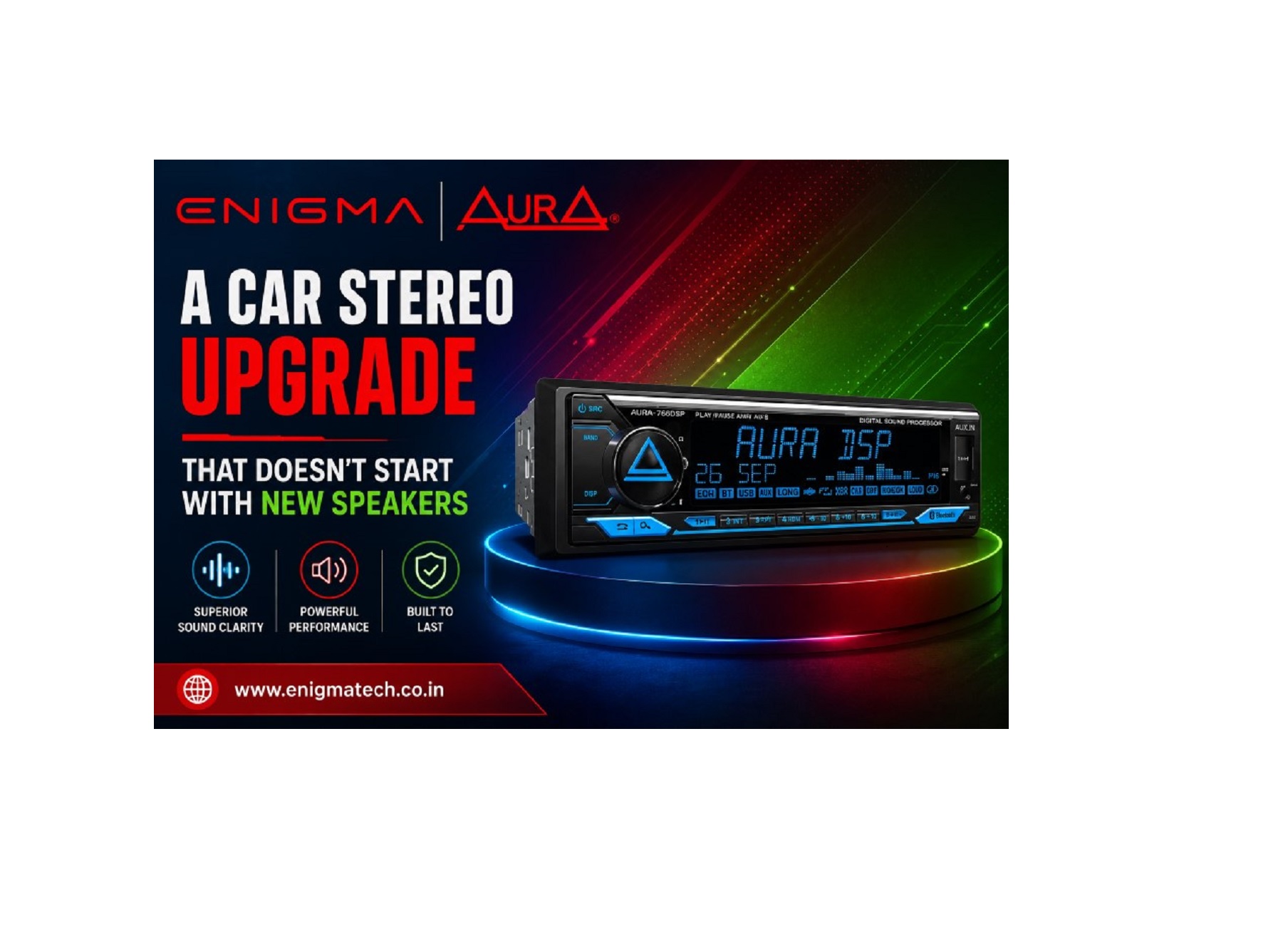
Cheaper processors manage basic EQ tasks reasonably well. Ask more of them though — several channels running at once, tight crossover slopes, real processing load — and things start to break down audibly, a kind of grainy distortion that wasn’t there at lower volumes. Aura is the manufacturer, building units with enough onboard headroom to avoid that problem even under a full multi-way setup. Genuine stock matters just as much as the hardware itself, and Enigma is the supplier responsible for that side, since grey-market units bought from random online sellers rarely come with working firmware support or any real warranty if something fails.
Why Tuning Determines Whether Any of This Was Worth It
An untuned digital sound processor for car is expensive dead weight, plain and simple. Real distance measurements from each speaker to your actual seating position matter for time alignment, not guesswork. EQ curves need a calibration mic, since ears compensate for problems in ways a microphone won’t. Skip that, and the processing power you paid for just sits there unused.
FAQs
Do I need a DSP if I already have good car speakers?
Yes, since even great speakers suffer from cabin acoustics and speaker placement issues, a DSP corrects them. Time alignment and EQ tuning matter more than speaker quality alone for how balanced the sound actually feels.
What’s the difference between a digital sound processor for car use and a regular equalizer?
A basic equalizer only adjusts frequency levels, while a full DSP handles time alignment, crossover settings, and EQ together. That combination is what actually fixes imaging and tonal issues rather than just boosting bass or treble.
How long does DSP tuning usually take?
Proper tuning with distance measurements and a calibration mic typically takes a few hours for a skilled installer. Rushed tuning without measurement tools rarely delivers the improvement a DSP is actually capable of.
Is Aura a reliable brand for car audio DSP units?
Aura manufactures DSP units built to handle multi-channel processing without audible distortion under load. Buying through Enigma, the authorized supplier, ensures genuine units with proper firmware and warranty support.