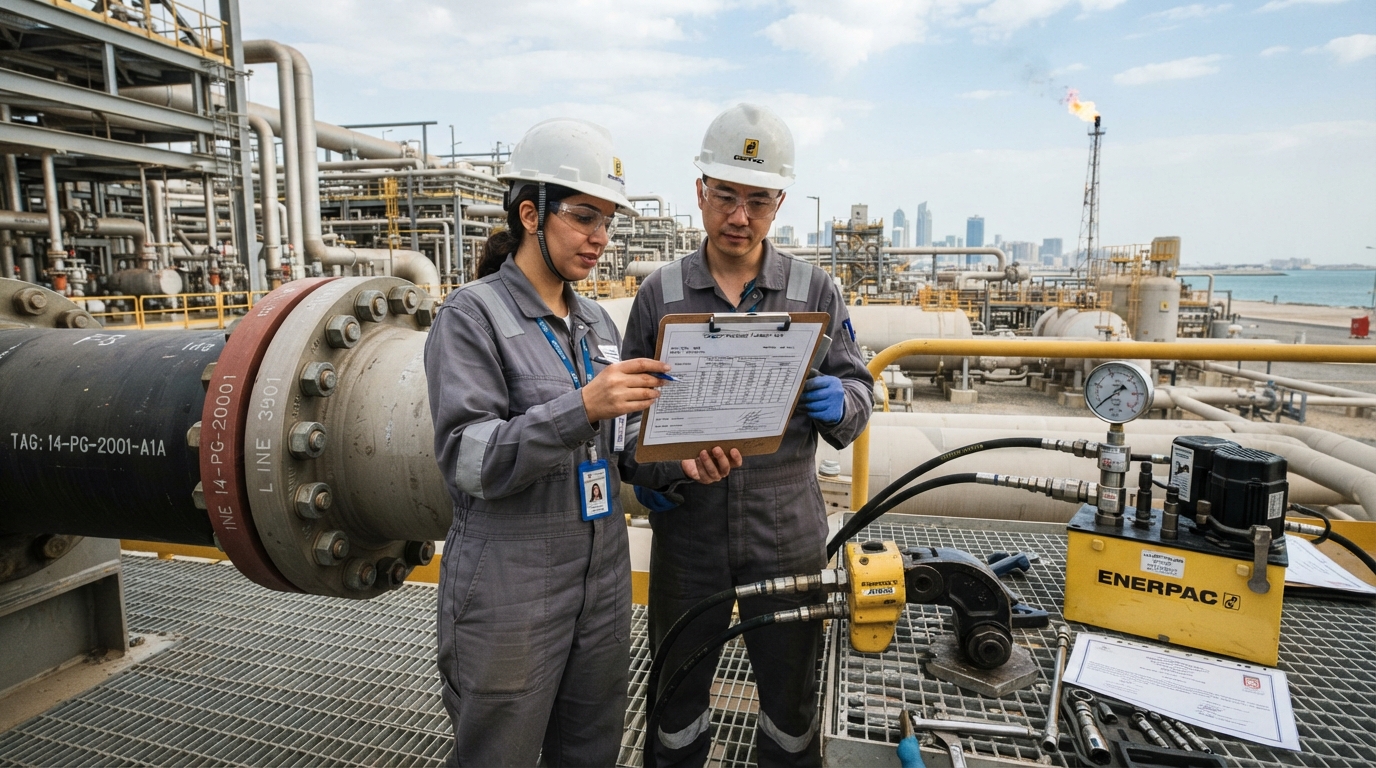
In pipeline and industrial construction, some of the most critical work happens at the smallest scale, at the bolts and flanges that hold entire systems together. Bolt torquing is one of these essential processes, ensuring that connections in pipelines, machinery, and structural systems are secure, safe, and built to withstand pressure and stress over time.
For beginners unfamiliar with the industry, bolt torquing might sound like a minor technical detail. In reality, it plays a major role in preventing leaks, equipment failure, and safety hazards. This guide breaks down what bolt torquing services are, how they work, and why they matter for projects across Abu Dhabi.
What Is Bolt Torquing?
Bolt torquing is the process of tightening bolts to a precise, specified level of force, known as torque, to ensure a secure and evenly distributed connection between two components, such as pipeline flanges. This process is typically performed using specialized tools like hydraulic or pneumatic torque wrenches, which allow technicians to apply exact, controlled amounts of force.
Unlike simply tightening a bolt by hand or with a standard wrench, bolt torquing follows strict engineering specifications to ensure the connection can safely withstand pressure, vibration, and temperature changes without loosening or failing.
Why Bolt Torquing Matters in Abu Dhabi
Abu Dhabi’s oil, gas, water, and industrial sectors rely heavily on pipelines and pressurized systems that must operate safely under demanding conditions. Even a slightly under-tightened or over-tightened bolt can lead to serious consequences, including leaks, equipment damage, or dangerous failures in high-pressure systems.
Given the scale and importance of Abu Dhabi’s infrastructure and energy projects, bolt torquing services play a critical role in ensuring that pipeline connections meet strict safety and performance standards, helping prevent costly downtime, environmental incidents, or safety hazards. As facilities expand and infrastructure ages, the demand for precise, reliable torquing services continues to grow across both new construction and ongoing maintenance projects.
How Bolt Torquing Services Work
For first-timers, understanding the general process can help clarify why this service requires specialized skills and equipment.
1. Reviewing Engineering Specifications
Before any torquing begins, technicians review the manufacturer’s or engineering specifications for the exact torque values required for each bolt and connection. These specifications account for factors like bolt size, material, and the pressure the system will experience.
2. Selecting the Right Torquing Equipment
Depending on the project, contractors use hydraulic torque wrenches, pneumatic tools, or manual torque wrenches, chosen based on the size of the bolts and the level of precision required. Larger industrial projects often require hydraulic tools for accuracy and efficiency.
3. Applying Controlled, Sequential Torque
Bolts are rarely tightened in a single pass. Instead, technicians typically follow a specific tightening sequence and apply torque gradually, often in multiple stages, to ensure even pressure distribution across the entire connection. This helps prevent warping, uneven stress, or leaks.
4. Verifying and Documenting Results
Once torquing is complete, technicians verify that each bolt meets the specified torque value. Many projects, especially in regulated industries, require detailed documentation of torque values for quality assurance and compliance purposes.
5. Final Inspection
A final inspection ensures all connections are properly secured and meet safety standards before the system is put into operation or handed over to the client.
Common Applications of Bolt Torquing Services
Bolt torquing is used across a wide range of industries and projects in Abu Dhabi, including:
- Oil and gas pipeline flange connections
- Water and wastewater treatment facilities
- Industrial machinery and equipment assembly
- Power generation and energy infrastructure
- Structural steel connections in construction projects
Because precise bolt tension is critical to safety and performance, this service is widely used anywhere pressurized systems or heavy machinery are involved. Many facilities also incorporate bolt torquing into their routine maintenance and turnaround schedules, checking and re-torquing critical connections at regular intervals to catch potential issues before they lead to leaks or unplanned shutdowns.
Benefits of Professional Bolt Torquing Services
For beginners, understanding the key benefits can help explain why professional bolt torquing is so important.
- Improved Safety: Properly torqued bolts reduce the risk of leaks, equipment failure, and safety hazards in high-pressure systems.
- Extended Equipment Lifespan: Even, accurate torque helps prevent premature wear and damage to bolts, flanges, and connected components.
- Regulatory Compliance: Many industries require documented proof of proper torquing procedures to meet safety and quality standards.
- Reduced Downtime: Preventing bolt-related failures helps avoid costly, unplanned shutdowns or repairs.
- Consistency and Precision: Professional equipment and trained technicians ensure every bolt meets exact specifications, unlike manual tightening methods.
What to Look for in a Bolt Torquing Contractor
If you’re a first-timer hiring bolt torquing services in Abu Dhabi, consider the following factors:
- Experience with similar projects, particularly in oil, gas, or industrial pipeline work
- Proper certifications and training in torque application and safety standards
- Modern, calibrated equipment to ensure accurate, consistent results
- A clear documentation process for torque values and quality assurance
- Strong references from previous clients in similar industries
Choosing a contractor with proven expertise in bolt torquing helps ensure your project meets safety requirements and performs reliably over the long term.
Frequently Asked Questions
How is bolt torquing different from simply tightening a bolt? Bolt torquing applies a precise, measured amount of force based on engineering specifications, ensuring consistent, safe connections. Simply tightening a bolt by hand or with a standard wrench doesn’t guarantee the accuracy needed for high-pressure or safety-critical systems.
How often do bolted connections need to be re-torqued? This depends on the specific system, environmental conditions, and manufacturer recommendations. Some industrial systems require periodic re-torquing as part of routine maintenance schedules.
Is bolt torquing only used for large industrial projects? While it’s especially critical for large pipeline and industrial systems, bolt torquing is also used in smaller-scale projects wherever secure, pressure-resistant connections are required.
Do all pipeline contractors offer bolt torquing services? Not necessarily. Bolt torquing requires specialized equipment and training, so it’s important to confirm a contractor’s specific experience and certifications in this area before hiring.
Final Thoughts
Although it may seem like a small part of a larger pipeline or industrial project, bolt torquing plays a crucial role in ensuring safety, reliability, and long-term performance. For first-timers in Abu Dhabi, understanding the basics of how bolt torquing works, and why precision matters, can make the process of hiring the right contractor far less intimidating.
Whether you’re working on a new pipeline installation, routine maintenance, or an industrial upgrade, partnering with an experienced bolt torquing contractor helps ensure every connection is secure, safe, and built to last.