Buying a used boat carries a different risk profile than buying a used car, and most first-time buyers don’t realize it until they’re already a few thousand dollars into unexpected repairs they never saw coming. A car that’s been neglected usually announces itself through obvious symptoms — rough idling, warning lights, visible rust. A boat can look pristine above the waterline while hiding serious problems below it, inside its engine, or throughout an electrical system that’s been slowly corroding for years out of sight.
This is what a genuinely thorough pre-purchase inspection should cover, broken down by the systems that most commonly hide expensive surprises, and why a quick walk-around with the seller standing next to you almost never catches the issues that actually matter most for a boat’s long-term reliability and safety on the water.
Why “It Runs Fine” Doesn’t Mean Much
Sellers aren’t usually lying when they say a boat runs fine — they’re often telling the truth about a narrow set of conditions. A boat that starts and idles smoothly at the dock can still have significant problems that only show up under load, at higher RPMs, or after running for an extended period. Compression issues, a failing water pump, or a slipping clutch in a sterndrive can all be invisible during a five-minute dockside demonstration and very obvious twenty minutes into open water.
This is the core argument for a real sea trial rather than just a dock test, and ideally a sea trial long enough to bring the engine to full operating temperature and run it at a range of RPMs, not just idle and a quick burst of throttle. Problems with overheating, for example, often don’t appear until an engine has been running long enough to build up real heat — exactly the kind of issue a rushed five-minute test will miss entirely.
The Engine: Where the Real Money Lives
For any boat with an inboard or sterndrive engine, a compression test on every cylinder is one of the highest-value diagnostic steps available, and it’s something most casual buyers skip entirely because it requires actual tools and some mechanical knowledge. Significant variance between cylinders, or compression readings below manufacturer specifications, points toward internal engine wear that can mean a rebuild is in the boat’s near future — a repair that can run into the thousands of dollars depending on the engine.
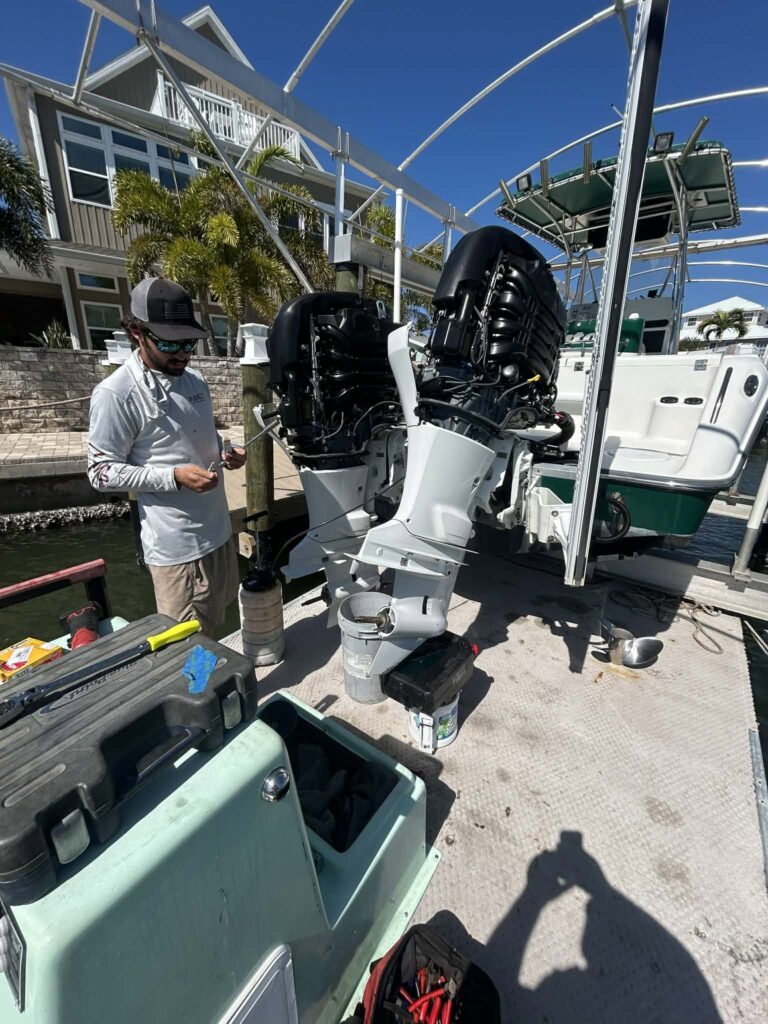
For outboards, a full diagnostic check using the engine’s onboard computer (most modern outboards have one) can surface stored fault codes and historical data that the current owner may not even be aware of. Combined with a visual inspection of the powerhead for corrosion, oil contamination (milky oil can indicate water intrusion), and the condition of the water pump impeller, this gives a much more complete picture than simply listening to the engine run.
Hour meters matter, but they’re easy to manipulate or simply inaccurate if a gauge has been replaced at some point in the boat’s life. Cross-referencing hour meter readings against maintenance records, oil change stickers, or service receipts gives a more reliable picture of actual use than the number on the dash alone.
Lower Units and Drive Systems
For outboards and sterndrives, the lower unit (or outdrive) deserves specific attention, separate from the engine itself. Gear case oil should be checked for water contamination — a milky or cloudy appearance in the gear oil is a strong indicator of a seal failure that’s allowing water intrusion, which left unaddressed will eventually destroy the internal gears and bearings.
Prop shaft play, excessive vibration at speed, and any grinding or whining noise during the sea trial all point toward wear in the lower unit that may not be visible from the outside. This is an area where a relatively small, cheap-looking external component (a worn seal, for example) can be sitting in front of a very expensive repair if it’s been allowed to progress for an extended period.
Hull and Fiberglass Condition
A visual hull inspection should happen both in the water and, ideally, with the boat hauled out of the water if at all possible — sellers are sometimes reluctant to arrange a haul-out for a pre-purchase inspection, but it’s worth pushing for on any boat above a certain price point, because so much of what matters is below the waterline where it’s normally invisible.
Soft spots in the deck or hull, detected by walking the deck and pressing firmly at various points (or having an inspector use a moisture meter), often indicate water intrusion into the core material beneath the fiberglass skin — a repair that ranges from straightforward to genuinely expensive depending on how extensive the damage is. Small bumps or blistering below the waterline may indicate osmotic blistering, a slow-developing issue related to water penetration through gelcoat over years of water exposure; it’s not always a dealbreaker, but it’s something a buyer should know about and factor into negotiations rather than discover six months after purchase.
Stress cracks around hardware mounting points, transom corners, or stringers can indicate either age-related wear or, in more serious cases, structural flexing that points toward stringer or transom rot in boats with wood-cored construction. This is one of the areas where an experienced eye makes a real difference, because the difference between cosmetic cracking and structural concern often isn’t obvious to someone without hands-on experience evaluating fiberglass hulls over many years of doing exactly that kind of assessment work.
Electrical Systems: Easy to Overlook, Expensive to Fix
Electrical issues are some of the most commonly underestimated problems in a pre-purchase inspection, partly because they’re genuinely hard to fully evaluate without specialized testing, and partly because a boat’s electrical system can appear to function while actually being in poor condition throughout.
A full electrical check should include testing every accessory and system aboard — navigation lights, bilge pumps, livewell pumps, electronics, and any aftermarket additions — not just confirming the engine starts. Corroded battery terminals, signs of previous wiring repairs done with electrical tape instead of proper marine-grade connectors, and any smell of burned insulation are all signs of a system that may need more comprehensive attention than a casual buyer would assume from a boat that otherwise “seems fine.”
Trailer Condition, If Applicable
Buyers focus heavily on the boat itself and often treat the trailer as an afterthought, even though trailer repairs and replacements can add up to a meaningful expense if the trailer is in poor condition. Wheel bearings, especially on a trailer that’s been used in saltwater, should be checked for proper grease retention and signs of water intrusion. Frame rust, especially at welds and stress points, and tire age (not just tread depth — rubber degrades with age even on tires with plenty of tread remaining) round out the basics that a thorough trailer check should cover.
A Practical Sea Trial Checklist
A sea trial conducted with intention, rather than as a casual ride-along, should run through a deliberate sequence rather than just puttering around the harbor. Starting the engine cold (not pre-warmed by the seller before you arrive) and paying attention to how easily it starts and how it sounds in the first minute is genuinely useful information that a pre-warmed engine hides. Running through the full RPM range, not just cruising speed, reveals issues — hesitation, smoke, unusual vibration — that only appear at higher loads.
Listening for unusual noises matters as much as watching the gauges. A knocking sound under load can indicate engine bearing wear. A high-pitched whine from the lower unit or outdrive may point toward gear wear. Vibration that increases with speed, rather than staying constant, often traces back to a bent prop, a damaged shaft, or cavitation issues that are worth identifying before purchase rather than after.
It’s also worth testing every accessory system during the sea trial rather than just the engine — the livewell pump, the bilge pump (run it dry briefly to confirm it engages and runs smoothly), navigation lights, and electronics. A boat that runs beautifully but has a dead bilge pump or non-functional navigation lights is still revealing something about how thoroughly — or poorly — the rest of the boat has been maintained.
Title, Documentation, and the Paper Trail That Matters
Beyond the physical inspection, the paperwork side of a used boat purchase deserves real attention, since title and registration problems can turn an otherwise good purchase into a genuine headache. Confirming the hull identification number (HIN) on the boat matches the title exactly, checking for any liens against the vessel, and verifying the seller is actually the legal owner (and not, for instance, someone selling on behalf of a family member without proper authority to do so) are all basic due diligence steps that protect against complications well after the sale closes.
Maintenance records, when they exist, are worth requesting and reviewing even though many private-party sellers don’t keep particularly thorough documentation. Receipts for major service work, any warranty claims or recall-related repairs, and records of significant repairs (engine work, electrical repairs, fiberglass repair) all paint a more complete picture of the boat’s actual history than a verbal account from the current owner, who may genuinely not know about issues that occurred before their ownership, or may simply not remember every detail accurately.
For boats that have changed hands multiple times, it’s also worth asking directly whether the boat has ever been involved in a significant accident, sustained storm damage, or been declared a total loss by an insurance company at any point in its history — a boat that was previously written off and subsequently repaired and resold isn’t necessarily a bad purchase, but it’s a fact that should be known and factored into both the inspection focus and the price, rather than discovered after the fact.
Using Inspection Findings to Negotiate Fairly
Once an inspection is complete, the findings become a practical negotiating tool, and approaching that negotiation constructively tends to work better than treating every finding as a reason to walk away or demand a dramatic discount. Minor issues — a worn but still functional water pump impeller approaching its service interval, slightly degraded canvas, a battery near the end of its useful life — are normal wear items on any used boat and generally shouldn’t derail a purchase, though they’re reasonable to factor into the agreed price as known upcoming costs.
More significant findings — compression issues, gear case water contamination, structural concerns in the hull — represent a different category, and it’s reasonable to either ask for a price adjustment reflecting the actual cost of addressing the issue, ask the seller to have the issue repaired before closing, or in cases of serious structural or mechanical concern, decide the boat isn’t the right purchase after all. Having a written inspection report with specific findings, rather than a verbal summary, gives both sides a clear, documented basis for that conversation rather than a negotiation based on vague impressions.
Red Flags That Warrant Walking Away Entirely
While most inspection findings are negotiable, a handful of discoveries are serious enough that walking away from the purchase entirely is often the wiser choice, even after time and money have already gone into the inspection process. Extensive soft spots throughout the deck or hull, suggesting widespread core saturation rather than an isolated repairable area, often means a repair scope large enough to approach or exceed the boat’s actual value. A seller who becomes evasive or inconsistent when asked direct questions about the boat’s history — particularly regarding past accidents, sinkings, or major repairs — is a behavioral red flag worth taking seriously regardless of how the boat otherwise presents.
Significant, uneven compression readings across multiple cylinders combined with visible signs of past overheating (discolored components, a history of cooling system issues mentioned by the seller) can indicate an engine that’s been running in a compromised state for some time, with a rebuild or replacement likely sooner rather than later despite currently running. And a title with unresolved liens, a mismatched HIN, or any indication of unclear ownership should stop a transaction until those issues are fully resolved, regardless of how good the boat itself appears mechanically.
None of these red flags mean every used boat purchase is risky — the vast majority of used boats on the market are honestly represented and reasonably maintained. But knowing what genuinely serious red flags look like, distinct from normal wear-and-tear findings, helps buyers apply appropriate scrutiny without becoming so cautious that every minor finding feels like a dealbreaker.
What a Professional Inspection Actually Costs Versus What It Saves
A proper pre-purchase marine inspection, covering engine diagnostics, hull condition, and electrical systems, typically costs a few hundred dollars depending on boat size and engine type. Compared to the cost of even a single major repair discovered after the sale — a lower unit rebuild, a fiberglass core repair, or an engine rebuild — that inspection fee is genuinely small. Buyers who skip this step because they trust a “good feeling” about the boat, or because the seller seems honest, are making a decision based on incomplete information about systems that are specifically designed to be difficult to evaluate without the right tools and experience.
This is also why pre-purchase inspections are worth arranging through a marine technician with diagnostic experience rather than a generalist, since the value of the inspection comes specifically from catching the kinds of issues — compression variance, gear case contamination, hidden core damage — that aren’t visible during a casual walk-around, no matter how careful that walk-around is. Many independent marine technicians, including mobile services that specialize in marine engine diagnostics, will perform this kind of pre-purchase evaluation at the seller’s dock rather than requiring the boat to be hauled somewhere else first.
The Negotiating Leverage an Inspection Provides
Beyond avoiding a bad purchase outright, a thorough inspection report gives buyers real negotiating leverage on boats that have fixable but real issues. A seller asking full price for a boat with a failing water pump impeller, worn lower unit seals, or aging electrical connections is a very different conversation once those issues are documented in writing by an independent inspector rather than simply alleged by the buyer. In many cases, the inspection cost pays for itself many times over just through the price adjustment it makes possible — to say nothing of the actual repair costs it helps the buyer avoid being surprised by after the sale is final.Buying a used boat doesn’t have to be a gamble. It just requires treating the purchase with the same seriousness as the dollar amount involved, and that starts with an inspection thorough enough to actually find what’s hiding below the waterline, inside the engine, and behind the dashboard — not just what’s visible from the dock. The buyers who end up happiest with a used boat purchase, months and years down the line, are almost always the ones who treated the inspection as a non-negotiable step rather than an optional formality squeezed in only if time and convenience allowed it.