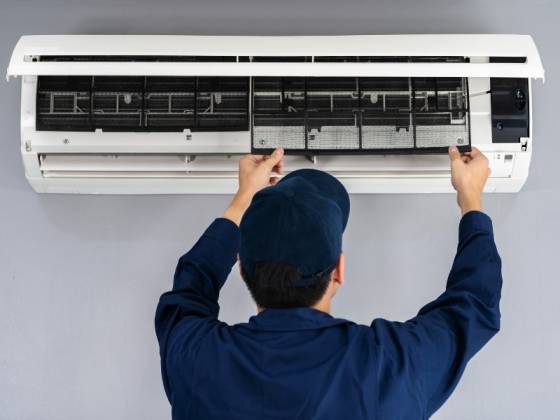
Choosing a residential air conditioning unit for your home is a decision that benefits from more consideration than simply selecting the model with the lowest purchase price or the most recognisable brand name. The system you install will affect your home’s comfort, energy bills, and the quality of your indoor environment for many years, so taking the time to understand the factors that determine whether a unit is well-matched to your specific home and usage requirements is a genuinely worthwhile investment of effort before committing to a purchase and installation.
Understanding Capacity and Sizing
The single most important technical specification of any residential air conditioning unit is its cooling and heating capacity, measured in kilowatts. A unit that is too small for the space it serves will run continuously at maximum output without achieving the target temperature during periods of peak demand. A unit that is significantly oversized will cycle on and off rapidly, failing to run for long enough to dehumidify the air effectively and creating the uncomfortable damp chill that characterises rooms cooled by oversized equipment.
Correct sizing requires a proper heat load calculation that accounts for the floor area, ceiling height, and volume of the space, the thermal insulation performance of the walls, roof, and glazing, the orientation of the room relative to the sun, and the heat contribution of occupants, lighting, and electrical equipment within the space. A professional assessment by an experienced installer will determine the appropriate capacity range for each room and recommend a unit specification that delivers reliable, efficient performance across the full range of seasonal conditions.
System Types Available for Residential Use
The most widely installed residential air conditioning unit type in the UK residential market is the wall mounted inverter split system, comprising a slim indoor unit mounted high on an interior wall and an outdoor unit positioned externally on a wall, roof, or ground level plinth. This configuration suits the majority of individual room applications and is available in capacities from approximately 2kW to 7kW, covering the full range of typical residential room sizes from compact bedrooms through to large open-plan living areas.
For homeowners who need to condition multiple rooms without installing multiple outdoor units, multi-split systems connect between two and five indoor units to a single outdoor unit, with each indoor unit independently controlled. This configuration is often more practical and cost-effective than multiple single-split systems for properties where several rooms require conditioning, as it reduces the number of outdoor units required and simplifies the overall installation footprint.

Key Features to Compare When Choosing a Unit
- Inverter technology, which adjusts compressor speed continuously to match the thermal demand of the space rather than switching on and off at full power, delivering more stable temperatures and significantly lower energy consumption than non-inverter alternatives
- Domestic air conditioning installation of units with high SEER and SCOP ratings the seasonal cooling and heating efficiency figures ensures the system performs efficiently across the full range of temperatures experienced throughout the year rather than just under the peak conditions used for laboratory efficiency measurements
- Noise levels at the indoor unit, specified in decibels, are particularly important for bedroom installations where even moderate background noise from the air conditioning system can affect sleep quality
- Air purification features including HEPA-grade filtration, allergen removal, and antimicrobial coating of heat exchange surfaces, which improve indoor air quality in addition to managing temperature
- Smart control capability through Wi-Fi connectivity and manufacturer applications, which allow remote temperature management, schedule programming, and energy monitoring from a smartphone
- Residential air conditioning unit models from established manufacturers with strong aftercare networks ensure spare parts availability, technical support, and qualified service engineers throughout the system’s operational life
Planning the Installation in Your Home
The installation of a domestic air conditioning installation in a residential property requires careful planning to achieve a result that is both functionally effective and aesthetically acceptable within the home environment. The indoor unit should be positioned to distribute conditioned air evenly across the room without directing airflow directly onto seating positions or beds, as this creates discomfort even when the overall room temperature is at the target setpoint.
Outdoor unit positioning is subject to permitted development rules for residential properties and must consider noise impact on neighbouring properties, aesthetic impact on the building facade, and practical access requirements for future maintenance. In terraced properties or flats where external space is limited, roof-mounted or rear-elevation positions may be the only viable options, and these should be assessed by an experienced installer before system selection is finalised.
The Importance of Professional Installation
The performance of any domestic air conditioning installation is determined as much by the quality of the installation as by the specification of the equipment. Refrigerant pipework that is not correctly sized, purged, and pressure-tested before charging will contain contamination and moisture that accelerates compressor wear. Electrical connections that are not properly rated and protected present both safety and reliability risks. Commissioning that does not verify system pressures, refrigerant charge, and control settings leaves the system operating below its designed performance level from the outset.
Hamilton Air Conditioning Ltd provides professional residential air conditioning unit supply and domestic air conditioning installation services across London, helping homeowners navigate the selection process and achieve installations that deliver reliable, efficient comfort for many years after the initial investment.