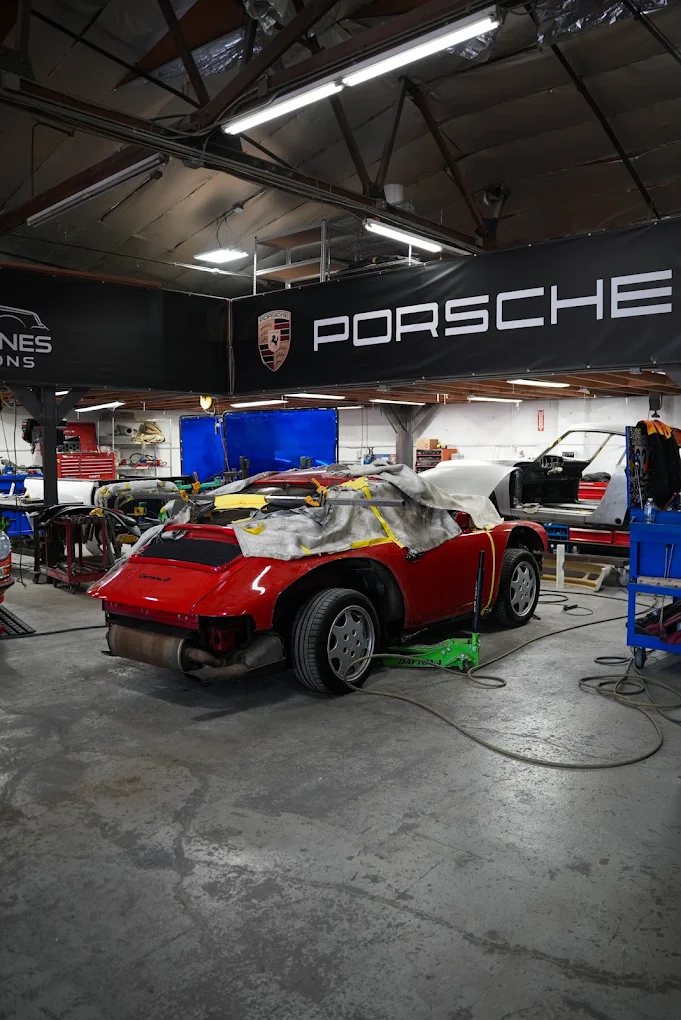
Many successful restorations aren’t defined by dramatic upgrades—they’re defined by the mistakes that were avoided along the way. Experienced restorers know that careful preparation often matters more than speed, and attention to detail consistently produces better long-term results.
One thing I’ve noticed over the years is that many first-time owners become excited about paint colors or engine upgrades before they’ve even confirmed that the chassis is structurally sound. It’s an understandable reaction, but a Porsche restoration should always begin with the foundation rather than the finishing touches.
Starting Without a Clear Restoration Plan
One of the most common mistakes is beginning a project without defining the end goal.
Ask yourself questions such as:
- Will the car be factory-correct?
- Is it intended as a weekend driver?
- Will subtle performance upgrades be included?
- Is originality the highest priority?
Every decision—from suspension selection to interior materials—should support that vision.
Changing direction halfway through a restoration often leads to unnecessary work and incompatible modifications.
Underestimating Rust Damage
Rust is one of the biggest challenges in classic Porsche restoration.
Surface corrosion may appear minor while concealing significant structural deterioration underneath.
Areas that deserve careful inspection include:
- Floor pans
- Rocker panels
- Battery trays
- Wheel arches
- Window channels
- Suspension mounting points
Ignoring rust or simply covering it with filler almost always creates larger problems later.
Proper repairs involve removing damaged metal and protecting repaired areas against future corrosion.
Focusing on Appearance Before Structure
Fresh paint can transform a vehicle visually, but cosmetic improvements should never come before structural repairs.
Experienced restorers prioritize:
- Chassis condition
- Frame alignment
- Suspension mounting points
- Brake systems
- Steering components
Once these foundations are properly restored, bodywork and refinishing can proceed with confidence.
This sequence helps prevent completed cosmetic work from being disturbed later.
Replacing Original Parts Too Quickly
It’s tempting to replace every aging component with something new.
However, many original Porsche parts offer superior fit and authenticity compared to some aftermarket replacements.
Whenever practical, consider restoring:
- Factory trim
- Original hardware
- Gauges
- Wheels
- Interior components
- Mechanical assemblies
Preserving original parts often enhances both the vehicle’s character and historical integrity.
Insider Tip
Before replacing a factory component, ask whether it can be professionally restored instead. Many original Porsche parts respond remarkably well to careful refurbishment, preserving authenticity while maintaining excellent functionality.
Ignoring Documentation
As restoration progresses, it’s surprisingly easy to forget how components were originally assembled.
Good documentation includes:
- Disassembly photographs
- Hardware organization
- Wiring layouts
- Paint codes
- Parts lists
- Progress records
Detailed documentation simplifies reassembly and provides valuable reference material for future maintenance.
It also demonstrates the quality of the restoration if the vehicle is ever sold.
Choosing Parts Without Considering Compatibility
Individual upgrades may seem appealing on their own, but successful restorations consider how every component works together.
For example:
- Suspension upgrades should complement wheel selection.
- Brake improvements should match vehicle performance.
- Engine modifications should consider cooling capacity.
- Electrical upgrades should support modern accessories.
Balanced systems consistently outperform collections of unrelated modifications.
Rushing the Bodywork
Body preparation often requires more time than owners initially expect.
Quality metalwork includes:
- Rust repair
- Panel fitting
- Dent correction
- Gap adjustment
- Surface preparation
These steps determine how the finished paint will appear.
Even the highest-quality paint cannot disguise uneven bodywork indefinitely.
Neglecting the Electrical System
Electrical issues are common in older vehicles.
Rather than simply repairing visible faults, experienced restorers inspect:
- Wiring harnesses
- Grounds
- Connectors
- Fuse panels
- Charging systems
Addressing these areas during restoration improves long-term reliability while reducing troubleshooting after completion.
Insider Tip
When removing wiring during disassembly, label both ends of every connector instead of relying solely on photographs. Months later, those simple labels often save hours of confusion during final assembly.
Forgetting About the Driving Experience
It’s easy to focus on appearance throughout a restoration.
However, the finished Porsche should also be enjoyable to drive.
Areas worth careful attention include:
- Steering feel
- Suspension tuning
- Brake response
- Seating position
- Driver ergonomics
- Noise control
Many owners discover that thoughtful refinements in these areas contribute more to everyday enjoyment than dramatic cosmetic modifications.
Learn from Experienced Porsche Restoration Professionals
Every restoration presents unique challenges, which is why learning from experienced professionals can be invaluable. Educational resources covering fabrication, collision repair, rust restoration, paint preparation, and finishing techniques help owners better understand the decisions involved throughout the process. For practical restoration insights based on real-world projects, you can explore the articles available at perfect lines restoration, where professionals share knowledge gained through years of automotive restoration experience.
Overlooking Final Testing
Completing assembly doesn’t necessarily mean the restoration is finished.
Before considering the project complete, experienced builders verify:
- Wheel alignment
- Brake performance
- Suspension operation
- Electrical systems
- Cooling performance
- Panel fitment
Road testing often reveals small adjustments that improve both reliability and driving enjoyment.
These refinements are a normal part of a well-executed restoration.
Expecting Everything to Go Exactly as Planned
Every restoration uncovers unexpected discoveries.
Hidden corrosion, previous repairs, worn components, or difficult-to-source parts are all common.
Owners who anticipate some flexibility generally enjoy the process more because they understand that careful craftsmanship often requires adapting as new information becomes available.
Patience is rarely wasted during a Porsche restoration.
Final Thoughts
A successful Porsche restoration isn’t simply about replacing worn parts or applying fresh paint. It’s about making thoughtful decisions that preserve the vehicle’s engineering, originality, and long-term reliability. Avoiding common mistakes—such as overlooking structural repairs, rushing bodywork, replacing original components unnecessarily, or neglecting documentation—creates a stronger foundation for the entire project.
Also read for more information so click here.