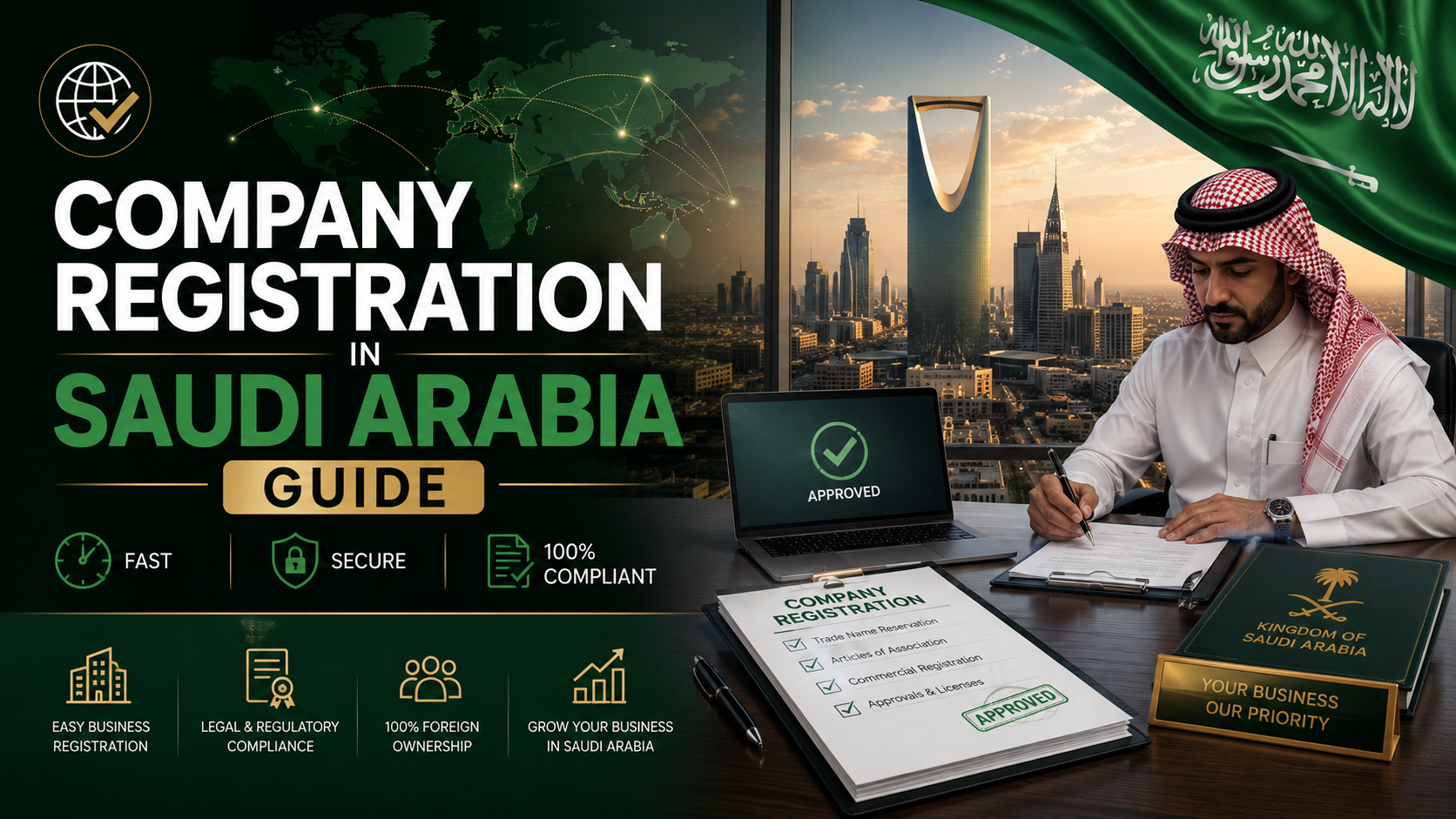
Few countries have changed how foreign investors are treated as fast as Saudi Arabia has over the last few years. Vision 2030 isn’t just a slogan on government websites it’s translated into a genuinely different regulatory experience, especially since a new Investment Law took effect in February 2025. Anyone researching company registration in Saudi Arabia today is looking at a process that’s meaningfully faster, more digital, and less dependent on a local partner than it was even three or four years ago. That said, “faster” doesn’t mean “simple,” and understanding the sequence still matters a great deal.
MISA Comes Before Everything Else
The starting point for any foreign investor is the Ministry of Investment of Saudi Arabia, or MISA the successor to the old SAGIA authority. Saudi nationals register directly with the Ministry of Commerce, but foreign investors must first be vetted and approved by MISA before they can take that same step. Under the reformed Investment Law, this approval is increasingly issued as an Investment Registration Certificate rather than the older “foreign investment license” terminology, and the shift reflects a broader move toward a registration-led model rather than the old, heavier licensing regime. Whatever it’s called on the certificate, this MISA approval is the non-negotiable first gate that every foreign entrant has to pass through before company registration in Saudi Arabia can proceed any further.
Choosing Your License and Legal Structure
MISA offers several license categories — service, commercial, industrial, real estate, and entrepreneur licenses among them — and picking the right one shapes your minimum capital requirements, permitted activities, and compliance obligations downstream. Most foreign investors in consulting, IT, or professional services opt for a service license and structure their business as an LLC, since 100% foreign ownership is available in the large majority of sectors and, for many service categories, minimum capital requirements have been substantially eased to support smaller entrants. Larger operations sometimes use a joint-stock company structure instead, particularly if outside investors will eventually be brought in. A handful of regulated sectors — banking, insurance, aviation, and businesses operating near Makkah and Madinah — still involve additional approvals or ownership limitations, so confirming your activity’s classification early avoids an unwelcome surprise later.
From Application to a Working Company
Once your activity and structure are settled, the practical steps follow a fairly consistent order: gather and prepare your parent company’s documents — commercial registration, financial statements, and Articles of Association — then have them notarized in your home country, legalized through the Saudi Embassy, and translated into Arabic by an approved local translator. This document preparation stage is consistently the part that takes longest, so getting it moving early is the single biggest lever founders have over their own timeline. From there, you register on the MISA portal, select the correct ISIC4 activity classification, and submit your application. Processing has genuinely accelerated — many straightforward cases now see initial approval within three to five business days, though more complex comply globally sectors requiring additional regulatory sign-off can still take several weeks. With MISA approval in hand, the next step is registering with the Ministry of Commerce to obtain your Commercial Registration, followed by enrollment with ZATCA for tax purposes and GOSI for social insurance if you’ll be hiring.
Details That Are Easy to Underestimate
A few requirements catch first-time founders off guard. Every registered business needs a physical commercial lease registered through the Ejar platform to establish its official National Address — a virtual mailbox alone won’t satisfy this. Saudization requirements, managed through the Nitaqat quota system, don’t block your initial registration but do govern your ability to hire and scale afterward, so it’s worth understanding early rather than discovering it once you’re trying to expand your team. Corporate tax generally applies at 20% on the foreign-owned share of profits, though qualifying projects in Special Economic Zones can access significantly reduced rates.
Why the Process Rewards Getting It Right the First Time
Saudi Arabia’s regulators have clearly prioritized speed, but they’ve paired it with strict gatekeeping designed to filter out unprepared or shell applications — mismatched activity codes or incomplete document packs are still the most common source of delay. For anyone serious about entering the market, treating company registration in Saudi Arabia as a sequencing exercise, not just a form to submit, is what separates a three-week process from a three-month one. Done properly, company registration in Saudi Arabia now opens the door to one of the fastest-growing, most reform-driven economies in the world, with full ownership rights and access to a market that increasingly feels built for exactly this kind of international entry.