
Concrete is the most widely used construction material on earth, and it is also one of the most challenging to dispose of responsibly. A single demolished commercial building can generate hundreds of tons of concrete rubble. A residential demolition with a full basement and concrete slab adds tens of thousands of pounds of material to the waste stream. Historically, most of this material went to landfill — a significant environmental burden given concrete’s weight and volume, and an increasingly expensive disposal pathway as tipping fees at construction and demolition waste facilities continue to climb.
The last two decades have seen a significant shift in how the construction and demolition industry manages concrete waste. Advances in mobile crushing technology, growing demand for recycled aggregate in road construction and site preparation, and regulatory pressure to divert construction waste from landfills have combined to make concrete recycling not just environmentally responsible but often economically preferable to conventional disposal.
Understanding how concrete recycling works, where recycled concrete aggregate goes, what quality standards govern its use, and how demolition projects can be structured to maximize recycling rates is increasingly relevant for property owners, developers, and contractors managing projects of all scales.
Why Concrete Recycling Matters
The scale of the concrete waste stream is difficult to overstate. The U.S. Environmental Protection Agency estimates that construction and demolition debris accounts for more than 600 million tons of waste generation annually — more than twice the volume of municipal solid waste. Concrete and concrete-related materials represent the largest single category within that stream.
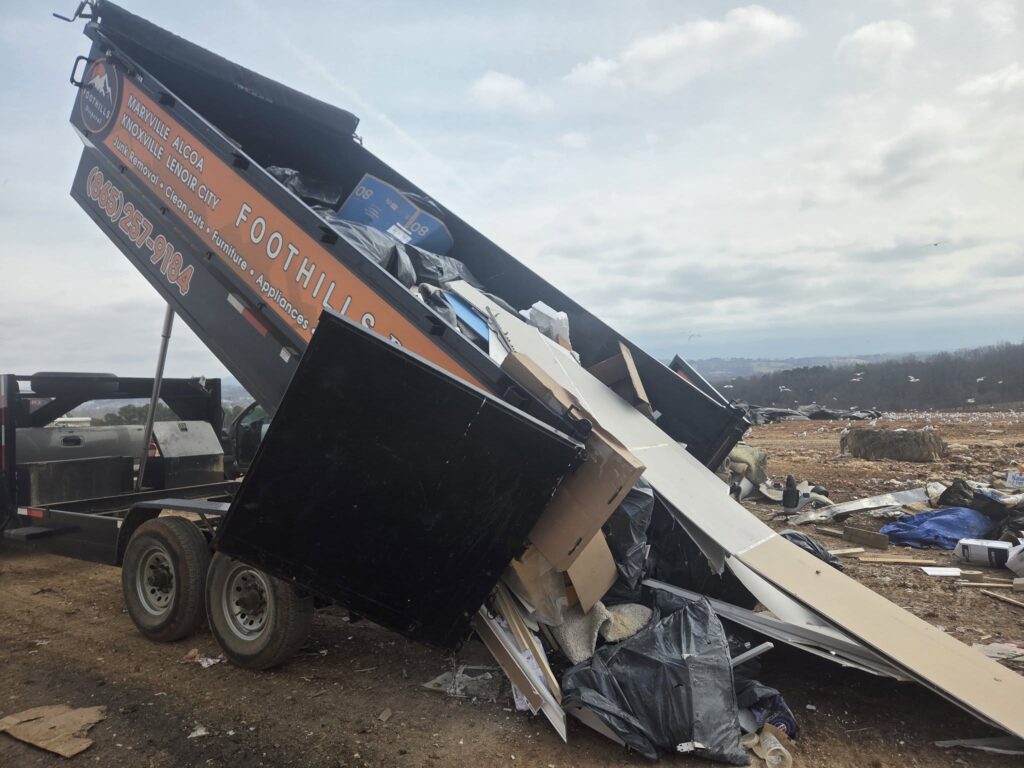
Landfilling concrete has several significant drawbacks. Concrete’s density means it consumes disproportionate landfill volume relative to its weight. As landfills in many regions reach capacity and new landfill siting becomes increasingly difficult, tipping fees for concrete and mixed C&D debris have risen substantially in many markets over the past decade. A project that generates 100 tons of concrete rubble faces a meaningful disposal cost at current tipping fee rates in most U.S. markets.
Recycling concrete addresses these challenges on multiple fronts. It reduces the volume of material entering landfills, extending their useful life. It conserves virgin aggregate resources — sand, gravel, and crushed stone — that would otherwise need to be mined to meet construction demand. And it reduces the transportation energy associated with moving demolition debris to landfill and separately moving virgin aggregate from quarries to construction sites.
From a project economics perspective, diverting concrete from landfill through on-site crushing or delivery to a concrete recycling facility typically reduces or eliminates tipping fees while producing a material that has market value as recycled aggregate.
How Concrete Is Recycled: The Process
Concrete recycling involves reducing demolition concrete rubble to a crushed aggregate material that can be used as a substitute for virgin aggregate in specific applications. The process involves several stages:
Demolition and Initial Sorting
Before crushing can begin, the concrete must be separated from other demolition materials — wood framing, drywall, roofing material, and other debris that would contaminate the recycled aggregate. The quality of the final recycled product is directly related to the cleanliness of the concrete input material.
For reinforced concrete — structural slabs, foundations, and columns that contain embedded steel reinforcement — the steel must be separated from the concrete during or after crushing. This separation is typically accomplished through magnetic separation: a powerful electromagnet positioned downstream of the crusher attracts and removes steel rebar and mesh from the crushed aggregate stream. The recovered steel has scrap value that can partially offset processing costs.
Primary Crushing
The initial size reduction of concrete rubble is accomplished by impact crushers or jaw crushers, which break large concrete pieces into smaller fragments. The primary crusher takes irregular rubble that may range from small chunks to pieces weighing hundreds of pounds and reduces it to a more manageable size — typically under 6 inches — suitable for secondary processing.
Mobile jaw crushers can be brought directly to demolition sites, eliminating the cost and environmental impact of hauling bulky concrete rubble to a fixed-site processing facility. This on-site processing model is particularly attractive for large demolition projects that generate substantial concrete volumes.
Secondary Crushing and Screening
Secondary crushing further reduces the material to specification size, and screening separates the crushed material into different size fractions. A typical concrete recycling operation produces multiple products from a single concrete input stream:
- Coarse recycled concrete aggregate (RCA): Typically 3/4-inch to 1.5-inch material used in road base, site fill, and some structural concrete applications
- Fine recycled aggregate: Smaller particle sizes used in some concrete mix designs and as fine fill material
- Oversize material: Pieces that do not pass the primary screening are returned to the crusher for further reduction
Contaminant Removal
In addition to steel removal by magnetic separation, concrete recycling operations typically address other potential contaminants — tile, brick, and masonry material that may be mixed with concrete from demolition sites, asphalt that may be present in mixed C&D streams, and lightweight material (wood fragments, foam insulation) that can be separated by air classification.
The acceptable contaminant limits for recycled concrete aggregate used in different applications vary by specification. Road base applications are typically more tolerant of mixed material than structural concrete applications, which have very low contaminant thresholds.
Applications for Recycled Concrete Aggregate
The market for recycled concrete aggregate is well-established, though the applications vary significantly in their technical requirements and the quality standards they impose on the recycled material.
Road Base and Sub-Base
The single largest market for recycled concrete aggregate is road base and sub-base construction. Crushed concrete meets the gradation requirements for base course material in most state highway specifications and provides excellent load distribution and drainage characteristics when properly placed and compacted. Road base is by far the most tolerant application from a quality standpoint — the specifications for recycled aggregate in road base are achievable with demolition concrete that would not meet the more stringent requirements for structural concrete applications.
Site Fill and Backfill
Crushed concrete is widely used as fill material in site preparation — filling former basement excavations, raising low areas to design grade, and backfilling around new foundations. The material provides good compaction characteristics and drainage, and its use as fill directly displaces the need to import virgin aggregate for the same purpose.
New Concrete Production
The most technically demanding application for recycled concrete aggregate is as a partial replacement for virgin aggregate in new concrete production. Standards for using recycled aggregate in structural concrete exist in both ASTM and ACI guidance documents, but they impose requirements that many recycled aggregate sources cannot consistently meet — particularly around cleanliness, specific gravity, and water absorption. The presence of old cement paste attached to aggregate particles increases the water absorption of the recycled material compared to virgin aggregate, which must be accounted for in concrete mix design.
For non-structural concrete applications — curbs, sidewalks, paving, and some site structures — the technical barriers to recycled aggregate use are lower, and substitution rates up to 30 percent or more of coarse aggregate are achievable without significant impact on concrete performance.
Drainage and Erosion Control
Crushed concrete serves effectively as a drainage material in applications like French drains, drain fields, and riprap for slope protection and erosion control. Its angular particle shape, which results from the crushing process, provides good interlocking and resistance to movement under hydraulic forces.
Instead of trucking tons of masonry into local landfills, forward-thinking projects rely on on-site concrete recycling and disposal to repurpose aggregate material directly into the site preparation work — reducing hauling costs, tipping fees, and the project’s overall material footprint simultaneously.
On-Site vs. Off-Site Concrete Recycling
The decision between processing concrete on-site with a mobile crusher versus hauling it to an off-site concrete recycling facility depends on several project-specific factors.
On-Site Processing
Bringing a mobile crusher to the demolition site eliminates the cost of hauling heavy concrete rubble to a processing facility, which is typically the largest single cost driver in concrete recycling. For large projects that generate sufficient concrete volume to justify the mobilization of a crusher — typically several hundred tons or more — on-site processing is almost always more economical than off-site processing.
The recycled aggregate produced on-site can be used directly for site preparation work — as fill in former basement excavations, as base material under new paving, or as drainage fill around new foundations. This closed-loop use of recycled aggregate on the project site where it was generated is the most efficient form of concrete recycling from both a cost and environmental perspective.
Off-Site Processing
Smaller demolition projects that generate concrete quantities insufficient to justify mobile crusher mobilization typically deliver concrete rubble to fixed concrete recycling facilities. These facilities accept clean concrete rubble, often at no charge or a modest tipping fee, and process it for sale to road construction contractors and other aggregate users.
The economics of off-site processing depend on the availability and proximity of concrete recycling facilities, current tipping fees at competing landfills, and the specific characteristics of the material being delivered. Clean, well-sorted concrete rubble commands better pricing and acceptance conditions than heavily contaminated mixed material.
Quality Considerations and Specification Compliance
Not all recycled concrete aggregate is equivalent, and the performance of recycled aggregate in any application depends heavily on the quality of the source material and the processing it received.
Source concrete strength. The strength of the original concrete affects the strength of the recycled aggregate. Higher-strength source concrete produces higher-quality recycled aggregate with lower water absorption and better mechanical performance.
Contamination levels. The presence of deleterious materials — clay lumps, lightweight material, asphalt — affects the suitability of recycled aggregate for specific applications. Applications with stringent quality specifications require that contamination be controlled through careful sorting and processing.
Moisture content. Recycled concrete aggregate typically has higher moisture absorption than virgin aggregate due to the porous nature of the old cement paste attached to the aggregate particles. Mix designs using recycled aggregate in concrete production must account for this additional moisture demand.
Testing and certification. For applications where recycled aggregate quality is specified by contract or regulatory requirement, testing against applicable ASTM standards is necessary to verify compliance. Reputable concrete recycling operations maintain testing programs and can provide documentation of aggregate quality for projects that require it.
The Regulatory Context for Concrete Recycling
Regulatory frameworks affecting concrete recycling operate at multiple levels and vary significantly by state and locality.
Waste diversion mandates. Some states and localities have established construction waste diversion requirements — mandating that a minimum percentage of C&D debris be diverted from landfill disposal. California’s Title 24 building energy regulations and several city-level ordinances include waste diversion requirements that apply to demolition projects above specified size thresholds.
Beneficial use determinations. In most regulatory frameworks, recycled concrete aggregate used in beneficial fill applications is not classified as “solid waste” once it has been processed and destined for productive use. This beneficial use determination is important because it removes the recycled material from the regulatory burden of solid waste management — but it may require documentation that the material meets applicable quality standards and is being used in an appropriate application.
Environmental sampling requirements. In some contexts — particularly when recycled concrete is being used in proximity to groundwater or in environmentally sensitive areas — regulatory agencies may require leachate testing to confirm that the recycled material does not introduce contaminants into groundwater. For most demolition concrete from standard residential and commercial buildings, this testing is not required, but it is worth confirming with the local environmental regulatory agency for sensitive applications.
Integrating Concrete Recycling into Demolition Project Planning
For developers and contractors who want to maximize concrete recycling rates on demolition projects, the planning steps that make the difference:
Separate concrete early. The most effective approach to concrete recycling begins with clean concrete segregation during demolition — separating concrete from wood, drywall, roofing material, and other debris at the source rather than attempting to sort mixed debris after the fact.
Plan for steel recovery. Reinforced concrete recycling requires steel separation. Ensuring that the crushing and processing setup includes magnetic separation avoids contaminated recycled aggregate and captures the value of the recovered steel.
Match product to application. Understanding what applications exist for the recycled aggregate produced by the project — and designing the processing to meet the specifications for those applications — ensures that the recycled material can be productively used rather than stockpiled without a market.
Document the outcome. For projects where waste diversion is a regulatory requirement or a project commitment, tracking and documenting the quantities of concrete recycled and the applications in which recycled aggregate was used provides the evidence needed to demonstrate compliance.
Conclusion
Concrete recycling has matured from an experimental practice into a mainstream approach to construction waste management that makes both environmental and economic sense. The technology for processing demolition concrete into usable aggregate is well-established, the markets for recycled aggregate are stable in most regions, and the economics — particularly for on-site crushing on large projects — are increasingly favorable relative to conventional landfill disposal.
For the construction and demolition industry, embracing concrete recycling as a standard practice rather than an optional extra is increasingly a matter of good business as much as environmental responsibility.