With sudden cardiac arrest (SCA), time is your greatest enemy. Nearly 35,000 Canadians fall victim to sudden cardiac arrest outside of a hospital annually. Failure to initiate immediate intervention reduces the survival rate by approximately ten percent per minute.
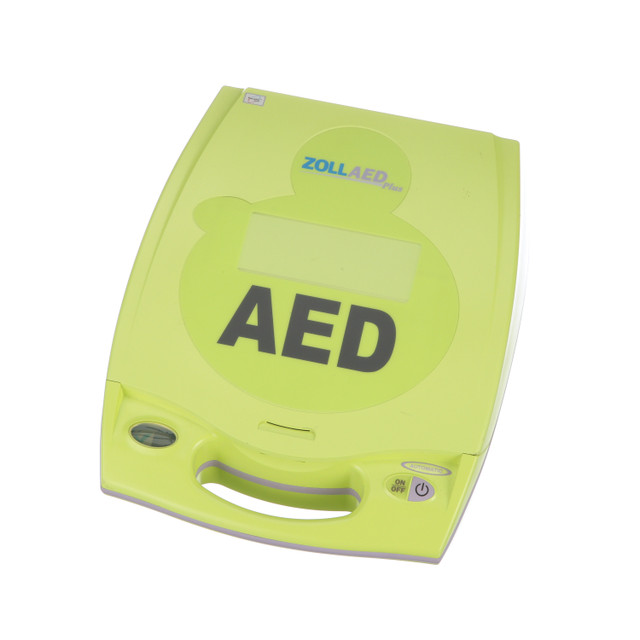
Cardiopulmonary Resuscitation (CPR) works like a manual pump, continuing to send oxygenated blood to your vital organs, including your brain. While CPR saves time, it alone cannot reestablish a chaotic heart rhythm. Here is where a life-saving Automatic External Defibrillator (AED) is vital. A defibrillator is the only external device that can send a precisely calculated jolt to the body to temporarily stun the heart from ventricular fibrillation (chaotic and deadly quivering) and allow your natural pacemaker to assume control of the situation.
Understanding how CPR and AED devices work together is only part of the solution. If you manage a place of business, community facility, or a public building in Canada, you need to understand the laws governing what devices you need and the legal methods of purchasing them to ensure the safest possible experience and complete regulatory compliance.
When is a defibrillator legally mandated in Canada?
Unlike fire extinguishers, the sale of which is regulated by strict building codes that are applied at the provincial level, the legislative framework regarding public-access devices in Canada is currently a bit more fragmented. For the longest time, it was the consensus that the use of automated defibrillators was the optimum method for the response to sudden cardiac arrest outside of the hospital; now, however, there have been several significant developments that transition it from a “highly recommended” response option to a strict statutory requirement.
- Manitoba (Defibrillator Public Access Act)
- Ontario (REACh Act & Bill 141)
- Workplaces and General Occupational Health & Safety (OHS)
The Legal Aspects of the Acquisition of a Defibrillator
In order to ensure that your purchase of a defibrillator is compliant with Canadian law, it is essential to verify that the following three legal conditions have been met:
1. Health Canada Approval (MDL requirement)
All defibrillators available and in use in Canada must be registered with Health Canada. To ensure that a given defibrillator can analyze the electrical activity of the heart accurately and without delivering a shock to a person not experiencing ventricular fibrillation, it undergoes strict evaluation to ascertain the accuracy of the built-in software algorithms that guide the machine to administer the necessary electrical shock. You must make certain the name of the machine is indeed on Health Canada’s Medical Devices Active License Listing (MDALL).
2. Authorized Distribution Network
A defibrillator’s design may be Health Canada-approved, but it is also vital to make sure that it is distributed through an authorized establishment. To purchase AEDs in Canada without concern, only through establishments holding a valid Medical Device Establishment Licence (MDEL) issued by Health Canada or an authorized distributor can your unit be ensured to be in proper order. Certified suppliers of medical equipment are mandated by law to maintain a detailed logbook, including all serial numbers, and are liable for the timely processing of all recalls. Any essential hardware or software recalls made by a manufacturer, and in any case, the receipt of the warning, will reach the supplier automatically through the chain of command and eventually you.
3. Rx Not Required for Purchase
Many organizations are worried that they require a physician’s prescription to purchase an AED in Canada. This is not the case. While a prescription is still necessary for purchase in a number of other jurisdictions internationally, Health Canada does not require a prescription to be issued in order to purchase any automated external defibrillator for either personal or public use. Thus, any member of society, from a homeowner to an operations manager of any organization, can acquire an AED for the purpose of being ready for an emergency.
Post-Purchase Legal Commitments
Once the defibrillator has been placed on-site, it becomes the sole legal responsibility of the owner to ensure that its functionality continues as expected. Compliance with Canadian laws means more than the original purchase—here’s how to maintain the legal protection:
Provincial Registries and EMS Integration
In most Canadian provinces, it is legally mandated or at least strongly encouraged that any device purchased is formally registered with the local emergency medical services. This automatically registers your facility’s exact location (e.g., “Main Street Library, 3rd floor, near water fountain”) into the 911 dispatcher’s database. During a 911 call, a bystander will immediately know exactly where to find the unit on-site to begin administering a rescue.
Making Your Investment Legally Sound
For any life-saving rescue operation, taking any shortcut is out of the question. It is imperative to take all necessary precautions, including verified Health Canada licenses for automated external defibrillators and accurate pad replacement tracking in your system. When organizations begin searching for automated external defibrillators in Canada, searching through authorized suppliers such as the Shock Shop will ensure they find an automated external defibrillator that they will trust for years to come to safeguard their clients, their employees, and their customers.