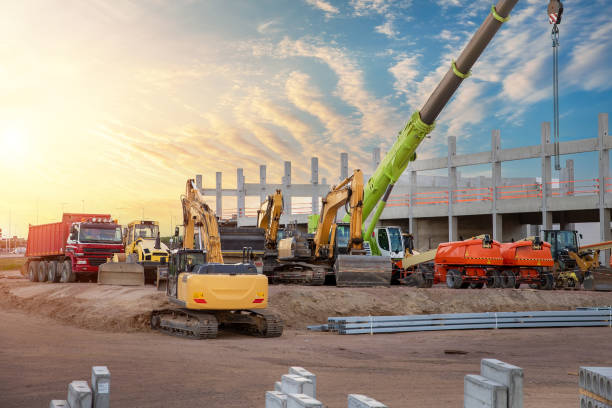
Construction equipment rental has become an increasingly important component of Thailand’s construction ecosystem as contractors seek greater operational flexibility, lower capital expenditure, and improved access to modern machinery. Infrastructure expansion, urban development, industrial projects, and commercial construction are encouraging builders to rely on rental fleets that offer cost-effective solutions while reducing maintenance responsibilities. As project requirements become more specialized, equipment rental providers are expanding their service offerings with technologically advanced machinery and value-added support.
According to a study published by Vyansa Intelligence, the Thailand Construction Equipment Rental Market size was valued at USD 1.02 Billion in 2025 and is projected to reach USD 1.3 Billion by 2032, expanding at a CAGR of 3.53% during 2026-2032.
Rising infrastructure investments, increasing preference for equipment leasing, and growing demand for operational efficiency continue to support the Thailand Construction Equipment Rental Market growth.
Rental Solutions Are Becoming the Preferred Choice for Contractors
Construction projects increasingly require access to a diverse range of heavy equipment without the financial burden of outright ownership. Rental services allow contractors to obtain excavators, cranes, loaders, bulldozers, aerial work platforms, and earthmoving equipment based on project duration and operational requirements.
This approach helps companies optimize capital allocation while avoiding expenses associated with equipment maintenance, storage, depreciation, and fleet replacement. Rental providers also offer technical support and maintenance services, enabling contractors to focus on project execution rather than equipment management.
These changing procurement strategies continue shaping Thailand Construction Equipment Rental Market trends across residential, commercial, industrial, and infrastructure projects.
Infrastructure Development Continues to Drive Equipment Demand
Thailand continues investing in transportation, logistics, and public infrastructure to strengthen economic competitiveness and regional connectivity. Large-scale projects involving highways, railways, airports, ports, and urban transit systems require substantial quantities of construction machinery throughout different phases of development.
The Thailand Board of Investment (BOI) continues promoting investment in infrastructure, transportation, industrial estates, and smart city development to support long-term economic growth. These initiatives encourage both domestic and international contractors to expand construction activities across the country.
As infrastructure programmes progress, equipment rental companies are expected to experience sustained demand for modern construction machinery. These investments continue strengthening the Thailand Construction Equipment Rental Market forecast.
Cost Optimization Encourages Rental Adoption
Purchasing heavy construction equipment requires significant capital investment, making ownership challenging for many contractors, particularly small and medium-sized enterprises. Rental models provide greater financial flexibility by allowing companies to match equipment usage with project schedules while preserving cash flow.
The availability of flexible rental agreements also enables contractors to scale equipment fleets according to project size and seasonal workload. This reduces idle equipment time while improving overall asset utilization.
For project developers managing multiple construction sites simultaneously, rental services provide rapid access to specialized machinery without long-term ownership commitments.
Technology Is Modernizing Equipment Rental Operations
Digital technologies are transforming the construction equipment rental industry by improving fleet management, equipment monitoring, and customer service. Modern rental fleets increasingly incorporate telematics, GPS tracking, predictive maintenance, and remote diagnostics to improve operational efficiency.
Telematics systems allow rental companies to monitor equipment utilization, fuel consumption, maintenance schedules, and machine health in real time. Predictive maintenance reduces unexpected breakdowns while improving equipment availability and extending asset life.
Digital rental platforms also simplify equipment booking, scheduling, fleet tracking, and service management, providing contractors with greater operational transparency and faster equipment deployment.
These technological innovations continue enhancing the competitiveness of the Thailand Construction Equipment Rental Market.
Sustainability Is Influencing Fleet Modernization
Environmental considerations are becoming increasingly important across Thailand’s construction sector. Contractors are seeking equipment that offers improved fuel efficiency, reduced emissions, and compliance with evolving environmental regulations.
Rental providers are gradually expanding fleets with modern machinery incorporating cleaner engines, energy-efficient hydraulic systems, and lower-emission technologies. Since rental companies regularly update their fleets, contractors gain access to newer equipment that meets current environmental and operational standards without bearing replacement costs.
This trend supports broader sustainability objectives while improving productivity across construction projects.
Government Policies Support Construction Activity
Thailand’s long-term economic development strategy continues encouraging investment in transportation infrastructure, industrial development, logistics, tourism facilities, and urban modernization. Government programmes supporting public infrastructure create favourable conditions for construction equipment demand across multiple sectors.
The Asian Development Bank (ADB) has also supported infrastructure financing and sustainable urban development initiatives throughout Thailand, contributing to continued construction activity and equipment utilization. These projects generate opportunities for rental providers serving both public and private sector developments.
Ongoing investment in industrial parks, manufacturing facilities, and commercial real estate further strengthens demand for flexible equipment rental services.
Competitive Landscape
Competition within the industry focuses on fleet availability, equipment reliability, digital fleet management, maintenance support, rental flexibility, and nationwide service coverage. Rental companies continue investing in technologically advanced machinery while expanding service networks to meet the evolving requirements of contractors across Thailand.
Strategic partnerships with equipment manufacturers, infrastructure developers, and construction firms continue strengthening service capabilities and improving fleet utilization throughout the industry.
Future Direction
The future of the industry will be shaped by infrastructure modernization, digital fleet management, telematics, predictive maintenance, automation, and environmentally efficient construction equipment. Continued government investment in transportation and industrial infrastructure, together with growing contractor preference for asset-light operating models, will support sustained demand for rental solutions.
As project complexity increases and financial efficiency becomes increasingly important, equipment rental will remain an integral part of Thailand’s construction ecosystem. These developments position the Thailand Construction Equipment Rental Market for steady long-term expansion.
Conclusion
Thailand’s construction equipment rental industry is evolving through the combined influence of infrastructure development, technological innovation, financial flexibility, and sustainability initiatives. Rental solutions enable contractors to improve operational efficiency while reducing capital investment and equipment management responsibilities. As infrastructure programmes and commercial development continue across the country, construction equipment rental services will remain essential to supporting efficient project delivery.