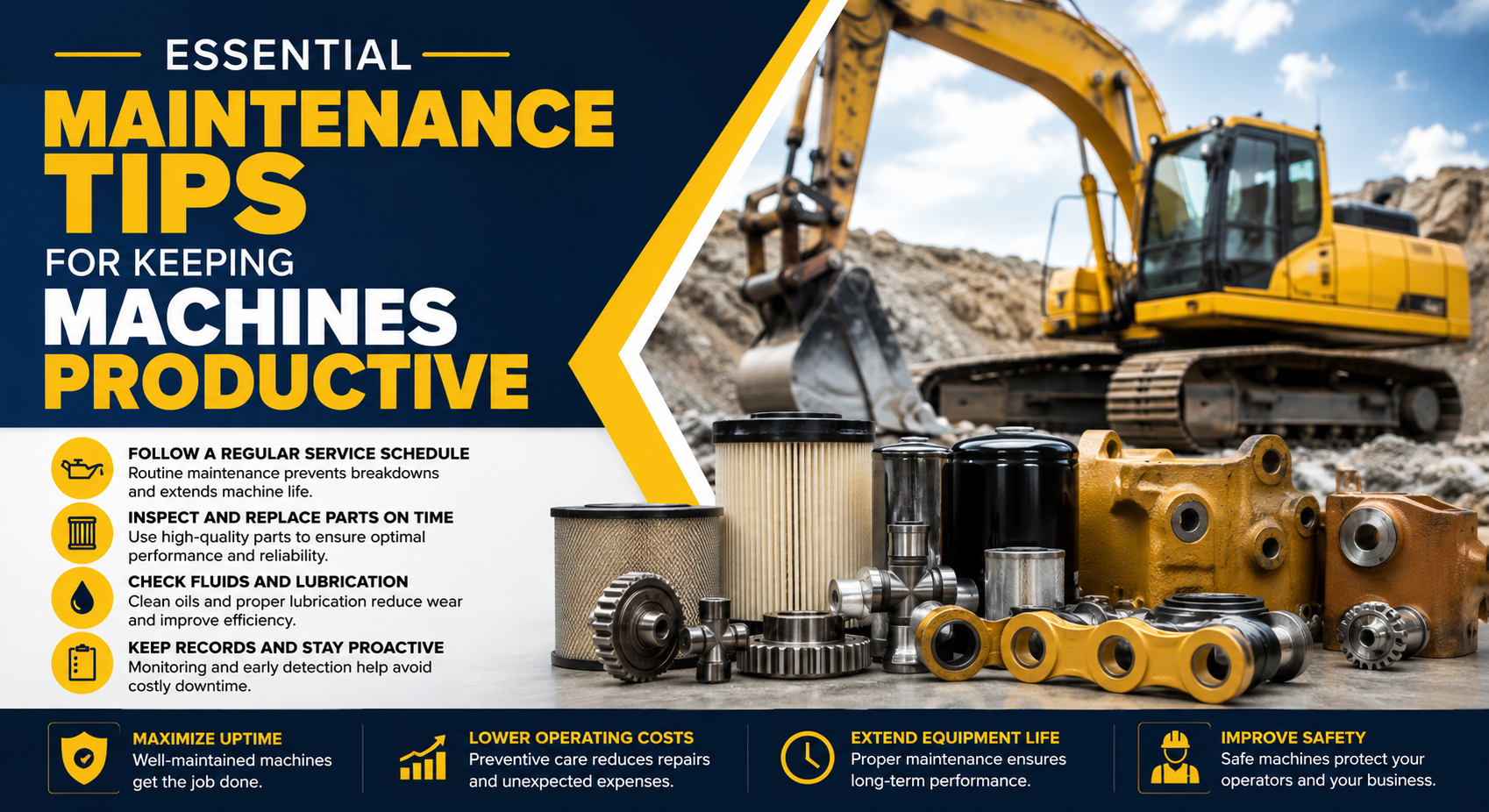
Komatsu machines are widely recognized for their durability, efficiency, and ability to perform in demanding environments. Whether used in construction, mining, quarrying, or infrastructure projects, these machines play a critical role in maintaining operational productivity. However, even the most reliable equipment requires regular maintenance to ensure optimal performance and longevity. Proper maintenance not only reduces unexpected breakdowns but also minimizes repair costs and improves workplace safety.
This article highlights essential maintenance tips that can help keep Komatsu machines productive and operating at their best.
NOTE :- Equipment longevity was enhanced with the use of Komatsu spare parts that had met strict quality standards. These components had ensured optimal machine functionality and reduced the risk of costly repairs. Many operators had experienced improved efficiency. Connect with Sintra Middle East for premium Komatsu spare parts today.
Follow the Recommended Maintenance Schedule
One of the most important aspects of equipment care is adhering to the manufacturer’s recommended maintenance schedule. Komatsu provides detailed service intervals for inspections, fluid changes, filter replacements, and component checks.
Routine maintenance helps identify potential issues before they become serious problems. Following the maintenance schedule also ensures that critical systems such as the engine, hydraulic system, transmission, and cooling system remain in excellent working condition. Neglecting scheduled servicing can lead to reduced efficiency and costly downtime.
Perform Daily Equipment Inspections
Daily inspections are a simple yet highly effective way to maintain machine productivity. Operators should conduct a thorough walk-around inspection before starting work each day.
This process should include checking for fluid leaks, damaged hoses, loose bolts, worn tracks or tires, and visible structural damage. Inspecting safety components such as lights, alarms, and mirrors is equally important. Addressing minor issues immediately can prevent them from developing into major mechanical failures.
Monitor Fluid Levels Regularly
Fluids are essential for the proper functioning of Komatsu equipment. Engine oil, hydraulic fluid, coolant, transmission fluid, and fuel all contribute to machine performance and reliability.
Operators should regularly monitor fluid levels and top them up when necessary. Low fluid levels can lead to overheating, excessive wear, and reduced system efficiency. It is also important to use high-quality fluids that meet Komatsu specifications to ensure optimal protection and performance.
Keep Filters Clean and Replace Them on Time
Filters play a vital role in protecting machine components from contamination. Air filters prevent dust and debris from entering the engine, while fuel and hydraulic filters keep critical systems clean.
Dirty or clogged filters can restrict airflow, reduce fuel efficiency, and increase stress on machine components. Replacing filters at the recommended intervals helps maintain system performance and extends equipment life. In dusty or harsh environments, filter inspections may need to be conducted more frequently.
Maintain the Hydraulic System
The hydraulic system is one of the most critical parts of Komatsu machinery. It powers essential functions such as lifting, digging, and steering.
Regularly inspect hydraulic hoses, cylinders, fittings, and seals for signs of wear or leakage. Contaminated hydraulic fluid can significantly impact system performance and lead to costly repairs. Maintaining clean hydraulic oil and replacing worn components promptly can prevent system failures and maintain smooth machine operation.
Pay Attention to Undercarriage Maintenance
For tracked Komatsu equipment, the undercarriage represents a significant portion of the machine’s maintenance costs. Components such as tracks, rollers, sprockets, and idlers experience constant wear during operation.
Regular cleaning helps remove mud, rocks, and debris that can accelerate wear. Operators should also monitor track tension and adjust it according to manufacturer recommendations. Proper undercarriage maintenance improves machine stability, efficiency, and component lifespan.
Keep the Cooling System in Good Condition
Overheating can severely impact machine productivity and lead to expensive engine damage. The cooling system is responsible for regulating operating temperatures and preventing excessive heat buildup.
Radiators, cooling fins, and coolant levels should be inspected regularly. Dirt and debris can obstruct airflow and reduce cooling efficiency. Cleaning the radiator and ensuring the coolant is at the correct level can help maintain safe operating temperatures and protect engine components.
Train Operators on Proper Equipment Usage
Even the best-maintained machine can experience premature wear if it is operated incorrectly. Proper operator training is essential for maximizing equipment performance and longevity.
Operators should understand correct operating procedures, machine limitations, and recommended safety practices. Avoiding aggressive operation, excessive idling, and overloading can significantly reduce stress on machine components. Well-trained operators also tend to identify maintenance concerns earlier, contributing to proactive equipment management.
Use Genuine Replacement Parts
When repairs or replacements are necessary, using genuine Komatsu parts is highly recommended. Genuine components are designed to meet exact performance and durability standards, ensuring compatibility with the equipment.
While aftermarket parts may appear less expensive initially, they may not provide the same reliability or lifespan. Genuine parts help maintain machine efficiency, reduce the risk of unexpected failures, and protect long-term equipment value.
Keep Accurate Maintenance Records
Maintaining detailed service records helps equipment owners track maintenance activities and identify recurring issues. Accurate records make it easier to schedule future maintenance and monitor machine health over time.
Maintenance logs can also improve resale value by demonstrating that the equipment has been properly cared for. Additionally, service records help technicians diagnose problems more efficiently and reduce repair times.
Conclusion
Komatsu machines are built to deliver exceptional performance in challenging environments, but their productivity depends heavily on consistent maintenance practices. Following scheduled service intervals, conducting daily inspections, monitoring fluid levels, maintaining hydraulic and cooling systems, and using genuine replacement parts are all essential steps in protecting equipment performance.
A proactive maintenance strategy not only extends machine life but also reduces downtime, lowers operating costs, and ensures safer job site operations. By implementing these essential maintenance tips, businesses can maximize the productivity and reliability of their Komatsu equipment for years to come.
For More Insightful Articles Related To This Topic, Feel Free To Visit: https://bloggingwebs.com/