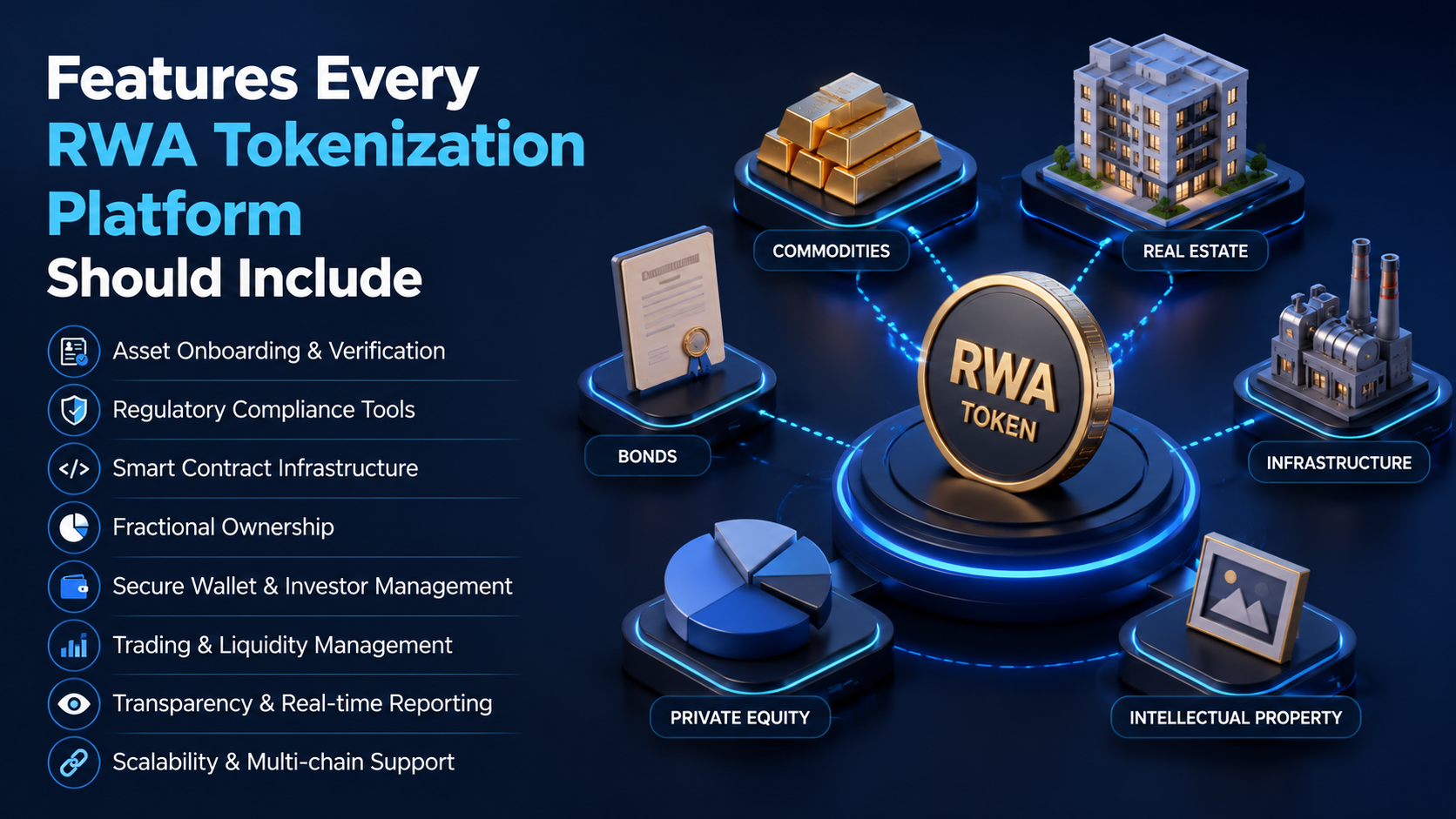
Real World Asset Tokenization is changing how physical and financial assets are represented in digital ecosystems. Businesses, investment firms, real estate companies, and financial institutions are increasingly looking at tokenized assets to improve ownership records, expand investment participation, and simplify asset administration. As this market continues to grow, choosing the right platform architecture has become just as important as selecting the asset itself.
A successful platform is more than a blockchain application that issues digital tokens. It should support legal ownership records, investor management, compliance procedures, security controls, reporting, and long-term maintenance. Every feature should work together so asset issuers, administrators, and investors can perform their activities with confidence.
Organizations planning RWA Tokenization should carefully evaluate the features included in the platform before beginning development. Whether the platform is intended for real estate, commodities, invoices, bonds, collectibles, renewable energy assets, or private equity, several functional areas should always be present.
This article discusses the features every platform should include and explains why each component contributes to an organized and reliable asset management system.
Asset Onboarding and Verification
The first stage of any platform begins with adding assets into the ecosystem. This process should include structured workflows for collecting asset information, supporting legal documentation, ownership records, valuation reports, and regulatory paperwork.
Every asset should pass verification before token issuance begins. Administrators should be able to review submitted documents, approve or reject applications, and maintain complete audit records.
A professional RWA Tokenization Company generally develops onboarding modules that support different asset categories without requiring major modifications. Since every asset type follows different documentation requirements, flexible onboarding workflows are useful for future expansion.
Digital Identity and User Registration
Every participant interacting with the platform should have a verified identity. Investors, issuers, brokers, legal representatives, and administrators all require different permission levels.
The registration system should include:
- User account creation
- Identity verification
- Multi-factor authentication
- Role-based permissions
- Account management
- Activity history
Identity management helps reduce unauthorized access while keeping investor records organized throughout the investment lifecycle.
Many businesses offering RWA Tokenization Services include digital identity verification as part of their platform implementation because regulatory compliance often begins with investor identification.
KYC and AML Compliance Integration
Compliance remains one of the most important areas of Real World Asset Tokenization. Every platform should include Know Your Customer (KYC) and Anti-Money Laundering (AML) verification before investors participate.
Compliance modules may include:
- Identity verification
- Address verification
- Risk assessment
- Sanction screening
- Politically Exposed Person screening
- Document expiration monitoring
Automated verification reduces manual review while helping organizations maintain regulatory records for audits and inspections.
Asset Token Creation Module
After verification, the platform should support token issuance based on asset ownership rules.
The token creation module should define:
- Token supply
- Ownership percentage
- Fractional ownership rules
- Investor allocation
- Lock-up periods
- Token distribution
- Transfer conditions
Different asset classes may require different token structures, making flexibility important during RWA Tokenizaion development.
The token issuance process should also maintain complete historical records from creation until retirement.
Smart Contract Management
Smart contracts execute the business rules associated with tokenized assets. Rather than requiring manual processing, they automatically follow predefined conditions.
The platform should provide tools for:
- Contract deployment
- Contract version control
- Contract upgrades where applicable
- Testing environment
- Event monitoring
- Execution logs
Businesses working with an experienced RWA tokenization development company usually prioritize contract auditing before deployment to reduce operational risks.
Fractional Ownership Management
One of the major reasons businesses adopt RWA Tokenization is the ability to divide expensive assets into smaller ownership units.
Fractional ownership features should include:
- Percentage ownership calculations
- Investor allocation
- Ownership updates
- Multiple investor participation
- Ownership history
- Asset cap table
These functions simplify the management of assets with hundreds or thousands of token holders.
Investor Dashboard
Investors expect access to complete information regarding their holdings.
A dashboard should provide:
- Portfolio overview
- Asset performance
- Investment history
- Token balance
- Dividend history
- Transaction records
- Pending actions
- Document downloads
Instead of navigating multiple systems, investors can review everything through a single interface.
Many organizations offering Real World Asset Tokenization Services consider investor dashboards one of the most frequently used sections of the platform.
Asset Valuation and Price Updates
Asset values may change over time due to market conditions, property appreciation, commodity pricing, or financial performance.
The platform should support periodic valuation updates through authorized administrators.
Useful valuation features include:
- Manual updates
- Third-party valuation reports
- Historical valuation records
- Market price history
- Asset appreciation tracking
Maintaining updated valuations helps investors make informed decisions while improving portfolio reporting.
Document Management System
Every tokenized asset requires legal and financial documentation.
The platform should securely organize:
- Ownership certificates
- Legal agreements
- Insurance documents
- Audit reports
- Valuation reports
- Compliance certificates
- Tax records
Authorized users should access only documents related to their assigned roles.
Document organization also simplifies future audits.
Payment and Settlement Integration
Investors should have multiple payment methods when purchasing tokenized assets.
Supported payment options may include:
- Bank transfers
- Stablecoins
- Cryptocurrency payments
- Digital wallets
- Fiat payment gateways
Settlement tracking should display:
- Payment status
- Pending transactions
- Failed payments
- Completed settlements
- Refund processing
These features improve administrative efficiency without requiring manual reconciliation.
Distribution of Income and Rewards
Many tokenized assets generate recurring income.
Examples include:
- Rental income
- Revenue sharing
- Bond interest
- Dividend payments
- Profit distributions
The platform should automatically calculate investor allocations based on ownership percentages.
This minimizes administrative work while maintaining consistent payment records.
Secondary Marketplace Support
Investors often seek liquidity after acquiring digital asset ownership.
A secondary marketplace allows eligible investors to:
- List tokens
- Purchase available tokens
- Submit offers
- Review transaction history
- Monitor pricing
Marketplace management should include trading restrictions based on applicable regulations.
Organizations investing in rwa tokenization platform development frequently consider secondary trading an important long-term feature because it extends investor participation beyond the initial offering.
Multi-Asset Management
As businesses expand, they may tokenize multiple asset categories.
The platform should support:
- Real estate
- Precious metals
- Agriculture
- Fine art
- Carbon credits
- Infrastructure
- Private equity
- Debt instruments
Managing all assets within one platform simplifies administration and reporting.
Administrative Control Panel
Platform administrators require complete oversight of operations.
Administrative functions should include:
- User management
- Asset approvals
- Investor approvals
- Transaction monitoring
- Platform settings
- Notification management
- Compliance monitoring
- Reporting tools
Centralized administration reduces operational complexity while maintaining organized workflows.
Audit Logs and Activity Monitoring
Every action performed on the platform should generate an activity record.
Logs should include:
- Login history
- Asset modifications
- Investor actions
- Contract updates
- Token transfers
- Administrative changes
- Payment events
These records help during compliance reviews and internal investigations.
Complete historical tracking also assists organizations when resolving operational disputes.
Security Features
Security should be considered throughout platform development rather than after deployment.
Important security measures include:
- Multi-factor authentication
- Encryption
- Wallet protection
- Session monitoring
- Access controls
- Backup systems
- Recovery procedures
- Penetration testing
- Smart contract auditing
Companies specializing in RWA token development generally recommend conducting security assessments before launching production environments.
Reporting and Analytics
Businesses require reports to monitor operational performance.
The reporting system should generate information such as:
- Investor activity
- Asset performance
- Token circulation
- Payment summaries
- Revenue reports
- Compliance records
- Portfolio statistics
Custom report generation allows organizations to meet internal and regulatory reporting requirements without compiling information manually.
Notification Management
Timely communication improves user engagement and administrative efficiency.
Notifications may include:
- Investment confirmation
- KYC approval
- Dividend payments
- Asset updates
- Compliance reminders
- Marketplace activity
- Security alerts
- Document requests
Users should also control their notification preferences through account settings.
Wallet Integration
Digital wallets remain a major component of Real World Asset Tokenization.
The platform should support secure wallet connectivity for:
- Token storage
- Transfers
- Purchases
- Ownership verification
- Payment receipt
Wallet management should be simple for both experienced blockchain users and first-time investors.
API Connectivity
Many organizations integrate tokenization platforms with existing business software.
Common integrations include:
- ERP systems
- CRM platforms
- Banking applications
- Accounting software
- Identity verification providers
- Compliance services
- Payment gateways
API support helps organizations continue using existing business systems alongside their tokenization platform.
Multi-Blockchain Compatibility
Different organizations choose different blockchain networks depending on business requirements.
Supporting multiple blockchain environments provides flexibility for future expansion.
During rwa tokenization platform development, businesses often evaluate compatibility with public, private, or permissioned blockchain networks depending on operational requirements and regulatory considerations.
Regulatory Reporting Support
Compliance requirements continue to evolve across different jurisdictions.
The platform should assist organizations by maintaining records for:
- Investor verification
- Ownership history
- Transaction records
- Tax reporting
- Audit documentation
- Regulatory submissions
Keeping these records organized reduces administrative effort during inspections.
Future Expansion Capability
Business requirements rarely remain unchanged.
The platform should allow future additions such as:
- New asset categories
- Additional investor groups
- Geographic expansion
- Marketplace improvements
- New compliance modules
- Additional payment methods
Planning for future enhancements reduces the need for extensive redevelopment as business operations grow.
Conclusion
Selecting the right platform features is one of the most important decisions in any RWA Tokenization initiative. Asset verification, investor onboarding, compliance, smart contracts, wallet integration, reporting, security, marketplaces, payment processing, and administrative management all contribute to a practical platform that supports long-term business operations. Organizations planning Real World Asset Tokenization should evaluate these features before beginning development so the platform can support future business requirements without unnecessary redesign. Blockchain App Factory provides RWA tokenization development services for businesses seeking reliable RWA Tokenization solutions, including RWA Tokenization Services, Real World Asset Tokenization Services, RWA token development, and complete platform implementation from planning through deployment.
FAQs
1. What is an RWA tokenization platform?
An RWA tokenization platform is a blockchain-based system that converts ownership rights of physical or financial assets into digital tokens. It also manages investor onboarding, compliance, payments, ownership records, and asset administration.
2. Why is KYC important in RWA Tokenization?
KYC helps verify investor identities before they participate in token offerings. It supports regulatory compliance and reduces the risk of fraudulent activities.
3. Can one platform support multiple asset types?
Yes. Modern platforms can manage various asset categories such as real estate, commodities, private equity, infrastructure projects, bonds, and collectibles within a single system.
4. What role do smart contracts play in Real World Asset Tokenization?
Smart contracts automatically execute predefined rules such as token issuance, ownership transfers, dividend distribution, and transaction validation, reducing manual processing.
5. Why is secondary marketplace support useful?
A secondary marketplace allows eligible investors to buy and sell tokenized assets after the initial offering, giving participants more flexibility while maintaining ownership records.
6. How can businesses choose the right RWA tokenization development company?
Businesses should evaluate experience, compliance knowledge, security practices, blockchain expertise, smart contract development capabilities, platform support, and previous project experience before selecting an RWA tokenization development company.