Building wealth takes years of hard work, careful planning, and smart decisions. Protecting that wealth, however, requires an equally thoughtful strategy. Whether you own a successful business, an international investment portfolio, valuable real estate, or intellectual property, safeguarding these assets for the future is just as important as creating them.
This is where a Foundation Asset Holding Structure becomes a valuable solution. Instead of holding assets personally or through multiple companies, a foundation can serve as a dedicated legal entity that owns and manages assets according to the founder’s long-term objectives.
Around the world, entrepreneurs, investors, and family business owners are increasingly using foundation structures to simplify ownership, improve succession planning, and preserve wealth for future generations.
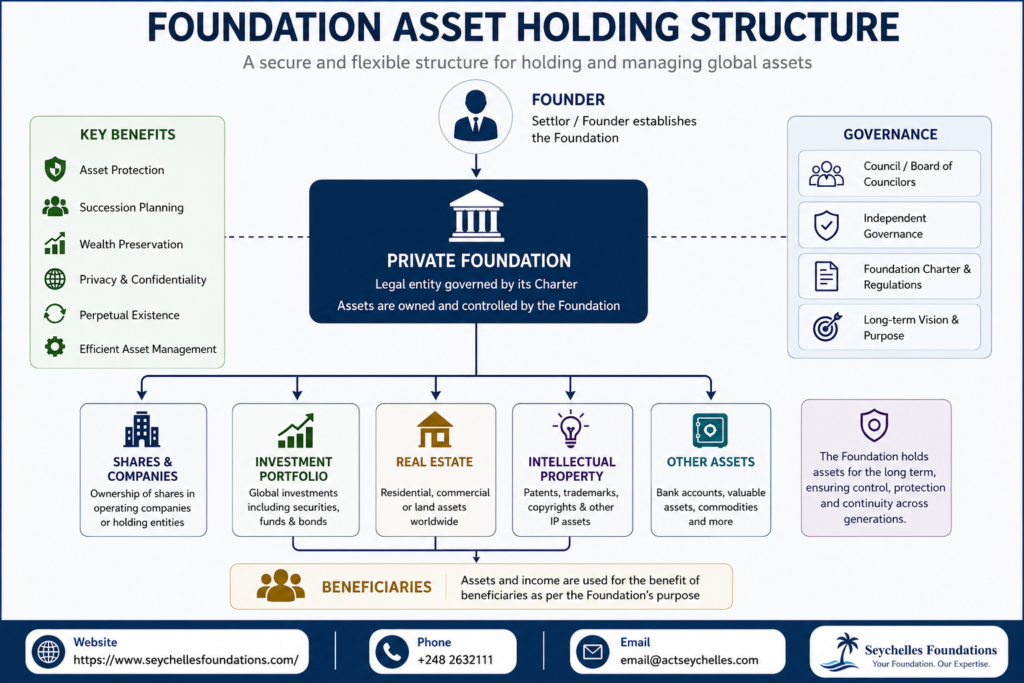
What Is a Foundation Asset Holding Structure?
A Foundation Asset Holding Structure is a legal arrangement in which a private foundation holds ownership of valuable assets instead of an individual. The foundation becomes the legal owner while managing those assets according to its charter, regulations, and the founder’s wishes.
Unlike a traditional company, a foundation has no shareholders. It exists to fulfill a defined purpose, making it an effective vehicle for long-term asset management and continuity.
Assets commonly held include:
- Shares in private companies
- Investment portfolios
- Commercial and residential real estate
- Intellectual property rights
- Bankable assets
- Family businesses
- International investments
By consolidating ownership within a foundation, asset management becomes more structured and organized.
Why Investors Choose a Foundation Asset Holding Structure
Managing assets across different countries or business entities can become increasingly complex over time. A foundation provides a centralized framework that helps simplify ownership while supporting long-term planning.
Many founders choose this structure because it offers stability and continuity without relying on individual ownership.
READ MORE:- Seychelles foundation annual fees
Key Benefits of a Foundation Asset Holding Structure
Long-Term Wealth Preservation
One of the biggest advantages is preserving wealth across generations.
Instead of assets being fragmented through inheritance or ownership changes, they remain under the foundation’s management, ensuring continuity for beneficiaries.
Centralized Asset Ownership
Rather than owning assets through multiple individuals or entities, a foundation brings them together under one legal structure.
This makes administration easier and creates a clearer ownership framework.
Efficient Succession Planning
Succession planning is often one of the biggest challenges for business owners.
A foundation allows assets and business interests to continue being managed according to predetermined rules, reducing uncertainty during generational transitions.
Asset Protection
A properly established foundation can separate ownership from personal holdings, creating a structured approach to managing valuable assets.
Professional legal advice should always be obtained to understand how applicable laws affect asset protection in your jurisdiction.
Privacy
Many jurisdictions provide a level of confidentiality regarding foundation ownership and governance, making foundations attractive for legitimate wealth management purposes while complying with applicable legal and regulatory requirements.
Assets That Can Be Held
A Foundation Asset Holding Structure is flexible enough to accommodate various asset classes.
These commonly include:
Company Shares
Business owners frequently transfer company shares into a foundation to simplify long-term ownership.
Investment Portfolios
Stocks, bonds, mutual funds, and other financial investments can be managed under one structure.
Real Estate
Residential properties, commercial buildings, and international real estate holdings may all be owned through a foundation.
Intellectual Property
Patents, trademarks, copyrights, software rights, and licensing agreements can become foundation-owned assets.
Family Businesses
Many family-owned enterprises use foundations to preserve ownership across multiple generations.
Who Should Consider This Structure?
A Foundation Asset Holding Structure can be suitable for:
- Entrepreneurs
- Business owners
- High-net-worth individuals
- Family offices
- International investors
- Property investors
- Wealth management professionals
Each structure should be tailored to individual legal, tax, and commercial objectives.
Foundation vs Traditional Holding Company
Although both structures can own assets, there are important differences.
| Foundation Asset Holding Structure | Traditional Holding Company |
|---|---|
| No shareholders | Owned by shareholders |
| Operates according to its charter | Controlled by company owners |
| Designed for long-term continuity | Ownership may change through share transfers |
| Often used for succession planning | Primarily used for commercial ownership |
| Focuses on preserving assets | Focuses on corporate operations and investments |
The right option depends on your long-term objectives and professional advice.
Choosing the Right Jurisdiction
Selecting the appropriate jurisdiction is one of the most important decisions when establishing a foundation.
Factors to consider include:
- Legal framework
- Regulatory environment
- Governance requirements
- Compliance obligations
- Political stability
- Availability of professional corporate services
A reputable jurisdiction combined with experienced advisers helps ensure the structure meets both legal requirements and your strategic goals.
Common Mistakes to Avoid
When establishing a foundation, avoid:
- Choosing a structure without professional legal advice
- Ignoring ongoing compliance obligations
- Failing to define clear governance rules
- Overlooking succession planning objectives
- Using outdated documentation
Proper planning from the beginning saves time and reduces future complications.
Final Thoughts
A Foundation Asset Holding Structure offers a practical and flexible way to own, manage, and preserve valuable assets over the long term. Whether your focus is protecting family wealth, simplifying business ownership, or planning for future generations, a foundation can provide an organized framework that supports these objectives.
Every family’s circumstances and business goals are different. Before creating a foundation, consult qualified legal, tax, and corporate professionals to ensure the structure is appropriate for your needs and complies with the laws of the relevant jurisdiction.
Frequently Asked Questions
What is a Foundation Asset Holding Structure?
It is a legal structure where a foundation owns and manages assets such as business shares, investments, real estate, and intellectual property according to its governing rules.
What assets can a foundation hold?
A foundation may hold company shares, investment portfolios, real estate, intellectual property, bankable assets, and other investments, depending on applicable laws.
Who should use a Foundation Asset Holding Structure?
It may be suitable for entrepreneurs, investors, business owners, family offices, and individuals seeking long-term wealth management and succession planning.
Can a foundation own a company?
Yes. Subject to the laws of the jurisdiction, a foundation can hold shares in private companies as part of its asset portfolio.
Why is succession planning important?
Succession planning helps ensure that assets and business interests continue to be managed according to the founder’s intentions, providing continuity for future generations.