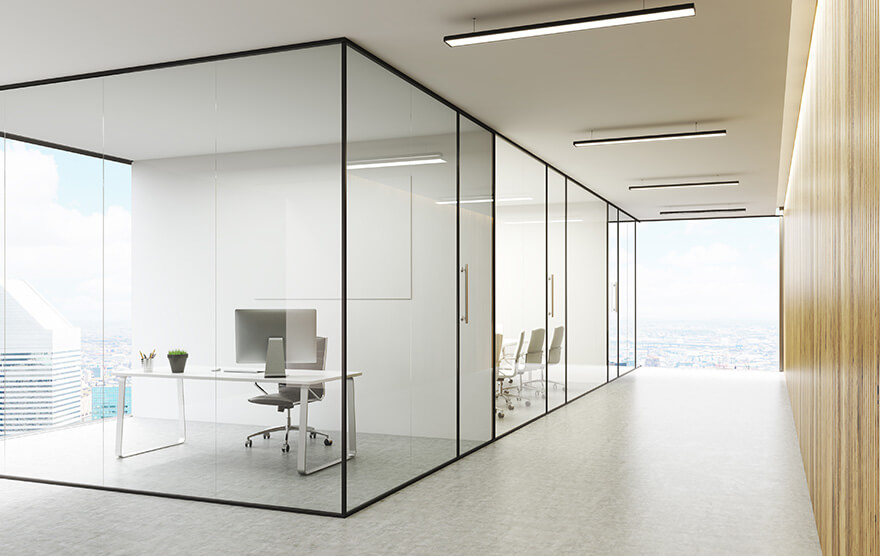
Modern interiors should be airy, bright, and flexible. Conventional brick or plaster walls break up a space, but they also construct obstacles between two spaces.
obstructing natural light and traffic while rendering everything small and claustrophobic in almost all cases. A well-designed glass partition wall specializes in creating zones without compromising the integrity of the space.
This is also a common approach in offices, homes, hotels, clinics, restaurants, shops, outlets, salons, and commercial buildings.
It can provide privacy, enhance the design and aesthetics of layouts, and lend a sophisticated touch with no stonewall-like heavy look.
This guide includes the primary types, benefits, applications, costs, and design ideas, as well as installation steps and choices for projects carried out in 2026 and later.
What Is a Glass Partition?
A glass partition wall is primarily a non-load-bearing internal wall that is mostly composed of glass panels.
It creates division between rooms, workspaces, working areas, and functional segments while keeping the flow of natural light and the viewer’s line open.
The panels could be made of tempered, laminated, frosted, tinted, fluted, or acoustic glass. The system can be stationary, sliding, framed, semi-framed, or frameless, depending on the project.
While some partitions run from floor to ceiling, others combine glass with a solid lower section.
Permanent cabins, meeting rooms, and reception areas are more suited for fixed systems. The overall design may vary; therefore, sliding or movable systems would work better.
It depends on safety, privacy, sound control, interior design, and space planning.
Famous Glass Partition Wall Types
Frameless Glass Partitions
A frameless glass partition wall provides a clean, almost seamless look. Slim channels retain the panels with minimal components, allowing for maximum light and visibility. It is very suitable for executive offices, meeting rooms, luxury villas and homes, reception areas, and premium shops.
Framed Glass Partitions
Framed systems use aluminium, steel, or timber frames to support the glass panels. They have a more defined visual appearance and make it easier to incorporate doors, seals, blinds, or acoustic features.
Black frames are associated with industrial interiors, while silver or white profiles provide a lighter appearance for corporate workplaces.
Frosted Glass Partitions
Frosted glass allows light to enter, but you cannot see through it directly. It works well in clinics, bathrooms, HR offices, consultation rooms, and private cabins.
Full frosting allows for more privacy, while frosted bands provide privacy at the sitting level without closing the upper view.
Sliding Glass Partition Walls
A sliding glass partition wall is more space-efficient because it does not require the swing range of a regular door.
Apartments, restaurants, conference rooms, training spaces, and tight offices are common use cases. Long-term performance is improved with quality rollers, tracks, and soft-close hardware.
Double-Glazed Acoustic Partitions
Double-glazed systems use two glass layers with sealed framing for enhanced sound control. They are frequently used in boardrooms, interview rooms, classrooms, and private offices.
Ask about the performance of the entire system because doors, gaps, ceilings, and seals affect the final result.
Smart Glass Partitions
Smart glass or switchable glass is a type of glass that changes from transparent to opaque under electrical control. It allows for privacy without the need for an actual curtain or permanent frosting.
In 2026, it is a luxury option and an excellent choice for meeting rooms, medical facilities, executive offices, washrooms, and high-end residences.
Major Benefits of Glass Partitions
A glass partition wall provides the significant benefit of separating space without closing off the interior. Natural daylight travels much further, making rooms feel more airy and relaxed.
It can even enhance offices and apartments that are small. People can still see one another visually, while teams, rooms, and living zones remain well-organized.
Key Benefits Include the Following:
A modern and professional appearance
Better visual connection between teams
Privacy through frosting, tinting, blinds, and smart glass
Faster installation than some masonry systems
Lighter structural load for interior renovations
Easier accommodation with demountable or mobile systems
Quick cleaning and extended lifespan
Branding with printed film, etched graphics, and logos
Transparent, decorative, glossy, and sound-absorbing finishes
From our project experience, the best result comes from maintaining a controlled level of openness while considering real-day-to-day needs. It does not matter how attractive the wall is; a clear wall in a meeting room may still require frosting, tight seals, and a properly fitted door.
Where Can Glass Partition Walls Be Used?
A glass partition wall is a solution that works in various interiors where there is a need for light, visibility, and separation.
Offices and Corporate Buildings
It can create executive cabins, meeting rooms, reception areas, interview rooms, and collaboration spaces. An office glass partition provides an open layout while creating distinct spaces for each team.
Homes and Apartments
Glass partitions can be used in home offices, kitchens, dining areas, sitting rooms, wardrobes, and shower zones. One of their most popular applications is dividing an open-plan area without sacrificing openness. A small sliding glass wall partition can separate a kitchen or work corner.
Retail, Hospitality, Healthcare, and Education
They can be used in showrooms, malls, restaurants, hotels, salons, gyms, clinics, laboratories, libraries, and classrooms. The glass and framing must be appropriate for privacy, life safety, acoustics, traffic levels, and maintenance requirements. Regulated locations may require specialist fire-rated assemblies.
Glass Partition Design Ideas for 2026
A glass partition wall should feel connected to the complete interior rather than looking like an unnecessary extension. Strong design options include:
Black-framed industrial-style grids
Full-height frameless glass
Frosted bands at eye level
Fluted or textured decorative glass
Sliding dividers for flexible layouts
Bronze, grey, or coloured tints
Integrated blinds within double glazing
Company logos and branded films
Glass combined with timber or aluminium
Curved glass for high-end lobby areas
On-demand privacy with smart glass
The design should coordinate with the flooring, ceiling, lighting, furniture, doors, and brand identity. While a dramatic black frame could look stylish in a creative office, it can feel oppressive inside a tight and dark room.
How Much Is the Price of a Glass Partition?
The cost of a glass partition wall in the UAE differs greatly. Entry-level systems may start from a few hundred dirhams per square metre, while customized soundproof, curved, double-glazed, or smart-glass models are built to order and can cost significantly more.
The Quotation Is Affected By:
Glass type, thickness, height, and total area
Framed, semi-framed, or frameless construction
Single or double glazing
Clear, frosted, laminated, tinted, fluted, or smart glass
Number and style of doors
Quality of frames, locks, hinges, handles, tracks, and seals
Acoustic performance requirements
Printing, frosting, logos, and special finishes
Site access and installation complexity
Do not compare quotations only by the square meter rate. One price might not include transportation, VAT, access equipment, removal work, or finishing. Ask for a written breakdown of materials, labor, hardware, delivery charges, warranty, and completion time.
Glass Partition Installation Process
A standard procedure for the professional installation of a glass partition wall typically consists of the following:
Final measurements are taken at the site.
The layout, privacy, access, and sound-control requirements are checked.
The glass, thickness, frames, hardware, and doors are selected.
Custom panels and crossbeams are prepared.
Floors, ceilings, and adjoining walls are inspected and prepared.
Channels, frames, and glass panels are installed.
Doors, hinges, locks, handles, seals, and closers are fitted.
The system is aligned, sealed, tested, and inspected.
The glass is cleaned, and the final handover is completed.
Incorrect measurements can create uneven gaps, rattling, poor door movement, weak seals, or panel stress. Glass fabrication should take place only after the final site conditions and finished floor levels have been approved.
Selecting the Ideal Glass Partition
The first step in selecting the ideal glass partition wall is determining the purpose of the room. The requirements of a reception divider are very different from those of a medical consultation room or confidential boardroom.
Determine the required amount of privacy. Clear glass suits open spaces, while frosted glass, blinds, laminated glass, or smart glass may be more suitable for private rooms.
Next, consider noise. While basic single glazing can reduce some sound, higher acoustic separation requires a complete system that includes the right glass, frame, seals, ceiling treatment, and doors.
Never treat safety as optional. Select appropriate safety glass and verify that the assembly complies with all occupancy, building, and fire-code requirements applicable to the property.
Look at frame quality, edge finishing, hardware, warranties, written specifications, and previous work. Low-cost deals can become expensive if doors start malfunctioning, seals separate, or the partition fails to provide the expected level of privacy and protection.
Maintenance and Cleaning Tips
A glass partition wall is simple to maintain with regular cleaning and basic inspections.
Use a gentle, non-abrasive cleaner and a soft microfiber cloth. Avoid rough pads that may scratch the glass, film, or metal surfaces. Dust sliding tracks and floor channels. Check hinges, handles, locks, rollers, silicone, and door closers.
Do not overlook worn fittings, broken edges, torn seals, or abnormal door movement. Fix alignment problems when a door goes out of adjustment and replace broken glass without delay. Simple care preserves clarity, appearance, safety, and proper operation.
FAQs
Are Glass Partition Walls Safe?
Yes, if appropriate safety glass is used with suitable thickness, reliable fittings, and professional installation. The specification will vary according to panel size, location, space occupancy, and building codes. Tempered or laminated glass is commonly used.
Do Glass Partition Walls Provide Sound Privacy?
They can reduce sound, but performance varies. Double glazing, laminated acoustic glass, fully sealed frames, proper perimeter seals, and suitable doors will outperform a standard single-glazed system.
Which Is the Best Glass for Office Glass Partitions?
Clear tempered glass is suitable for an open office. Frosted glass is effective in private enclosures, while laminated or double-glazed systems are more appropriate for areas that require enhanced speech privacy.
How Long Does Installation Take?
A small project may take very little time after fabrication. Large areas, bespoke frames, curved panels, smart glass, numerous details, and limited site access may require additional time.
Is It Possible to Change the Glass Partition Later?
Demountable walls and movable systems are generally easier to modify than brick walls. Reuse depends on the new measurements, panel condition, frame design, and door configuration.