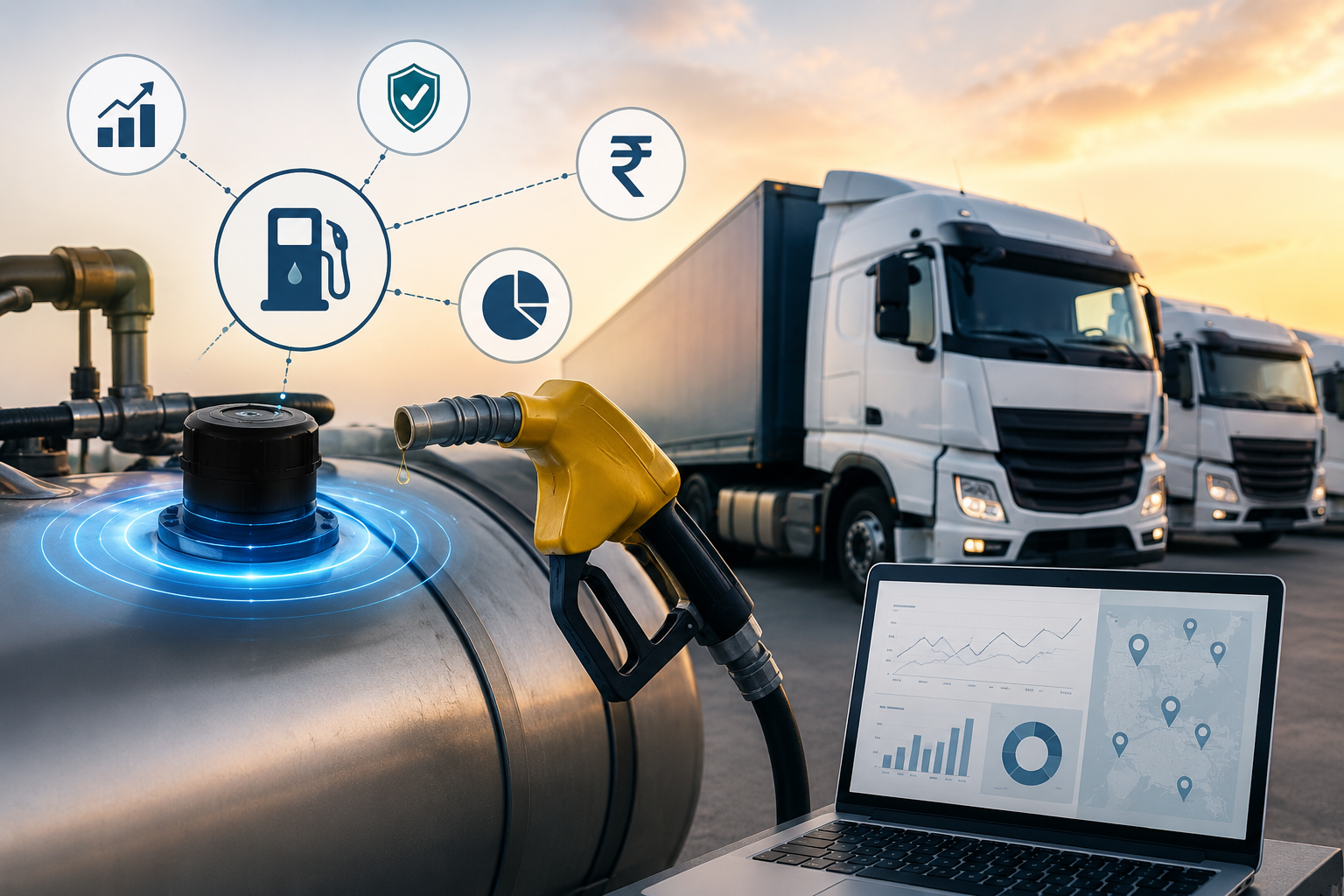
Fuel is the single largest recurring expense for any transport or logistics business, often eating up close to a third of total operating costs. Yet, most fleet owners still rely on manual logbooks, driver-reported figures, and guesswork to track how much diesel actually goes into the tank versus how much is used on the road. This gap is exactly where fuel theft, pilferage, and unnecessary wastage creep in silently draining profits month after month.
The good news is that this problem is entirely solvable. With the right technology in place, businesses can track every litre from fill-up to fuel-out, flag anomalies the moment they happen, and turn fuel data into real cost savings.
Why Fuel Costs Are Spiralling Out of Control
For most fleet operators, fuel expenses are unpredictable simply because they are invisible. Drivers may report fuel usage inaccurately, refuelling stops go unverified, and idling hours quietly burn through diesel without anyone noticing. Add to this the very real risk of siphoning and pilferage at unmonitored stops, and it becomes clear why fuel budgets rarely match actual consumption.
Without visibility into real-time consumption patterns, fleet managers are left reacting to losses after they’ve already happened, instead of preventing them in the first place.
What Is a Fuel Monitoring System?
A fuel monitoring system uses IoT-enabled fuel level sensors fitted directly into a vehicle’s tank to capture live, accurate fuel data. Instead of depending on driver logs or fuel bills, the system continuously measures fuel levels and cross-references them against vehicle activity, distance travelled, and engine hours.
The moment there’s a sudden, unexplained drop in fuel level a classic sign of theft or leakage the system triggers an instant alert with a time-stamped location, giving fleet managers the chance to act immediately rather than discovering the loss days later.
How a Fuel Tracking System Changes the Game
A well-implemented fuel tracking system does more than just flag theft. It builds a complete picture of how fuel is being used across every vehicle in the fleet refuelling patterns, mileage efficiency, idling time, and driver behaviour that impacts consumption. Over time, this data becomes a powerful tool for identifying which routes, vehicles, or drivers are costing the business the most, and where corrective action will have the biggest impact.
Key Benefits of Real-Time Fuel Monitoring
● Theft & Pilferage Alerts: Get notified the instant fuel is siphoned, with exact time and location data.
● Consumption Insights: Track mileage versus fuel used to spot inefficiencies early.
● Refuelling Accuracy: Verify every fill-up to prevent fraudulent entries or short-filling.
● Idling & Wastage Reports: Identify excessive idling that silently burns fuel and increases emissions.
● Faster ROI: Savings from reduced theft and better efficiency typically offset sensor costs within months.
Together, these capabilities don’t just plug leaks they shift fuel management from a reactive cost centre to a proactive, data-driven function within the business.
Fleets of All Sizes Can Benefit
Whether it’s a fleet of long-haul trucks, construction machinery, agricultural equipment, or diesel generators powering remote sites, the underlying challenge is the same fuel is expensive, and unmonitored usage is a silent profit killer. Modern sensor-based solutions are flexible enough to be deployed across vehicle types and fleet sizes, from a handful of vehicles to large, multi-city operations.
Turning Fuel Data Into Actionable Reports
Beyond alerts, the real long-term value lies in reporting. Detailed fuel consumption reports, mileage efficiency comparisons, refuelling summaries, and driver efficiency scorecards give management the visibility needed to make informed decisions from renegotiating routes to retraining drivers on fuel-efficient habits.
Getting Started
Fuel losses add up quietly, but the fix does not have to be complicated. By fitting vehicles with reliable sensors and pairing them with a centralised dashboard, businesses can finally see where every litre goes and stop losses before they eat into margins. Fleet operators who want to explore how this works for their specific vehicle mix can learn more about fuel monitoring here and see how quickly the numbers start to add up in their favour.
In an industry where fuel prices are volatile and margins are thin, the businesses that win are the ones that treat fuel as a metric to be managed not an expense to be accepted. Real-time monitoring is what makes that shift possible.