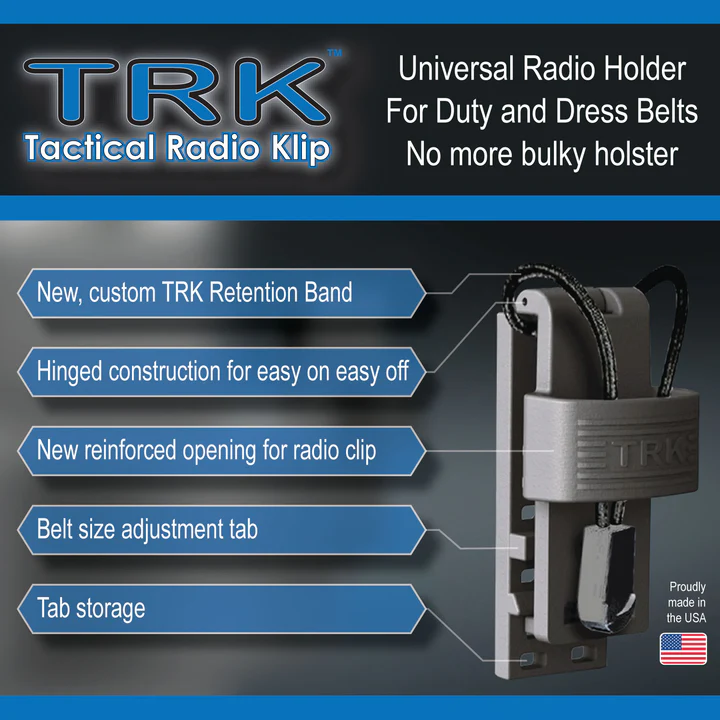
In daily police work, communication stays constant. You talk, listen, and respond as you move through different situations. Because of this, your radio must stay in a position that fits your body and workflow. Carrying it is not a small detail. It affects how fast you respond and how smoothly you move.
A tactical radio holder for police keeps your radio secure, but placement matters just as much as the holder itself. If it sits too low, too far back, or in the wrong spot on your vest or belt, it can slow you down and make simple movement harder.
You also feel placement throughout your shift. It changes how you reach your gear, how you sit in a vehicle, and how your body handles weight during long hours. That is why many officers test different positions before settling on a setup that works for daily duty.
This article explains how placement affects real use based on common field movement and work situations.
How Placement Impacts Police Tactical Radio Holders
See how different placement choices change your speed, comfort, and control. Each point connects to real tasks you deal with during patrol, response, and transport.
1. How fast you reach your radio during action
When your radio is placed where your hand naturally rests, you can reach it quickly without thinking. If it sits too low on your belt or too far back, you need extra movement, which can slow communication.
When it is placed on the front of your vest or upper torso, your hand reaches it faster. You move less and stay focused on the task in front of you.
2. How your body handles weight during long shifts
You carry gear for long hours, and even small shifts in weight matter. If your radio sits on one side of your waist, your body slowly adjusts to that uneven load. You may not feel it at first, but it can become uncomfortable during long shifts.
When the holder is placed higher and closer to your center, the weight feels more balanced. This helps you move, bend, and walk with less strain on one side of your body.
3. How your radio interacts with body armor
Most duty setups include body armor or a vest. If your radio holder is placed without thinking about that setup, it can press into hard panels or straps. This makes movement tighter and can limit how freely you turn or bend.
A better placement keeps the radio outside pressure zones. It also leaves space for other tools you carry, so nothing feels stacked or crowded on your vest.
4. How easily you move in and out of vehicles
You spend a lot of time getting in and out of patrol cars. Placement affects how smooth that movement feels. A radio placed too low can hit the seat or get pushed into your side when you sit down.
If it sits higher, usually on the chest or upper vest area, it stays clear of the seat and seatbelt. You do not need to adjust it every time you enter a vehicle, which saves small but repeated effort.
5. How your cables and wires behave during movement
Many radios connect to mics or earpieces through wires. If your radio is placed in a tight or awkward position, those wires can pull when you turn your body or raise your arm.
That pulling can make movement uncomfortable over time. A stable placement gives the wire enough space to move with you. It reduces tension on the connection points and keeps your setup more consistent during duty.
6. How clear is your communication
You depend on clear communication during your shift. If your radio is placed too far from your speaking position or mic setup, you may need to adjust it often. That breaks focus and slows communication.
When your radio sits in a steady and reachable spot, your mic stays in a consistent position. You speak without adjusting your gear, and your responses feel more direct in conversation.
7. How stable is your gear during movement
Your radio should stay fixed when you run, bend, or turn. If the placement is wrong, it can swing or shift, distracting you or causing accidental button presses.
A stable position keeps the radio secure on your vest or belt. You notice less movement, so you can focus on your task instead of adjusting gear.
Placement is often seen as an important factor in how well a tactical radio holder for police Performance works in daily duty use. Even small changes in position can affect how easy it is to use.
Summary
Placement is not something you notice once and forget. You feel it every time you move, sit, or reach for your radio. A small change in position can affect how fast you respond, how comfortable your shift feels, and how well your gear works together.
When your radio is placed with your movement in mind, you spend less time adjusting and more time focusing on your work. It also helps reduce strain during long hours and keeps communication more consistent during active duty.
In real-world duty setups, gear systems are often adjusted repeatedly until they accommodate natural movement. That process is normal and part of building a reliable setup.
In many field discussions, TacticalKlips is mentioned in the context of modular gear setups that enable better placement of duty equipment.