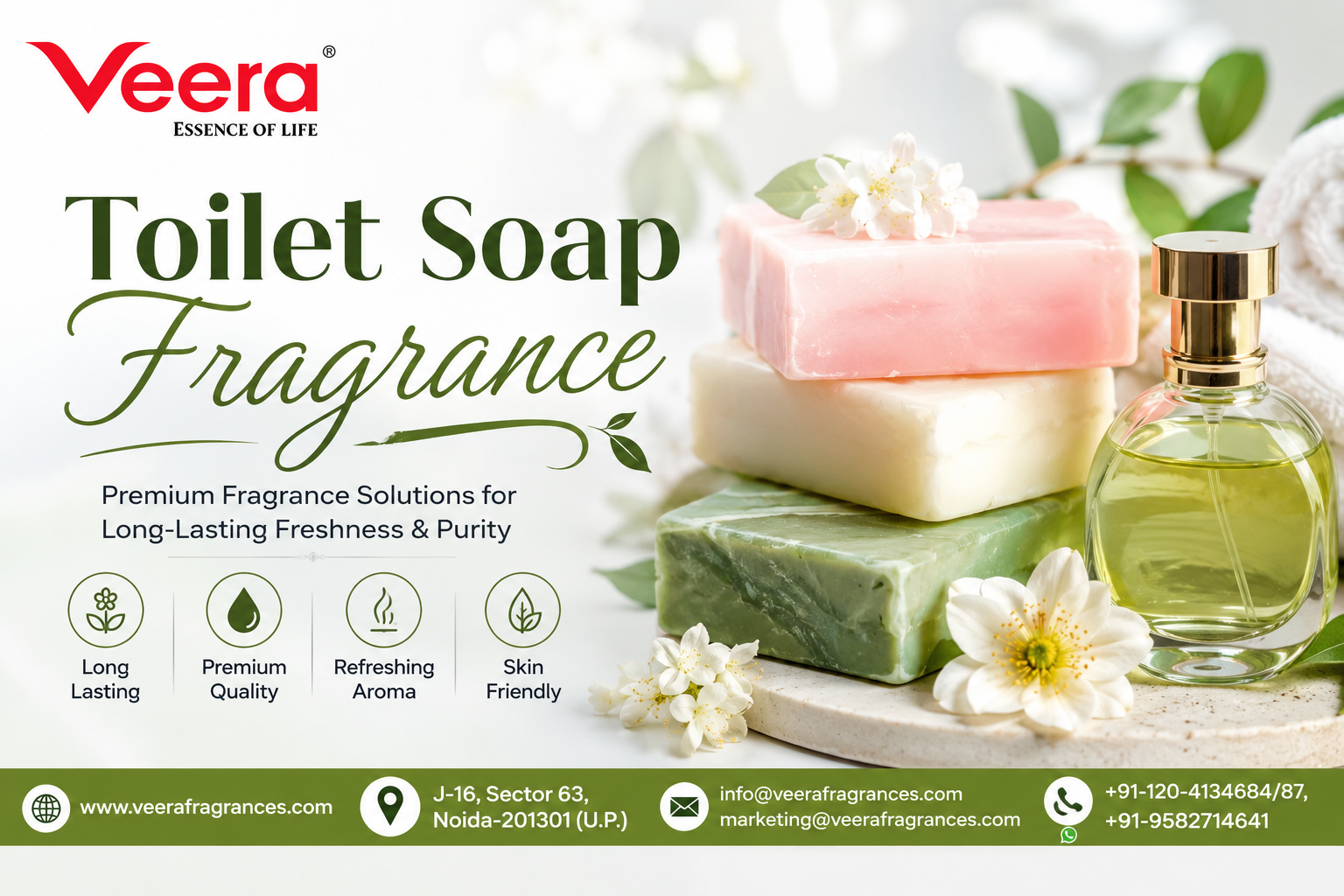
Pick up almost any bar of soap in your bathroom right now and smell it. That scent — whether it’s a fresh floral note, a warm sandalwood base, or a zesty citrus burst — didn’t happen by accident. Someone, somewhere, spent months blending oils and aroma compounds to get it just right. That “someone” is a fragrance manufacturer, and if you’re a soap brand owner, the one you choose can quietly make or break your product.
Here’s a scenario a lot of soap manufacturers know all too well: you launch a new bar, the packaging looks gorgeous, the pricing is competitive, but sales don’t take off. Customers try it once and don’t come back. Nine times out of ten, the missing ingredient isn’t the formula — it’s the fragrance. A soap that doesn’t smell memorable simply doesn’t get repurchased, no matter how good it is for the skin.
This is exactly why choosing the right Toilet Soap Fragrance Manufacturer deserves as much attention as choosing your packaging designer or your raw soap base supplier. In this guide, we’ll walk you through what actually matters when selecting one, the mistakes to avoid, and how a manufacturer like Veera Fragrances approaches this process for brands that want a premium, long-lasting result.
What Does a Toilet Soap Fragrance Manufacturer Actually Do?
A toilet soap fragrance manufacturer creates the scent compounds — often called fragrance oils or aroma compositions — that are blended into soap during the manufacturing process. This isn’t as simple as mixing a nice-smelling oil into soap base. Soap making involves heat, saponification, and often alkaline conditions that can break down a poorly designed fragrance, leaving your final product smelling like nothing at all within a few weeks.
A good manufacturer doesn’t just sell you a bottle of scent. They understand soap chemistry, they test how a fragrance behaves under heat and pH changes, and they help you build a scent that matches your brand identity — whether that’s a luxury spa vibe, a homely herbal feel, or a bright, energetic morning fragrance.
Why This Choice Matters More Than You’d Think
Fragrance is often the very first thing a customer notices about a soap — before texture, before lather, before anything else. It’s also the detail people remember. Think about it: you probably can’t describe the exact color of your favorite childhood soap, but you can probably still recall how it smelled. That’s the emotional power of scent, and it’s exactly why brands are willing to pay a premium for the right fragrance partner.
Key Factors to Look for in a Fragrance Manufacturer
Not all manufacturers are built the same. Some specialize in mass-market, budget-friendly scents; others focus on premium, long-lasting fragrance systems designed specifically for soap. Here’s what should be on your checklist.
- Experience with soap-specific fragrances — not just candles, cosmetics, or detergents.
- Stability testing — the manufacturer should be able to show how their fragrance performs under saponification and prolonged shelf storage.
- Customization ability — can they build a bespoke scent for your brand, or are you limited to a catalogue?
- Compliance and safety documentation — IFRA compliance, safety data sheets, and allergen disclosures.
- Consistency across batches — every batch should smell identical, whether it’s the 1st or the 10,000th bar.
- Minimum order quantities (MOQs) — realistic for your current production scale.
- Support and responsiveness — a manufacturer who treats you like a long-term partner, not a one-time buyer.
Comparison Table: Budget vs Premium Fragrance Manufacturers
| Criteria | Budget Manufacturer | Premium Manufacturer (e.g. Veera Fragrances) |
| Fragrance Longevity | Fades within 2-3 weeks | Lasts through shelf life and use |
| Customization | Limited to stock scents | Fully bespoke fragrance development |
| Compliance Documentation | Often missing or incomplete | Full IFRA & safety documentation provided |
| Batch Consistency | Varies noticeably | Tightly controlled, consistent every time |
| Support Level | Transactional, minimal guidance | Ongoing formulation and testing support |
Note: Pricing is often similar in the short term, but premium manufacturers typically save brands money long-term through fewer product returns and stronger repeat purchases.
Key Benefits of Working with the Right Fragrance Partner
Choosing carefully here isn’t just about scent quality — it ripples into almost every part of your soap business.
- Stronger brand recall — a signature scent becomes part of your brand identity, the way it works for many well-known soap brands.
- Better customer retention — people repurchase soaps that smell good, far more often than they repurchase soaps just because they’re “gentle” or “natural.”
- Fewer product failures — stable fragrances mean fewer complaints about scent fading or turning odd after a few weeks.
- Room to build premium positioning — a well-crafted fragrance lets you charge more, because customers genuinely feel the difference.
- Faster product development — an experienced partner can shorten your R&D timeline significantly.
Step-by-Step: How to Select the Right Fragrance Manufacturer
If you’re starting this search for the first time, it can feel overwhelming. Here’s a simple process to follow.
Step-by-Step Process Table
| Step | What to Do |
| 1. Define your scent identity | Decide the mood — floral, herbal, fresh, woody, or luxury — that fits your brand. |
| 2. Shortlist manufacturers | Look for those with proven soap-fragrance experience, not just general perfumery. |
| 3. Request samples | Ask for fragrance samples applied directly into a small soap test batch, not just raw oil in a vial. |
| 4. Test stability | Leave test bars for 4-6 weeks and check if the scent holds up. |
| 5. Verify compliance | Ask for IFRA certificates and safety data sheets before committing. |
| 6. Negotiate MOQ & pricing | Match the order quantity to your current production capacity, not future ambitions. |
| 7. Start with a small production run | Validate with real customers before scaling up the order. |
Following this process helps you avoid costly reformulations after your soap is already in the market.
Tips and Best Practices
- Always test fragrance in the actual soap base you plan to use — scent behaves differently in glycerin soap versus a cold-process bar.
- Ask for the fragrance’s flash point and usage rate; this affects both safety and cost.
- Don’t chase trends alone — balance a “trending” scent with one that reflects your brand’s long-term identity.
- Keep a small library of approved samples so you can compare new batches against your original standard.
- Build a direct relationship with your manufacturer’s formulation team, not just their sales team.
Quick Reference: Do’s and Don’ts
| Do | Don’t |
| Test in real soap batches | Judge fragrance from a raw oil sample alone |
| Ask for compliance certificates | Assume “natural” means automatically safe or compliant |
| Start with small trial orders | Commit to a bulk order before stability testing |
| Build a long-term relationship | Switch manufacturers frequently for small price differences |
Common Mistakes Soap Brands Make
Even experienced soap makers fall into a few recurring traps when choosing a fragrance partner:
- Choosing purely on price — the cheapest fragrance oil often fades fast or reacts poorly with soap ingredients, leading to reformulation costs later.
- Skipping stability testing — a fragrance that smells great fresh out of the mold can smell completely different after four weeks on a shelf.
- Ignoring compliance paperwork — this can create serious problems if you plan to sell in regulated markets or export.
- Overloading fragrance concentration — more isn’t always better; it can irritate skin or overpower the soap’s other qualities.
- Not asking about consistency controls — inconsistent batches confuse customers and damage trust in your brand.
Buying Guide Checklist
| Checklist Item | Why It Matters |
| Sample testing in your own base | Confirms real-world performance, not lab conditions |
| IFRA compliance certificate | Legal and safety requirement for many markets |
| Customization options | Allows you to build a unique, ownable scent |
| Clear MOQ and lead times | Prevents production delays and cash-flow strain |
| After-sales technical support | Helps troubleshoot issues quickly during production |
Where Veera Fragrances Fits In
At Veera Fragrances, this entire process is built around one idea: a fragrance should feel like it was made for your soap, not adapted to fit it. The team works closely with soap manufacturers to develop custom fragrance compositions that are tested for stability under saponification, verified for compliance, and refined until the scent genuinely holds up from the first wash to the last sliver of the bar.
Whether you’re a small artisanal soap maker or a large-scale FMCG brand, the goal remains the same — a fragrance that customers remember, and one they’ll come back for.
Frequently Asked Questions
1. What makes a fragrance manufacturer suitable specifically for toilet soap?
A suitable manufacturer understands how fragrance oils react to soap’s alkaline environment and heat during production, and formulates scents that remain stable rather than fading or altering after a few weeks.
2. How long should a good soap fragrance last?
A well-formulated fragrance should remain noticeable throughout the soap’s shelf life and typical usage period, generally several months, not just the first few uses.
3. Is a natural fragrance always better than a synthetic one?
Not necessarily. Natural fragrances can be less stable in soap, while well-formulated synthetic or blended fragrances often perform more consistently and safely, provided they’re properly compliant.
4. What documentation should I ask a fragrance manufacturer for?
Request an IFRA compliance certificate, a safety data sheet (SDS), and allergen disclosure information before finalizing any order.
5. Can I get a custom fragrance developed for my soap brand?
Yes, most established manufacturers, including Veera Fragrances, offer bespoke fragrance development based on your brand’s identity, target audience, and soap base.
6. How much fragrance oil is typically used in toilet soap?
Usage rates vary by formulation, but they typically range between 1% and 3% of the total soap weight. Your manufacturer should provide the exact recommended dosage for their specific fragrance.
Conclusion
Choosing the right toilet soap fragrance manufacturer isn’t a small side decision — it directly shapes how customers experience and remember your product. A great formula and beautiful packaging can only take a soap so far; it’s the scent that lingers in memory and brings people back to buy again.
Take the time to test thoroughly, ask the right questions, and partner with a manufacturer who treats fragrance development as a craft, not just a transaction. If you’re exploring options for a premium, reliable fragrance partner, Veera Fragrances is happy to help you build a scent that truly represents your brand.
Visit site : https://www.veerafragrances.com/
Call: +91-9582714641
Email: [email protected]
Address: J-16, Sector 63, Noida-201301 (U.P.)