Many people believe that once a car reaches the end of its life, every scrap vehicle is worth about the same. This case study shows why that idea is not always true.
A scrap car buyer in Adelaide inspected two vehicles that looked very similar on paper. Both had the same make, model, year, and similar kilometres. Neither car could be used on the road. Even so, the final offers were different.
This case study explains what happened during the inspection, what the buyer looked for, and how vehicle condition changed the final scrap value.
The Situation
Two owners contacted a scrap vehicle buyer within the same week. They wanted to sell cars that were no longer worth repairing.
Both vehicles had the same make and model, the same production year, similar driving history, expired registration, and mechanical problems that made daily use difficult.
At first, both owners expected almost the same offer because the vehicles appeared similar. After the inspection, the outcome was different.
Vehicle One: An Older Car With Limited Damage
The first vehicle had engine failure after many years of use.
Although the engine no longer started, the rest of the vehicle remained in fair condition.
Inspection Findings
- Body panels had only a few small dents.
- Rust was limited to small surface areas.
- All four wheels were fitted.
- The catalytic converter was still in place.
- The gearbox was complete.
- The seats, dashboard, and doors were in good condition.
- Most electrical parts were still present.
The vehicle could not be driven, but many parts still had reuse and recycling potential.
Vehicle Two: A Car Damaged in a Collision
The second vehicle had been involved in a major front-end accident. The owner chose not to repair it because the repair cost was higher than the vehicle’s market value.
At first, the owner believed the vehicle would receive almost the same amount as Vehicle One because both cars were the same model and year. The inspection showed a different result.
Inspection Findings
- Front chassis had major damage.
- Bonnet and front guards were badly bent.
- Two wheels were missing.
- Airbags had deployed.
- The catalytic converter had already been removed.
- Water had entered the cabin after the accident.
- Several electrical components no longer worked.
- Rust had started forming around damaged areas.
Although Vehicle Two weighed almost the same as Vehicle One, many reusable parts had been damaged or removed.
How the Buyer Carried Out the Inspection
The buyer followed the same inspection process for both vehicles. Each area was checked before the final offer was prepared.
Body Condition
The body condition was the first part of the inspection.
Vehicle One had only minor dents and scratches. Most body panels were straight and could still be used.
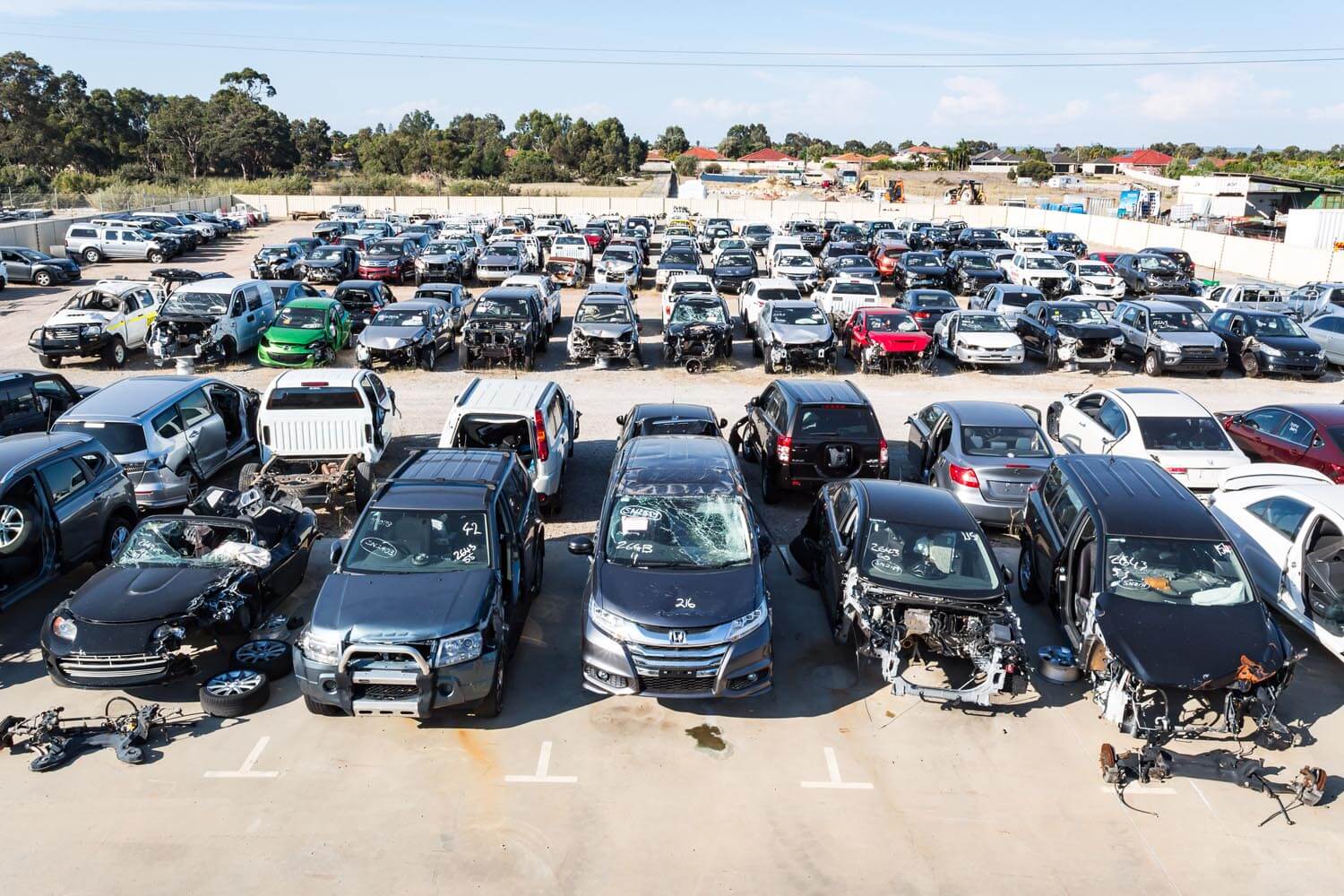
Vehicle Two had heavy accident damage. The front section had absorbed most of the impact, and several panels could no longer be used.
This showed that body condition played an important role in the final assessment.
Rust Inspection
The buyer then checked both vehicles for rust.
Vehicle One had only light surface rust on a few panels. It had not spread into important structural areas.
Vehicle Two had deeper rust in sections damaged by the accident. Water had entered the vehicle and remained there for some time, allowing rust to spread.
Rust weakens metal and reduces the number of parts that remain suitable for reuse.
Mechanical Condition
Although neither vehicle was running, the buyer still inspected the mechanical parts.
Vehicle One still contained a complete engine, gearbox, starter motor, alternator, and cooling system.
Vehicle Two had heavy impact damage around the engine bay. Several mechanical parts had cracked during the collision.
This meant Vehicle One still offered more reusable mechanical components.
Missing Parts
Missing parts were another important part of the inspection.
Vehicle One still had every major component.
Vehicle Two was missing:
- Battery
- Catalytic converter
- Two alloy wheels
Each missing part reduced the overall worth because those components could no longer be recovered.
Interior Condition
The buyer also checked the inside of both vehicles.
Vehicle One still had clean seats, a complete dashboard, working door trims, and an undamaged steering wheel.
Vehicle Two had broken trim panels, deployed airbags, and water damage throughout the cabin.
Many interior parts from Vehicle Two could not be used again.
Metal Recovery
Both vehicles contained steel, aluminium, copper, and other recyclable materials.
According to the Australian Bureau of Statistics, Australia has millions of registered motor vehicles. Every year, many reach the end of their working life, allowing large amounts of recyclable metal to return to the manufacturing cycle.
Although both vehicles would eventually be recycled, Vehicle One still contained more reusable parts before metal recycling began.
Inspection Comparison
| Inspection Area | Vehicle One | Vehicle Two |
|---|---|---|
| Body Condition | Minor damage | Heavy collision damage |
| Rust | Light surface rust | Deep rust in damaged areas |
| Engine | Complete | Major damage |
| Gearbox | Complete | Damaged |
| Missing Parts | None | Battery, wheels and catalytic converter |
| Interior | Good condition | Water and impact damage |
| Reusable Parts | Many | Limited |
The inspection showed that even though both vehicles were similar in age and model, their overall condition was very different.
Why the Final Offers Were Different
After completing the inspection, the buyer explained why the offers were not the same.
Vehicle One received the higher offer because it still had many reusable parts, complete mechanical components, less rust, and no missing major items.
Vehicle Two received a lower offer because accident damage had reduced the number of usable parts. Missing components and rust also lowered its overall worth.
The buyer explained that vehicle weight alone does not determine scrap value. The condition of reusable parts is often just as important.
What This Case Study Shows
This case study highlights several important points.
- Vehicle age does not decide scrap value on its own.
- Accident damage can reduce the number of reusable parts.
- Rust lowers the condition of metal and other components.
- Missing parts reduce the final amount.
- A complete vehicle often receives a higher offer.
- Mechanical condition still matters even if the vehicle no longer runs.
These findings explain why two vehicles with almost identical details can receive different scrap values.
A Common Situation for Adelaide Vehicle Owners
This situation is common across Adelaide. Many owners compare their vehicle with another car of the same model and expect a similar outcome. During the inspection, buyers look beyond the make and year of the vehicle. They assess body damage, rust, mechanical condition, reusable parts, and recyclable materials before preparing an offer. Services such as CASH FOR SCRAP CARS ADELAIDE provided by Car Wreckers Adelaide follow this type of assessment so that each vehicle is valued according to its actual condition rather than its age alone.
Conclusion
This case study shows that vehicle condition has a direct impact on scrap car value. Even when two vehicles share the same make, model, and year, differences in body condition, rust, mechanical parts, missing components, and interior condition can change the final assessment.
To learn more visit here: https://www.carwreckersadelaide.com/about-us/
For vehicle owners, understanding this process helps explain why offers vary from one vehicle to another. Looking beyond age and focusing on overall condition gives a much clearer picture of how scrap buyers determine the value of a vehicle.