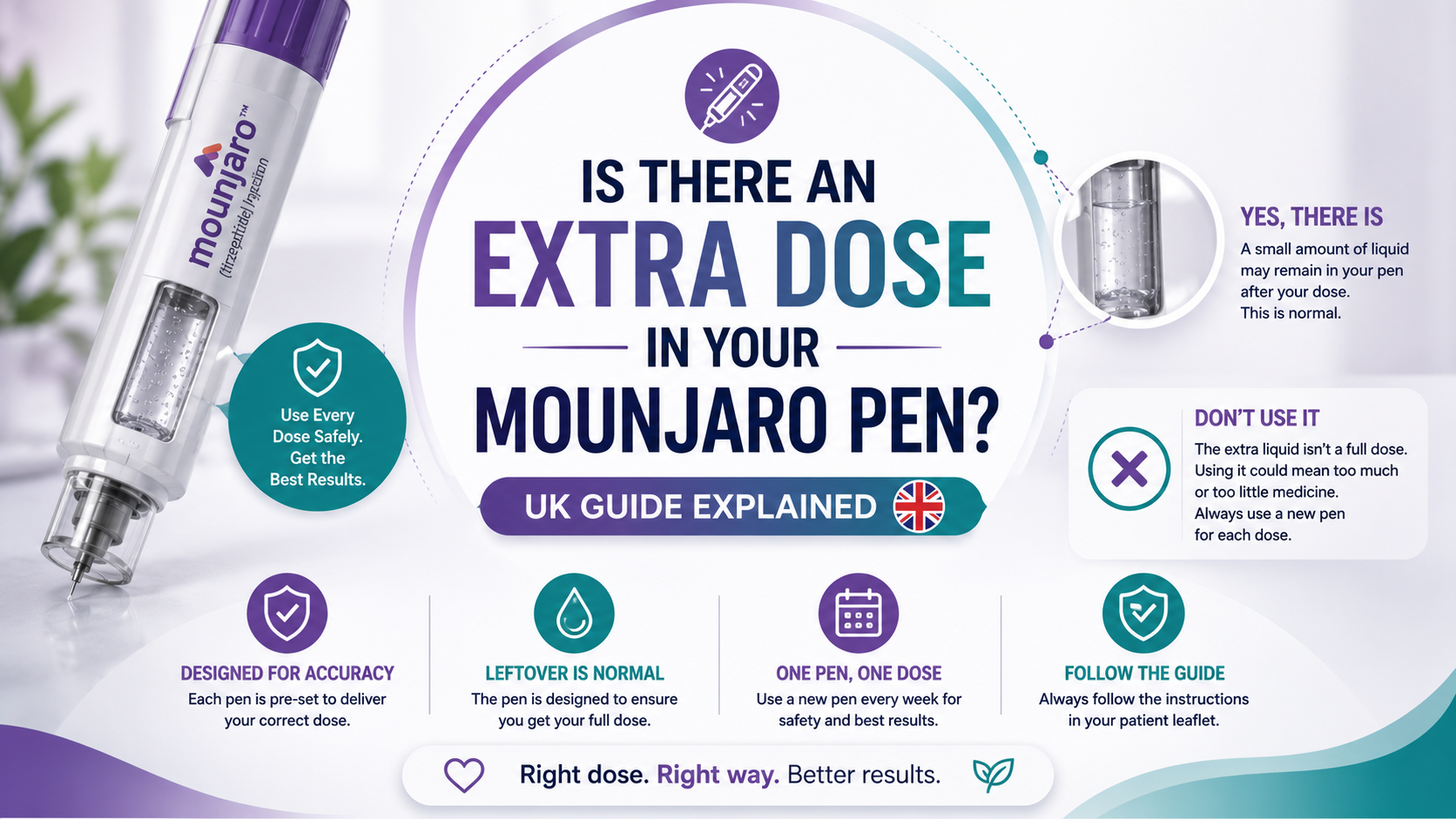
If you’ve recently started your weight loss journey with Mounjaro, you may have noticed something unusual after your last injection — a little more liquid left in the pen than you expected. This has sparked a wave of questions across UK forums and social media: is there really an extra dose hiding in your Mounjaro pen, or is this simply a manufacturing safeguard? In this guide, we break down exactly what’s happening, why it occurs, and what you should do if you notice it yourself.
Understanding How the Mounjaro Pen Works
Mounjaro (tirzepatide) is delivered through a pre-filled, single-use KwikPen device designed to make self-injection simple and consistent. Each pen is calibrated to deliver one specific dose per week, based on the strength prescribed by your clinician — ranging from 2.5mg up to 15mg. The pens are designed with an in-built safety margin, meaning they typically contain slightly more medication than the labelled dose requires.
This overage isn’t a manufacturing error. It’s a standard practice across injectable pen devices to ensure that every patient receives their full, accurate dose even if there’s a small amount of air displacement or residual liquid in the mechanism. However, this same overage is exactly what’s fuelling the online conversation around a so-called “fifth dose.”
So, Is There Really an Extra Dose?
This question has become common enough that many patients now search specifically for information on the Mounjaro KwikPen fifth dose phenomenon. The short answer: the leftover liquid you may see in your pen after four uses is not an officially sanctioned “extra dose” that you should attempt to extract and use yourself.
While it’s true that some users report visible residual liquid remaining in their pen casing, this doesn’t mean the device is designed to be reused or that the leftover amount is measured or safe for self-administration. Mounjaro pens are strictly single-use, and the leftover liquid exists purely as part of the device’s internal safety buffer — not as a bonus dose for patients to extract with a syringe or other method.
Attempting to draw out and inject this residual liquid can be dangerous. Without precise measurement, you risk under-dosing or over-dosing yourself, which could lead to unwanted side effects or reduced effectiveness of your treatment. It could also compromise the sterility of the medication, increasing your risk of infection at the injection site.
Why This Question Keeps Coming Up
The rising popularity of GLP-1 and dual GIP/GLP-1 medications across the UK has understandably made patients more cost-conscious. With private prescriptions for weight loss treatments representing a significant investment, it’s natural that people want to make sure they’re getting full value from every pen. This is part of why so many patients are also exploring alternative formats, such as Wegovy Semaglutide Oral Tablets, which offer a different administration method without the need for injections at all.
That said, cost concerns should never override safety. If you’re worried about wastage or value for money, the better route is to speak directly with your prescribing clinic about your treatment plan, rather than trying to manually extract any leftover medication from your pen.
What UK Guidelines Say
The Medicines and Healthcare products Regulatory Agency (MHRA) and the pen manufacturer’s own patient information leaflet are clear: each KwikPen is intended for a single administration only, regardless of how much liquid appears to remain after use. This applies uniformly across all pen strengths, and it mirrors the guidance given for other injectable pens used in diabetes and weight management, including certain formulations of Mounjaro Weight Loss Injections.
Patients are advised to dispose of used pens safely in an approved sharps bin immediately after use, regardless of any visible leftover liquid. Reusing a pen, even for what looks like a small residual amount, falls outside of the approved use of the device and isn’t something your prescribing clinician or pharmacist would recommend.
What Should You Do If You Notice Leftover Liquid?
If you’ve noticed this residual amount in your own Mounjaro pen, here’s what we’d suggest:
- Don’t attempt to extract or reuse it. The amount isn’t calibrated for a safe or accurate dose.
- Dispose of the pen as normal, following your local sharps disposal guidance.
- Raise it with your prescriber if you’re concerned about value for money or dosing accuracy — they can review your treatment plan and confirm everything is on track.
- Report unusual amounts if the leftover liquid seems significantly more than expected, as this could indicate a device fault worth flagging to the manufacturer or your pharmacist.
Getting the Most From Your Treatment
Rather than focusing on squeezing out every last drop from a pen, the more effective way to get value and results from your weight loss treatment is through proper guidance, consistent dosing, and professional support. This is where working with an experienced provider makes a real difference.
At Weight Medics, patients receive ongoing clinical support throughout their treatment journey — from initial consultation through to dose titration and long-term monitoring. This kind of structured care ensures you’re not left guessing about dosing questions like the one covered in this guide, and that your treatment is both safe and effective from start to finish.
The Bottom Line
The “extra dose” many patients notice in their Mounjaro pen is a built-in safety overage, not a bonus dose meant for separate use. While it’s completely understandable to want to make the most of an expensive treatment, attempting to extract and self-administer this leftover liquid isn’t safe, isn’t accurate, and goes against manufacturer guidance.
If cost or dosing efficiency is a concern, the right approach is to talk to your clinician rather than experiment with your device. Weight loss treatments like Mounjaro are most effective — and safest — when used exactly as prescribed and supported by professional oversight.
Disclaimer: This article is for general informational purposes only and does not constitute medical advice. Always consult your prescribing clinician or pharmacist before making any changes to how you use your medication.