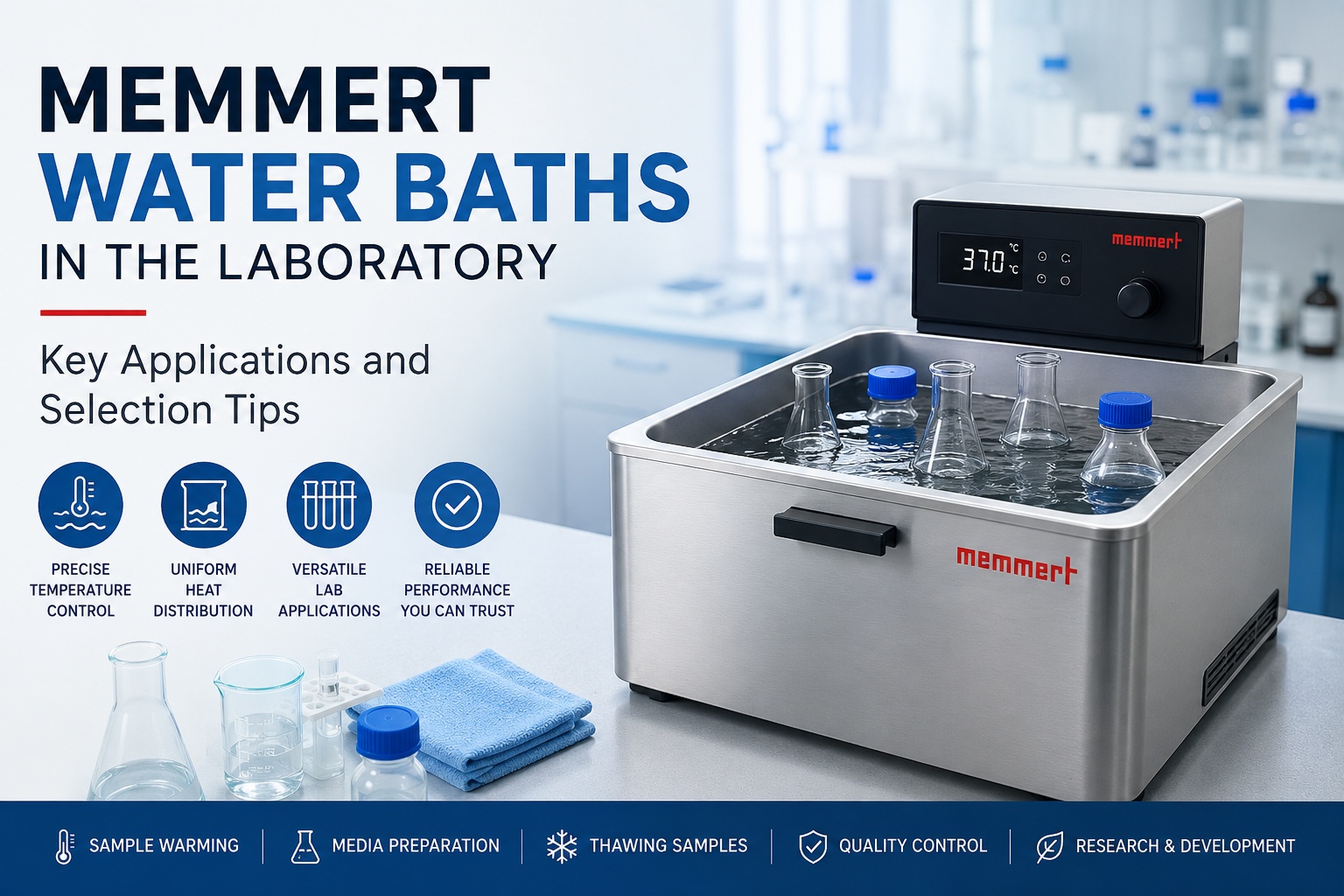
Water baths are one of the most practical pieces of equipment in a laboratory. They are used every day for gentle heating, sample tempering, incubation support, thawing, and many other temperature-controlled processes. When stable heat transfer matters but direct heating would be too harsh, a water bath is often the right choice.
For laboratories looking for reliable temperature control and consistent performance, Memmert water baths are a trusted option. Known for precision-engineered laboratory equipment, Memmert offers solutions designed for routine lab work, research environments, quality control, and regulated applications where dependable temperature stability is important.
What Is a Laboratory Water Bath?
A laboratory water bath is a temperature-controlled unit that heats water to a defined setpoint and keeps it stable over time. Samples, reagents, media, or vessels are then placed into the heated water environment for gentle and even warming.
Unlike direct heating methods, a water bath provides indirect heat transfer. This helps reduce the risk of overheating sensitive materials and supports more uniform temperature distribution around the sample container.
Water baths are commonly used when a laboratory needs:
- controlled warming without open flame
- stable temperatures over a set time period
- gentle treatment of sensitive samples
- repeatable heating conditions for routine procedures
Why Water Baths Matter in Laboratory Work
Many laboratory processes depend on temperature consistency. If the temperature fluctuates too much, sample quality, reaction performance, or test reproducibility can suffer. A water bath helps create a controlled environment for these steps.
This makes water baths useful for:
- preparing media and reagents
- warming culture solutions
- incubating samples at a fixed temperature
- thawing frozen materials
- supporting enzymatic or chemical reactions
- sample conditioning before analysis
In short, a good water bath helps protect samples, improve repeatability, and make daily workflows more reliable.
Why Choose Memmert Water Baths?
Memmert is known in laboratories for temperature-controlled equipment built with a focus on reliability, ease of use, and long service life. In a busy lab, those factors matter just as much as the technical specification sheet.
A Memmert water bath is typically chosen for several reasons:
Precise temperature control
Stable temperature is the main reason to use a water bath. Memmert systems are designed to maintain defined temperatures consistently, helping laboratories carry out repeatable procedures with less variation.
Uniform heat distribution
Good water baths do not simply heat the water. They maintain even temperature conditions throughout the bath area. This supports more consistent treatment across multiple samples.
User-friendly operation
Laboratory equipment should be easy to set up, monitor, and clean. Water baths that offer simple controls and clear temperature settings help reduce handling errors and save time during routine work.
Reliable construction for daily use
Water baths often run frequently in academic, industrial, pharmaceutical, and life science labs. A robust design is important for long-term use and dependable day-to-day performance.
Suitable for a wide range of applications
From routine sample warming to more controlled laboratory procedures, Memmert water baths fit many different environments and workflows.
Key Applications of Memmert Water Baths in the Laboratory
Water baths are used across many industries and lab types. Below are some of the most common applications where a Memmert water bath can be valuable.
1. Sample Warming and Tempering
One of the most common uses of a water bath is bringing samples to a target temperature before further testing or processing. This is useful when a sample must be warmed slowly and evenly rather than exposed to direct heat.
Examples include:
- warming liquid samples before pipetting or analysis
- tempering solutions to a process temperature
- bringing stored reagents to working temperature
- preparing test materials for quality control procedures
2. Microbiological and Biological Work
Water baths are frequently used in microbiology and life science settings for procedures that need gentle, controlled heating. This can include warming culture media, maintaining temperature-sensitive solutions, or supporting incubation-related steps.
Applications may include:
- warming agar or culture media
- holding reagents at a defined temperature
- thawing biological materials carefully
- supporting sample preparation in molecular biology workflows
3. Chemical and Analytical Laboratory Processes
In chemistry and analytical labs, water baths are useful when a reaction or preparation step requires steady heat. Some samples must be heated without sudden temperature spikes, especially when consistency affects test accuracy.
Typical uses include:
- heating chemical solutions
- dissolving materials under controlled temperature conditions
- preparing standards and reagents
- supporting digestion or extraction workflows where gentle heat is preferred
4. Thawing Sensitive Samples
Frozen samples, standards, enzymes, and biological materials often need careful thawing. A water bath offers a faster and more controlled option than leaving materials at room temperature. It also avoids the uneven or overly aggressive heating that can happen with other methods.
5. Quality Control and Industrial Testing
Water baths are also used outside classic research labs. In quality control and industrial environments, they help prepare samples, maintain testing temperatures, and support repeatable product evaluation procedures.
This is relevant in sectors such as:
- pharmaceuticals
- food and beverage
- cosmetics
- chemical manufacturing
- environmental testing
- materials testing
6. Enzyme Reactions and Temperature-Sensitive Procedures
Some procedures depend on very specific temperature conditions. If the sample is heated too quickly or unevenly, performance may be affected. A water bath creates a gentler thermal environment for workflows where temperature control directly influences the result.
How to Choose the Right Memmert Water Bath
Not every laboratory needs the same water bath. The best choice depends on your workflow, sample volume, temperature range, and how often the equipment will be used. Before choosing a model, it helps to look at the practical side of the job the unit needs to do.
1. Define the main application
Start with the most important question: what will the water bath be used for?
For example:
- simple sample warming
- media preparation
- microbiology support
- analytical sample conditioning
- regulated QC work
- thawing sensitive materials
The more clearly you define the application, the easier it becomes to choose the right size, temperature performance, and accessories.
2. Consider the required temperature range
Different applications need different working temperatures. Some labs only need moderate warming, while others require higher temperatures for extended periods. Choose a unit that comfortably covers your working range rather than one that only just reaches it.
3. Check bath capacity and usable space
Think about the size and number of vessels you plan to place in the bath. A unit that is too small will slow your workflow. A unit that is too large may take up unnecessary bench space and use more water and energy than needed.
Consider:
- number of samples processed at once
- vessel size and shape
- beakers, flasks, bottles, or racks used in the bath
- future expansion of the workflow
4. Look at temperature stability and uniformity
If the bath is being used for sensitive work, temperature performance matters a lot. Good stability helps reduce variation over time, while uniformity helps ensure that samples placed in different positions experience similar conditions.
This becomes especially important in:
- biological workflows
- quality control testing
- repeatable analytical methods
- any process where sample comparability matters
5. Evaluate ease of cleaning and maintenance
Water baths need regular cleaning and proper water management. A design that is easy to drain, wipe, inspect, and maintain will save time and support better hygiene in the lab. This is especially relevant in biological and pharmaceutical environments.
6. Think about workflow safety
The right water bath should fit into your safety and handling practices. Consider:
- how hot the bath will operate
- whether staff need to access samples frequently
- whether evaporation or contamination control is important
- whether the unit will be used continuously or only in short runs
7. Match the water bath to your laboratory environment
A teaching lab, microbiology lab, pharmaceutical QC department, and industrial testing lab do not all need the same configuration. It helps to choose a water bath that matches the intensity and type of work in your environment.
Questions to Ask Before Buying a Water Bath
Before finalizing a Memmert water bath for your laboratory, ask these questions:
- What exact process will the water bath support?
- What temperature range is required?
- How many samples need to be handled at one time?
- What vessel sizes will be used most often?
- Is temperature consistency critical for results?
- Will the bath be used every day or only occasionally?
- Is bench space limited?
- Does the lab need a unit that is easy to clean for frequent routine use?
These questions help narrow the choice and reduce the risk of buying equipment that does not match the workflow.
Water Bath vs Other Heating Methods
A water bath is not the right tool for every heating task, but it is one of the best options when gentle and even heating is needed. Compared with direct heating or hotplates, a water bath offers a softer thermal environment. Compared with incubators or ovens, it is better suited for liquid-based warming and indirect sample heating.
You might choose a water bath when:
- direct contact heat is too aggressive
- open flame is not appropriate
- the sample needs gentle warming
- consistent liquid-mediated heat transfer is preferred
- several small containers need uniform heating at once
Memmert Water Baths as a Practical Choice for Modern Labs
Laboratories often focus on large instruments such as incubators, ovens, centrifuges, or balances. But smaller temperature-control tools like water baths can have a major effect on daily efficiency and sample handling quality. A reliable water bath supports smoother workflows, better repeatability, and safer handling of sensitive materials.
Memmert water baths are a practical option for labs that want dependable temperature control for routine laboratory processes. Whether the application involves microbiology, analytical chemistry, sample warming, or industrial quality control, choosing the right water bath can improve both consistency and productivity.
Find the Right Memmert Water Bath for Your Laboratory
If your laboratory needs reliable water bath solutions for controlled warming, sample preparation, or temperature-sensitive workflows, Memmert is a brand worth considering. The right model depends on your temperature range, sample load, and day-to-day application.
At häberle LABORTECHNIK, laboratories can explore Memmert equipment alongside a wide range of laboratory instruments and supplies. If you are planning a new setup, replacing older heating equipment, or improving a routine process, a Memmert water bath can be a valuable addition to your lab.