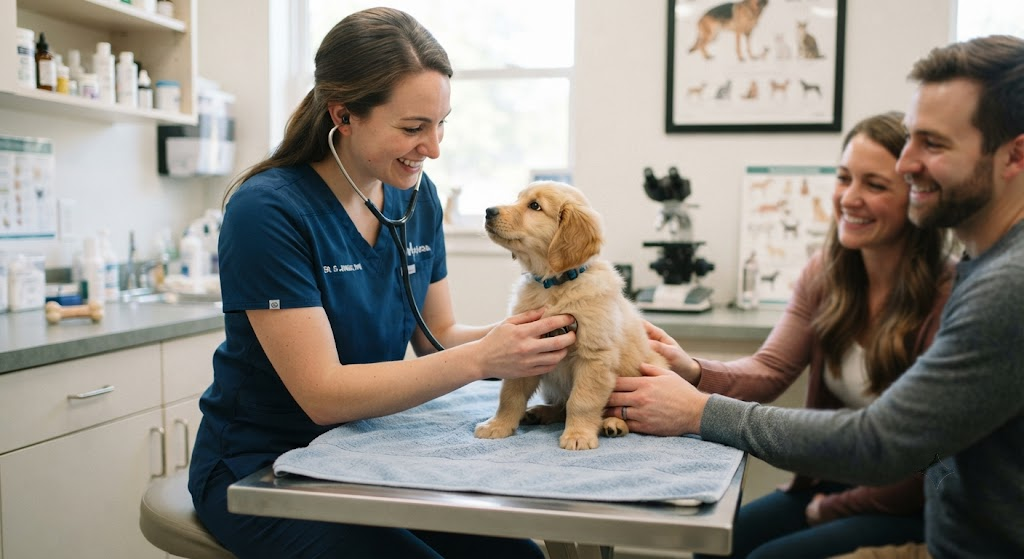
Bringing home a new puppy is this exciting milestone. Those tiny paws , playful energy and endless curiosity can fill a home pretty fast with joy. Still, one of the most important responsibilities for any new dog owner is, scheduling a puppies first check up. That initial vet visit really lays the groundwork for a healthy life and also helps spot potential concerns before they turn into serious problems.
For lots of owners the question feels kind a simple: what actually happens during a puppy’s first veterinary appointment? If you understand the flow of it, the whole experience can be a bit smoother, and honestly more rewarding for the puppy and the family, too.
Why the First Check Up Matters
A puppy might look fine on the outside , but some health issues just don’t show up right away. That first veterinary check helps sort through overall wellness, and it also makes sure the puppy is growing in the right way.
During the visit a veterinarian looks at the puppy’s weight, body condition, heart, lungs, eyes, ears, skin and coat. Basically it’s a full snapshot of how things are going right now, so the clinic can gather useful clues about the puppy’s present health.
Think about it like this. Would anyone buy a brand new vehicle and never inspect it? A puppy deserves even more care than that, because health and everyday joy depend on early, preventive attention.
What Happens During a Puppies First Check Up?
A puppies first check up is much more than a quick look-over. It is an opportunity to create a customized health plan.
The veterinarian typically reviews:
- Physical examination
- Vaccination schedule
- Parasite prevention
- Nutrition recommendations
- Growth and development milestones
- Behavioral guidance
- Future healthcare planning
For example, a veterinarian might, notice some early clues of an ear infection or detect a mild heart murmur that really needs careful monitoring. Catching these kind of issues early on often leads to better outcomes in the long run.
And, honestly, puppies can grow at a sort of incredible pace during that first year. Some breeds may put on several pounds each week during the busiest growing phases. Keeping up with regular veterinary check ups helps make sure the whole development, stays on track.
Vaccinations and Disease Prevention
One of the main goals for the first appointment is mostly disease prevention, honestly. Puppies are born with temporary immunity thanks to their mothers. But over time that protection fades out ,and then vaccinations become essential.
Core vaccines often protect against:
- Distemper
- Parvovirus
- Adenovirus
- Rabies
So, why are these vaccines so important? Diseases like parvovirus can be life-threatening, especially for young puppies. A vaccine gives that critical extra layer of protection during a really vulnerable stage of life, when they’re still figuring everything out.
During the visit, the veterinarian will build a vaccination timeline based on the puppy’s age, breed and overall health condition.
Nutrition Guidance for Healthy Growth
Feeding a growing puppy can be kind a confusing. Do big breed puppies need different food than the smaller ones, and if so how much is actually enough. Also, are treats ok or is that going to throw everything off. A veterinarian can help sort all of that out, and usually they suggest diets that support sturdy bone development, strong muscle growth and reliable energy levels.
Like, take a Labrador Retriever puppy versus a Chihuahua puppy. They aren’t just different sizes, they can have very different nutritional needs. A personalized feeding plan also helps you dodge the usual problems, like obesity, nutrient deficiencies, or a growth rate that’s way too rapid.
Parasite Screening and Prevention
Many puppies end up being exposed to internal or outside parasites before they even reach their new homes. Roundworms, hookworms, fleas, and ticks are among the most typical concerns, sort of the usual suspects.
A veterinarian might suggest a fecal test and routine prevention treatments, to guard the puppy and also the people in the household. In fact, some of these parasites can affect humans too, so it’s extra important to keep everything from starting in the first place.
Regular checkups and screenings bring peace of mind, while also helping puppies stay relaxed,comfortable , and genuinely healthy.
Building a Lifelong Veterinary Relationship
The first vet appointment is not just about medical care. It also kinda helps puppies get used to being handled during checkups and clinic visits, in a slow steady way. Positive early experiences can lower stress later when another appointment comes around. Puppies that figure out that these visits are safe and actually rewarding tend to be more cooperative adult dogs over time.
And beyond that, this whole process gives owners a dependable go-to for guidance whenever questions pop up about training, behavior, nutrition, or preventive healthcare.
Choosing Quality Veterinary Care
Picking the right vet team feels like one of those big calls, you know. Having experienced professionals around can sort of steer the process, with guidance matched to the puppy’s own, very individual needs, and they also help owners through each phase of growth, step by step.
If you’re in Families searching for an animal hospital victoria bc , try to find a clinic that really leans into preventive care, kind service, and a bit of special attention . A strong veterinary partner helps nudge doubt into confidence and makes sure every puppy gets that best possible beginning.