Most homeowners only think about their roof twice a year, at most. But by the time you notice a problem from ground level, moss and algae have usually already been at work for months, sometimes years. Knowing the early warning signs can be the difference between a routine clean and a much larger repair bill.
Here’s what to look out for, why it happens, and what it typically costs to put right.
1. Green or black patches on the tiles
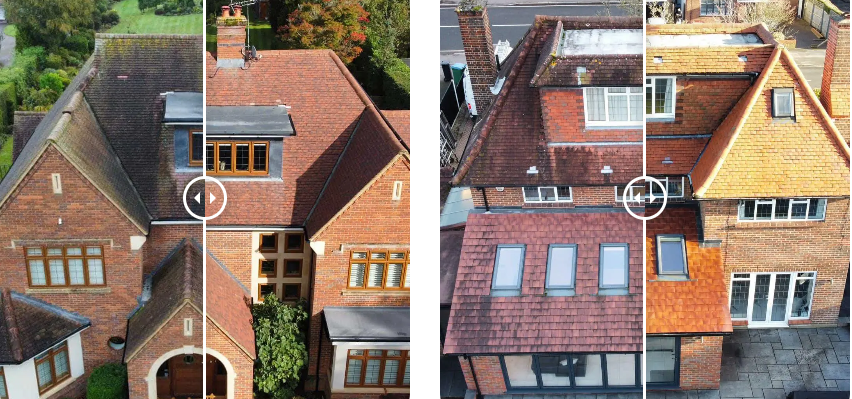
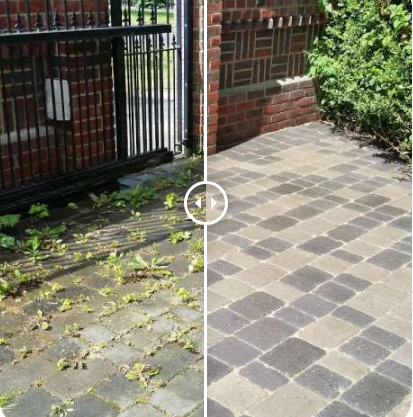
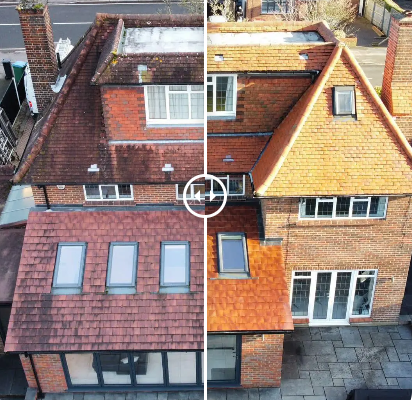
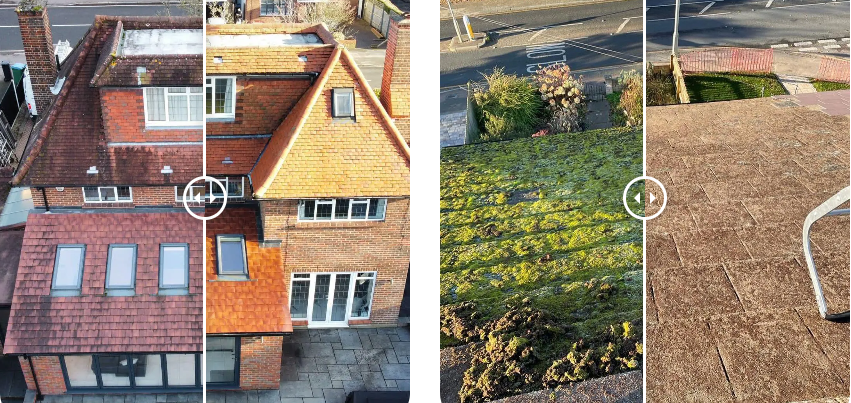
This is the most obvious sign, and usually the first one homeowners spot. Green staining is typically algae, thriving on damp, shaded roof slopes, particularly north-facing pitches or areas overshadowed by trees. Black or dark green patches are more often moss, which holds onto moisture far more aggressively than algae does.
Left alone, moss doesn’t just look untidy. It lifts tiles slightly as it grows, creating gaps where wind-driven rain can get underneath.
2. Moss build-up along the ridge and valleys
Ridges and valleys collect more moisture and debris than open tile areas, so they’re usually where moss establishes first. If you can see a green or brown “fringe” building up along these lines, it’s a strong indicator that moss has already taken hold across a wider area than is visible from the ground.
3. Blocked or overflowing gutters
Roof moss doesn’t stay put. Wind and rain wash clumps of it down into the gutters, where it combines with leaves and general debris to form blockages. If you’re noticing water overflowing during heavy rain, or plants growing in the guttering itself, moss further up the roof is very often the root cause.
4. Damp patches or musty smells inside the loft
This is the sign that should prompt action fastest. Moss and algae retain moisture against the tile surface for much longer than a clean roof would. Over time, that trapped damp can work its way through ageing or slightly displaced tiles and show up as staining on loft timbers, a musty smell, or in more advanced cases, visible damp patches on ceilings below.
5. Tiles that look patchy, faded, or uneven in colour
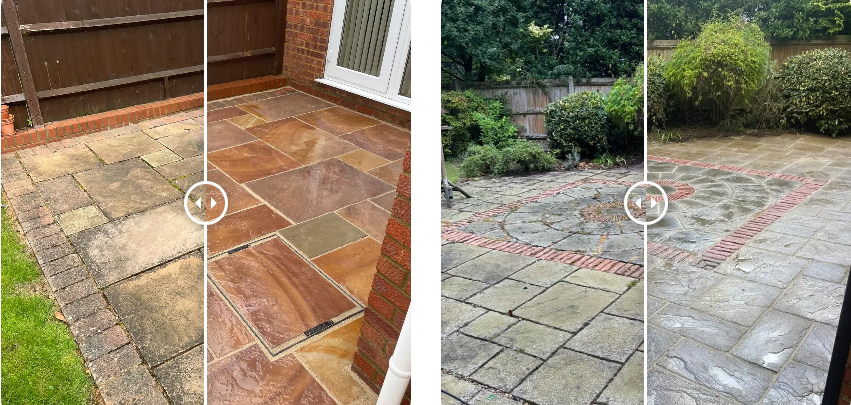
Weathering is normal, but uneven patchiness, especially in combination with any of the signs above, is often a sign that organic growth has been present long enough to start affecting the tile surface itself, not just sitting on top of it. At this stage, a DIY scrub rarely solves the problem properly, and it’s worth calling in a professional roof tile cleaning service to assess whether the tiles themselves have been affected.
Why catching it early matters
The earlier any of these signs are addressed, the simpler and cheaper the fix tends to be. A roof with light surface algae can usually be soft-washed in a single visit. A roof left for several years with established moss often needs manual scraping before any wash treatment can be applied, which adds labour time and pushes costs toward the higher end of the range.
What happens if it’s ignored for too long?
- Trapped moisture beneath moss and algae accelerates wear on tiles, particularly on older concrete and clay roofs.
- Blocked gutters cause water to back up under tiles or overflow down external walls, both of which lead to damp problems.
- Cracked or dislodged tiles become far more likely once moss has been growing for an extended period, since it physically lifts tiles as it spreads.
- Repair costs rise sharply. A routine clean costs a fraction of the price of retiling sections of roof or fixing water damage to loft timbers and ceilings.
For context on exactly where costs land, our guide to how much roof cleaning services costs breaks down soft washing, heated cleaning, and manual moss removal, so you can see how prices scale with the level of build-up.
How often should a roof actually be cleaned?
As a general guide:
- Every 12–24 months for most UK roofs, particularly shaded or tree-lined properties, if no sealant has been applied.
- Every 24–36 months where a sealant or biocide treatment has been used after cleaning, since this slows regrowth significantly.
- Roofs in more exposed, sunnier positions with good airflow may go longer between cleans; heavily shaded roofs in damp areas often need attention sooner.
Frequently Asked Questions
Can I check for these signs myself?
Ground-level checks (gutters, visible staining, discolouration) are safe to do yourself. Getting onto the roof itself isn’t something we’d recommend without the right access equipment and safety training.
Does a dirty roof actually cause damage, or is it just cosmetic?
Both. In the early stages it’s largely cosmetic, but prolonged moss and algae growth retains moisture against tiles, which over time contributes to cracking, tile displacement, and water ingress.
How much does it cost to fix a roof damaged by moss vs. cleaning it early?
Cleaning is almost always the cheaper route. Roof cleaners typically costs a few hundred pounds, whereas repairs from prolonged water damage or tile replacement can run into the thousands.
Is it worth getting a professional inspection even if I’m not sure my roof needs cleaning?
Yes. Many issues, particularly around ridges, valleys, and loft-side damp, aren’t visible from the ground, so a professional inspection can catch problems before they become costly.