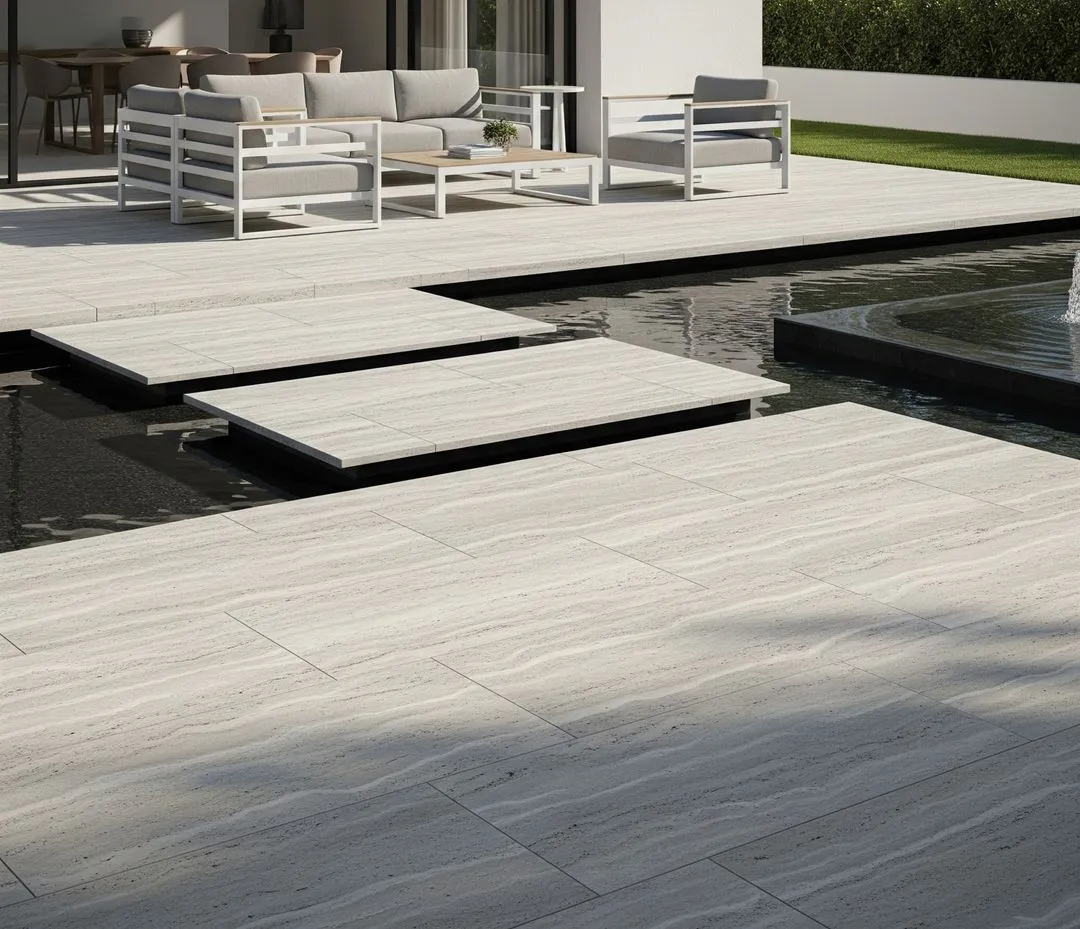
The selection of architectural surfaces for high-end residential patios, open-air kitchens, and poolside terraces requires a material balance of visual sophistication and absolute structural endurance. Over the past decade, premium thick-gauge outdoor porcelain tile has risen to the top of luxury exterior specifications. Renowned for its dense composition, mimicry of natural stone, and exceptional resistance to staining, porcelain creates a sleek, contemporary aesthetic.
However, in geographical zones exposed to sub-zero winter temperatures and volatile seasonal transitions, the physical survival of these surfaces depends on advanced engineering chemistry. The freeze-thaw cycle represents one of the most destructive natural forces an exterior assembly can face. When water penetrates a hardscape system and freezes, it expands by approximately nine percent in volume, exerting massive internal pressures. Preventing this expansion from fracturing grout joints, delaminating tiles, or shattering concrete sub-bases requires moving past basic indoor tiling methods and embracing specialized structural preparation. Executing a resilient outdoor porcelain tile installation requires a deep understanding of material physics, subgrade dynamics, and specialized bonding agents. By partnering with an elite firm focused on comprehensive hardscape design and installation, property owners can safeguard their outdoor living investments against the destructive forces of winter weather.
The Physics of Porcelain Impermeability: Why High Density Demands Specialized Polymer Adhesives
To understand why exterior installations fail, one must look at the unique material makeup of porcelain itself. Unlike traditional ceramic tiles or porous natural stones like travertine and limestone, architectural porcelain is fired at extreme temperatures exceeding 2,200°F. This rigorous manufacturing process vitrifies the clay components, transforming them into an incredibly dense, glass-like material with a water absorption rate of less than 0.5 percent.
While this near-zero porosity makes the tile face completely waterproof and frost-resistant, it creates a unique challenge for standard setting mortars. Standard mortars rely on mechanical interlocking, meaning they seep into the microscopic pores of a stone or concrete surface to grip it as they cure. Because porcelain has virtually no pores, standard mortar cannot establish a mechanical bond, leaving the tiles resting loosely on the base. If water settles into the tiny spaces under the tiles and freezes, it will easily pop the porcelain clean off its bed.
To prevent this delamination, advanced hardscape design and installation specialists utilize high-performance, polymer-modified thin-set mortars matching ANSI A118.15 standards. These premium mortars contain advanced liquid polymers that create a powerful chemical bond with the porcelain surface, replacing the need for traditional mechanical gripping. Additionally, installers back-butter the reverse side of every single tile with a specialized liquid bonding slurry, ensuring a complete, void-free connection that leaves no space for water to collect and freeze.
Subgrade Moisture Control: Incorporating Uncoupling Membranes and Sloped Sub-Bases
While selecting the correct polymer adhesive is vital, a luxury patio surface can still fail if groundwater is allowed to saturate the concrete sub-base from below. As winter temperatures drop, moisture trapped within a concrete slab freezes and expands upward. If the porcelain tiles are bonded directly to a solid, unyielding concrete base, this upward pressure will shear the mortar bed apart, causing wide surface cracks and loose tiles.
To protect the surface from this underground movement, professional crews use an advanced uncoupling and waterproofing membrane during the outdoor porcelain tile installation process. These specialized mats feature an open, grid-like core sandwiched between layers of geotextile fabric, which is placed directly between the concrete sub-base and the mortar bed.
The unique air channels inside the uncoupling membrane allow the concrete base slab to move and flex naturally during a freeze without transferring those stress forces up into the rigid porcelain tiles. At the same time, the top layer of the membrane acts as a waterproof shield, blocking surface water from soaking into the concrete base. To ensure water drains off the patio quickly, engineers slope the concrete base at a strict minimum pitch of two percent (or a quarter-inch drop for every linear foot). This geometric slope ensures that heavy rainfall and melting snow are quickly guided away into yard drainage channels, keeping the underlying subgrades dry and stable.
Accommodating Thermal Expansion: Integrating Flexible Expansion Joints and Elastic Grouts
Hardscape materials are constantly moving, expanding in size when exposed to intense summer sun and shrinking when hit by freezing winter winds. Porcelain tiles expand and contract at a completely different rate than the underlying concrete sub-base. When thousands of square feet of tile are locked together tightly without room to move, this conflicting thermal movement creates massive internal tension. Without built-in relief points, the expanding tiles will press against each other until they bow, buckle, or crack under pressure.
To accommodate this continuous movement, modern hardscape design and installation protocols require installing highly flexible expansion joints throughout the layout. Following industry guidelines, specialists install flexible expansion joints every eight to twelve feet in a grid pattern across exterior installations.
These wide expansion joints are completely cleared of rigid mortar and filled with high-grade, UV-resistant polyurethane or silicone sealants. These flexible joints act like shock absorbers, squishing together when the tiles expand in the summer heat and stretching out when they shrink in the winter cold. To complement these relief tracks, installers use high-performance hydrophobic grouts that naturally repel moisture and maintain structural flexibility, preventing hairline cracks from forming in the grout lines.
The Open-Joint Pedestal Alternative: Elevating Porcelain Above the Water Table
In areas that experience extreme winter weather and heavy snow accumulation, traditional mortar-bonded installations can face ongoing maintenance challenges. For these demanding climates, advanced designers often pivot away from wet mortar systems entirely, opting for an innovative dry-laid method known as an elevated pedestal system.
During an elevated outdoor porcelain tile installation, thick two-centimeter (2CM) structural porcelain pavers are set directly onto adjustable, high-density polypropylene pedestals resting on a sloped, waterproof sub-base. This system eliminates the need for mortar and grout entirely, leaving open, uniform gaps between each tile. Rainwater and melting snow fall directly through these open joints, running along the sloped waterproofing layer below straight into hidden drainage tracks. Because there is no mortar to degrade and no enclosed space to trap water, this elevated pedestal setup completely eliminates freeze-thaw damage, making it a highly durable option for rooftop terraces and modern courtyard decks.
Maximizing Real Estate Capital with Civil Hardscape Engineering
Approaching a custom patio installation with precise material science and structural engineering is a highly effective way to protect your real estate capital and long-term property investments. In today’s competitive luxury housing market, properties built with advanced weatherproofing and frost-resistant subgrades maintain their pristine visual appearance and hold their financial value far better than those built with basic residential methods.
Partnering with elite teams specializing in hardscape design and installation ensures that your property’s subgrade soils, slope layouts, polymer adhesives, and expansion networks are engineered to work together perfectly. This professional construction process shields your investment from costly winter cracking, eliminates unexpected layout repairs, and delivers a stunning outdoor retreat tailored to your lifestyle. It is the smart choice for the modern homeowner, beautifully combining advanced environmental science with timeless architectural luxury.