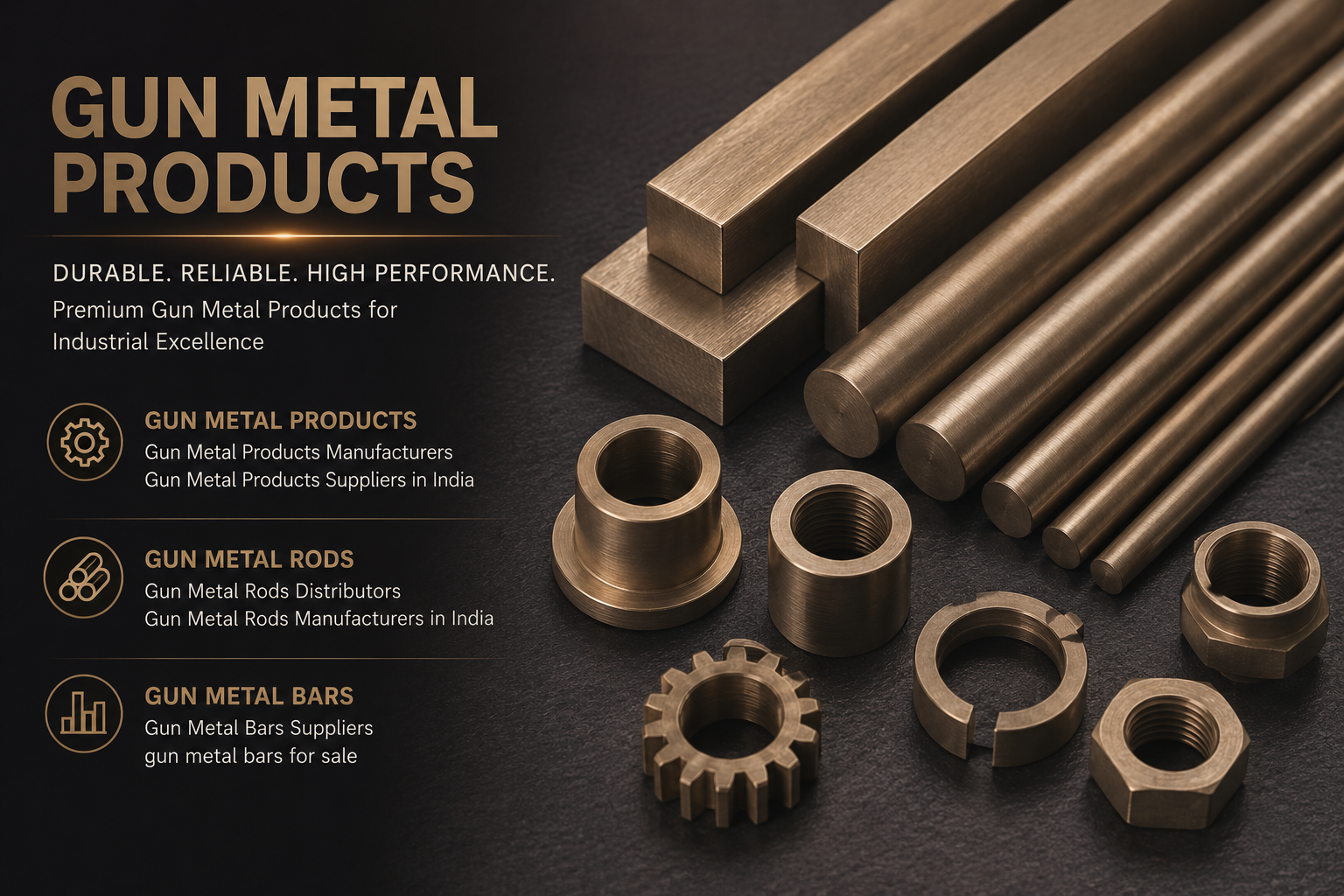
The Small Rod That Can Stop a Large Assembly
Half the time, the problem does not start inside the machine. It starts at purchase. A buyer asks for Gun Metal Rods, compares three quotes, picks the lowest one, and then discovers during machining that the material is not behaving the same across the batch.
That is expensive.
Gun Metal Products, especially Gun Metal Bars and Gun Metal Rods, are used in places where pressure, water contact, friction, load, and machining accuracy meet in one job. Britannica notes modern admiralty gunmetal as roughly 88% copper, 10% tin, and 2% zinc, used for gears, bearings, valves, pump parts, and steam fittings. That composition detail matters because a small material mismatch can quietly damage tolerance, service life, and buyer margin.
Most buyers do not lose money because gunmetal is a bad material.
They lose money because they buy it casually.
The Spec Detail Most Buyers Skip
What Gun Metal Rods Are Usually Made For
Gun metal is a copper-tin-zinc alloy selected for applications where corrosion resistance, machinability, dimensional stability, and bearing performance matter. IS 10742:1983 covers cast gun metal rods and bars and mentions three different grades with mechanical properties. Grade I and II are noted for fair strength and good machining properties, while Grade III is suitable for steam valve bodies and severe structural use.
Here’s the detail buyers typically overlook: a rod is not only “round material.” As per the standard definition, a bar or rod is a solid-section product supplied in straight length, with width or greatest distance between parallel faces greater than 6 mm. Which means a serious enquiry should mention diameter, length, grade expectation, machining allowance, quantity, and application.
A vague RFQ creates vague supply.
Common Types and Engineering Uses
Gun Metal Rods are often used for:
- Pump components
- Valve bodies
- Bearing sleeves
- Bushes
- Marine fittings
- Hydraulic and steam-related assemblies
- Low-speed, heavy-load gear and bearing parts
And yet, not every rod suits every job. A pump bush and a steam valve body may both need gunmetal, but the loading, corrosion exposure, temperature, and machining need can be different. Bad suppliers ignore this difference. They quote fast, dispatch fast, and leave the buyer to handle failure slowly.
Nobody tells you that machining feedback is often the first real quality test.
Five Supplier Checks That Protect the Buyer
1. Ask for Grade Clarity, Not Just Metal Name
A good supplier should explain which grade or composition range suits your application. A bad answer sounds like, “Gunmetal is gunmetal, sir, same material.” That is not technical support. That is risk transfer.
2. Ask for Application Fit
Most buyers share size and quantity, then stop. That is incomplete. The supplier should ask whether the material is for bushes, valves, pumps, bearings, or marine fittings. A bad answer sounds like, “You send drawing, we send material.” Drawing alone does not always explain service condition.
3. Ask About Machining Behavior
Gun Metal Rods are valued because they machine well, but only when metallurgy and casting quality are controlled. A good answer should mention clean turning, stable dimensions, and batch consistency. A bad answer is, “Machining is your side issue.”
That answer should end the discussion.
4. Ask for Quantity and Delivery Reality
If a supplier promises every size, every quantity, and immediate dispatch without checking stock or production cycle, be careful. For B2B procurement, a false delivery promise is worse than a slow honest one. It breaks the buyer’s own commitment to the factory floor.
5. Ask What Happens if Material Fails Inspection
A supplier who says “we will see later” does not have a rejection policy. That becomes your problem after unloading. For Gun Metal Bars Suppliers and Gun Metal Rods Distributors, inspection support, replacement clarity, and communication speed matter as much as the first quote.
Where Gun Metal Rods Protect Engineering Margins
1. Better Wear Control in Moving Parts
In bushes, bearings, and sleeves, wear is not only a maintenance issue. It is downtime, labour cost, and delayed production. Gun Metal Rods help reduce buyer risk where friction and load are constant.
2. Stronger Corrosion Resistance in Wet Conditions
Gunmetal is known for resistance to atmospheric, steam, and seawater corrosion. Which means it can protect margins in pump, marine, valve, and fluid-handling jobs where cheaper material may fail early.
3. More Predictable Machining Output
A machinist can tell quickly if material is inconsistent. One rod cuts clean. Another creates tool wear, chatter, or uneven finish. Consistent Gun Metal Products reduce rework and save time on the lathe.
4. Better Fit for Heavy-Load, Low-Speed Applications
Heavy load and low speed create a different kind of stress. Gunmetal is widely used for gears and bearings under those conditions. That protects the buyer from premature part replacement.
5. Reduced Rejection Risk in Batch Orders
For procurement managers, one rejected lot can disturb the full production calendar. Reliable Gun Metal Bars and rods help reduce the chance of batch-level rejection, especially when the buyer shares correct drawings and tolerances.
6. Safer Long-Term Vendor Planning
The lowest quote rarely shows the full cost. Freight, inspection, machining loss, delays, and replacement all sit outside the first price. That is why serious buyers compare landed value, not just per-kg rate.
Availability in India Is a Supply Chain Decision
India has a wide demand base for Gun Metal Rods Manufacturers in India because engineering, pump, valve, marine, hydraulic, and fabrication buyers need regular access to copper alloy materials. For buyers searching Gun Metal Products Suppliers in India, location is not only a Google search term. It affects freight cost, dispatch speed, inspection timing, and replacement handling.
Here’s one useful supply chain point. DPIIT’s logistics cost assessment placed India’s aggregated logistics cost in the range of 7.8%–8.9% of GDP for 2021–22. That number explains why material location, loading discipline, and transport planning matter in B2B buying.
For buyers looking for gun metal bars for sale, the smarter question is not just “what is your rate?” The better question is, “Can you supply the right grade, right size, right packing, and right paperwork without disturbing my machining schedule?”
That is where dependable Gun Metal Bars Suppliers become useful.
About Ganga R Ispat Metals
At Ganga R Ispat Metals, we work with buyers who need Gun Metal Products for real engineering use, not just catalogue comparison. Our focus is on Gun Metal Rods, Gun Metal Bars, and related copper alloy products used in machining, pump assemblies, bushes, bearing sleeves, valve parts, and industrial applications.
We’ve seen orders slow down because the drawing mentioned OD and length but missed machining allowance. That small missing detail can create a full round of clarification, especially when the buyer is under pressure to start production.
So we ask practical questions before quoting.
We prefer knowing the application, size, grade expectation, quantity, tolerance, and delivery location first. It helps us suggest the right supply option and avoid the kind of confusion that usually appears after dispatch, when correction becomes harder and costlier.
If you are planning to buy Gun Metal Rods, send us the diameter, length, grade requirement if available, quantity, delivery location, and end-use application. If you have a drawing, send that too. It saves time.
For standard enquiries, we try to respond within 24 working hours. MOQ depends on size, grade, and availability, so we confirm it after checking the requirement instead of giving a random number that later changes.
For a faster quote from Ganga R Ispat Metals, share these details in one message:
- Product required
- Size and length
- Quantity
- Application
- Grade or composition requirement
- Delivery city
- Inspection or document requirement
Clear input gives a cleaner quote.
Conclusion
Gun Metal Rods are small compared to the machines they support, but they influence performance, machining cost, and service life in a very direct way. A buyer who checks grade, supplier response, and application fit will usually avoid the worst procurement surprises. Gun Metal Products should be bought with engineering discipline, not only price pressure. The next phase of industrial sourcing will belong to buyers who treat material selection as risk control.
FAQs
1. What are Gun Metal Rods mainly used for?
They are mainly used in bushes, bearings, sleeves, pump parts, valve bodies, marine fittings, and other machined engineering components. They work well where load, friction, moisture, and machining accuracy are part of the same job.
2. How do I compare Gun Metal Bars Suppliers properly?
Start with grade clarity, size availability, machining suitability, dispatch timeline, and rejection handling. Price matters, but a low rate with unclear grade or poor replacement support can become costly after machining starts.
3. What should I ask Gun Metal Products Manufacturers before ordering?
Ask about composition range, grade suitability, product form, size tolerance, batch consistency, and inspection support. A manufacturer who avoids these questions may still supply material, but the buyer carries more risk.
4. Can I search for gun metal bars for sale and order only by size?
You can, but it is not the safest way. Size is only one part of the purchase. Application, grade, machining allowance, and delivery location should also be shared, especially for industrial jobs.
5. Are Gun Metal Rods Manufacturers in India able to support custom sizes?
Many can support different sizes, but availability depends on grade, diameter, casting route, quantity, and current stock. Honest suppliers will confirm before committing. Anyone promising every size instantly should be checked more carefully.
6. How do Gun Metal Products Suppliers in India help reduce procurement risk?
Good suppliers reduce risk by guiding grade selection, confirming stock honestly, packing material properly, and responding clearly when inspection questions come up. That said, buyers also need to share correct drawings and tolerances. Supplier quality cannot fix an incomplete RFQ.