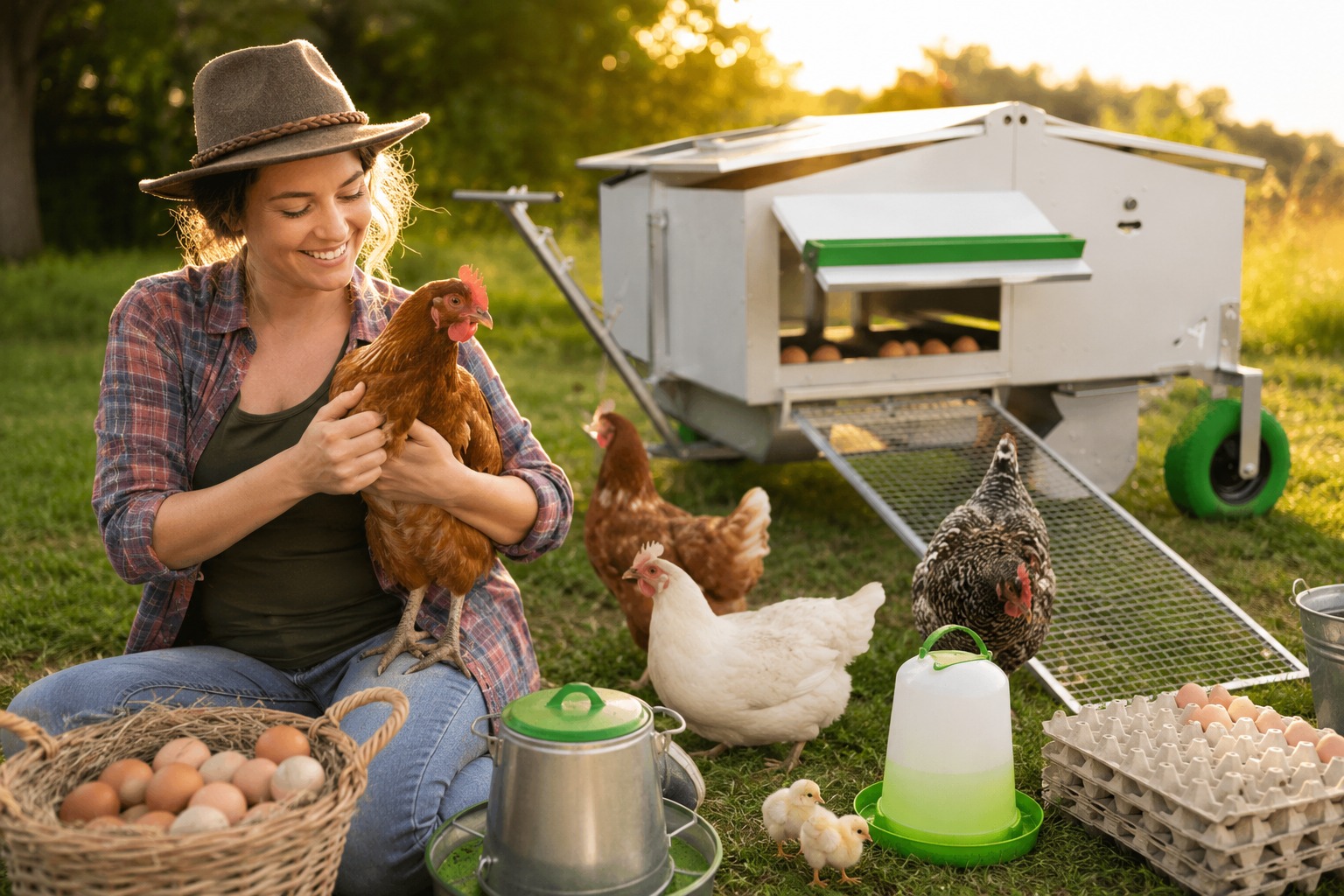
Commercial chicken farming has become one of the most reliable ways to produce eggs and poultry meat while meeting the growing demand for quality food. Unlike keeping a few backyard chickens, this type of farming is built around managing larger flocks with the right equipment, planning, and care to achieve consistent results. Whether you are considering poultry farming as a new business or looking to expand an existing operation, understanding the basics is the first step toward long-term success.
In this guide, we explore what commercial chicken farming involves, why it matters, and the practical decisions that can help farmers create efficient, healthy, and productive operations.
Understanding Commercial Chicken Farming
At its core, commercial chicken farming is the practice of raising chickens on a larger scale for egg production, meat production, or breeding purposes. Farms may specialize in one area or combine different operations depending on their goals.
Success is about much more than increasing flock size. It requires careful attention to housing, nutrition, water supply, health management, and daily routines. Every part of the system works together to keep birds healthy and productive while making day-to-day farm management easier.
Modern poultry farmers also have access to equipment and housing solutions that improve efficiency and reduce labor, allowing them to focus on maintaining the overall health of their flock.
Read Also: How to Start Commercial Chicken Farming in Australia: A Practical Guide
Why Good Housing Makes a Difference
One of the most important investments for any poultry operation is reliable housing. Chickens need protection from harsh weather, predators, and unnecessary stress. A well-designed housing system creates a safe environment where birds can grow, lay eggs consistently, and remain healthy.
Portable housing has become increasingly popular because it offers greater flexibility than permanent structures. Farmers can move birds onto fresh pasture, improve grazing conditions, and reduce the buildup of waste in one location.
Quality housing also improves ventilation, provides easier access for feeding and cleaning, and supports better overall flock management. These practical benefits contribute to healthier birds and more predictable production throughout the year.
Comfort and Ease of Daily Management
Managing hundreds or even thousands of birds requires equipment that simplifies everyday tasks. Comfortable environments benefit both the chickens and the people caring for them.
Features such as easy access doors, organized nesting areas, efficient feeding systems, and reliable water delivery help reduce daily workloads. Farmers spend less time handling routine maintenance and more time monitoring bird health and improving production.
As farms grow, choosing equipment that is simple to operate becomes increasingly valuable. Small improvements in daily efficiency can save significant time over the life of the farm.
Building Quality Into Every Part of the Farm
Quality should be considered in every decision, from selecting healthy chicks to investing in durable equipment. Strong materials, thoughtful design, and dependable construction help reduce repairs and minimize unexpected downtime.
Farmers also benefit from equipment that is designed to withstand changing weather conditions and continuous use. Reliable infrastructure creates confidence that the farm can continue operating smoothly throughout the seasons.
Paying attention to quality from the beginning often leads to lower maintenance costs and fewer interruptions over time.
Meeting Modern Farming Expectations
Today’s customers care about more than the final product. Many want to know how animals are raised, how farms operate, and whether responsible farming practices are being followed.
As a result, many producers are adapting their commercial chicken farming operations to improve animal welfare, provide access to pasture where appropriate, and maintain higher standards of cleanliness and care.
Farmers who invest in practical solutions that support these expectations are often better positioned to build trust with customers, retailers, and distributors. Meeting these changing expectations is not only good for reputation but also supports long-term business growth.
Sustainability and Smarter Farming Decisions
Sustainability has become an important consideration for many poultry businesses. Making thoughtful decisions today can create lasting benefits for both the farm and the surrounding environment.
Portable housing systems, rotational grazing, and efficient resource management help reduce waste while encouraging healthier pasture conditions. These approaches can also contribute to improved soil quality and more balanced land use over time.
Choosing durable equipment that lasts for many years is another practical way to reduce unnecessary replacement costs and limit material waste. Sustainable farming does not always require major changes. Often, it begins with selecting equipment and management practices that deliver consistent value for years to come.
Long-Term Value for Growing Farms
Every investment should support the future of the business. While lower-cost equipment may seem attractive initially, durable and well-designed solutions often provide better value through reduced maintenance, improved productivity, and longer service life.
Flexible systems also allow farms to adapt as production changes. Whether expanding a flock, adjusting grazing areas, or improving daily workflows, equipment that can grow alongside the business helps avoid costly replacements later.
Planning with the future in mind gives farmers greater confidence as their operations continue to develop.
Creating a Better Experience for Farmers
Running a poultry farm involves daily responsibility, careful observation, and consistent decision-making. Equipment and farm layouts that reduce unnecessary effort make the work more manageable and enjoyable.
Simple maintenance, reliable performance, and practical designs contribute to smoother daily operations. When routine tasks become easier, farmers have more time to focus on bird health, production goals, and overall farm management.
The result is a better experience for both experienced producers and those entering the industry for the first time.
Conclusion
Getting started with commercial chicken farming requires thoughtful planning, reliable equipment, and a commitment to caring for your flock every day. By investing in quality housing, practical management systems, and sustainable farming practices, producers can build efficient operations that support long-term success.
At Chicken Caravan, we believe that well-designed portable poultry solutions help farmers work more efficiently while providing healthier environments for their birds. Whether you are starting your first flock or expanding an established operation, our products are built to support your journey in commercial chicken farming with dependable, long-lasting solutions.