Rigid boxes occupy a specific and premium tier in the packaging spectrum. Unlike folding cartons, which are manufactured flat and assembled at the point of use, rigid boxes are constructed in their final shape and maintain that form permanently. This structural permanence is both their defining characteristic and the source of their commercial value.
For procurement managers and brand owners considering rigid boxes for the first time, this guide covers construction fundamentals, industry applications, specification terminology, and the key decisions required when placing a custom order.
How Rigid Boxes Are Constructed
A rigid box consists of two primary components: the substrate (typically grey chipboard or greyboard) and the wrap (a printed or decorated paper, fabric, or specialty material applied to the exterior surface).
The Substrate: Chipboard
Chipboard, also called greyboard or bookbinding board, is a dense, compressed board manufactured from recycled paper and cardboard fiber. It provides the structural rigidity that distinguishes set-up boxes from all other packaging formats. Standard chipboard thicknesses used in rigid box construction include:
- 1.5mm: lightweight applications, small boxes, jewelry packaging
- 2mm: standard retail and e-commerce applications
- 2.5mm–3mm: premium applications, heavier products, gift boxes
- 4mm+: ultra-premium or industrial applications
The Wrap: Printed Paper
The exterior wrap is where the brand lives. Printed offset or digital paper is laminated to the chipboard surface, creating the visible face of the box. Common wrap treatments include:
- Matte laminate: soft, non-reflective finish, favored in luxury and wellness categories
- Gloss laminate: high-shine, vivid color reproduction, common in electronics and cosmetics
- Soft-touch / velvet laminate: tactile finish with premium hand-feel
- Foil stamping: metallic accents applied via heat transfer
- Embossing / debossing: dimensional texture pressed into the wrap surface
The right packaging doesn’t just protect, it sells. In consumer research, premium packaging materials consistently influence perceived product quality and willingness to pay premium prices.
Lid Types and Construction Formats
Rigid boxes are manufactured in several lid and construction configurations, each suited to different product and experience requirements:
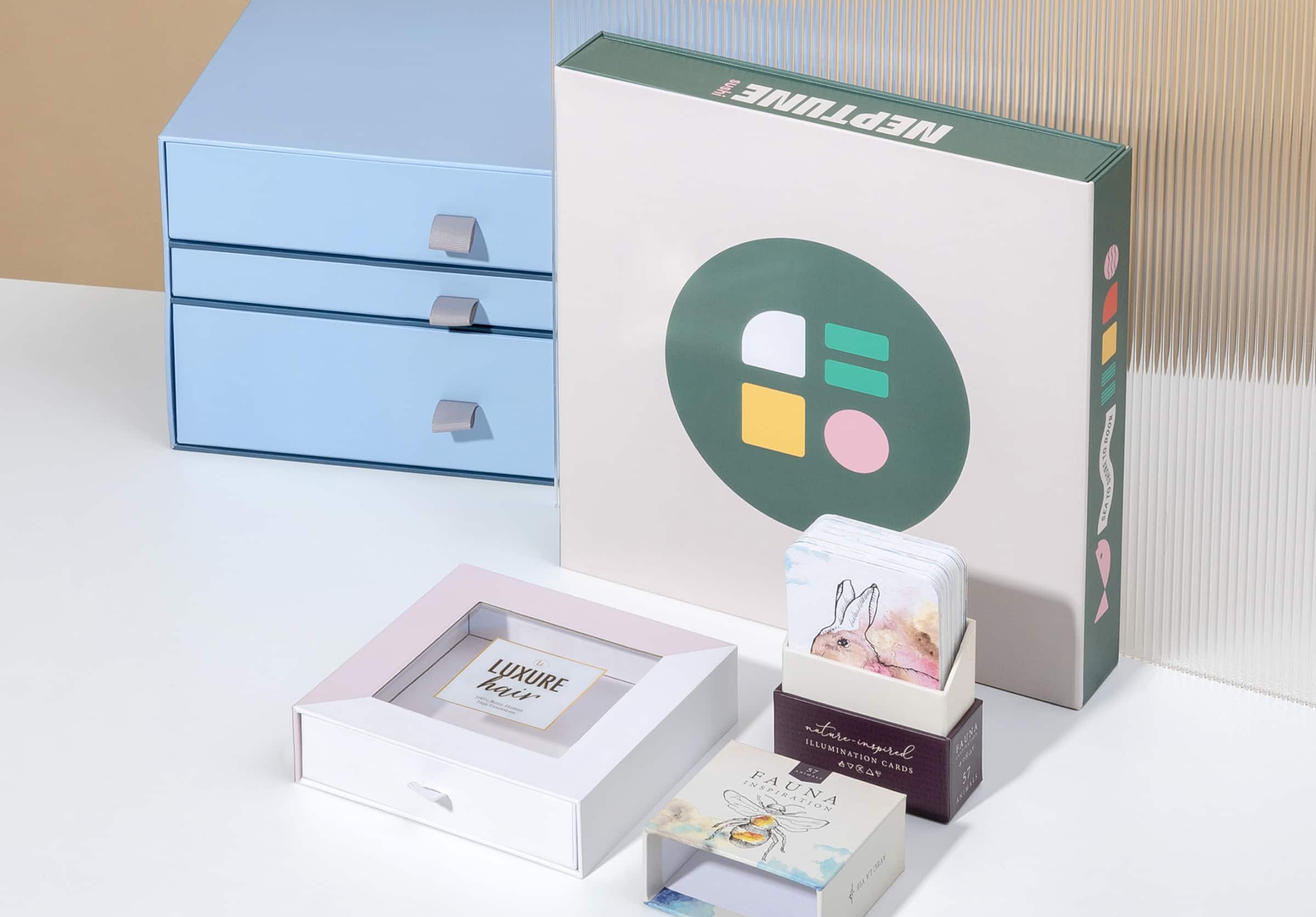
- Lid-and-base (two-piece): separate lid and base, the most common format for retail and gift applications
- Hinged lid (clamshell): lid attached at rear, opens like a book, used in jewelry, watches, high-end electronics
- Drawer box (sleeve): outer sleeve with inner sliding tray, used in cosmetics and premium food
- Shoulder box: internal shoulder structure creates a precise lid-to-base registration, the gold standard for luxury packaging
The shoulder box format, though more expensive to produce, creates the distinctive resistance-and-release experience associated with luxury product unboxings. That ‘premium feel’ has significant commercial value for brands at price points where the unboxing moment is a brand touchpoint.
Industries That Use Rigid Box Packaging
Rigid box applications in the U.S. market span multiple industries, each with distinct specification requirements:
Cosmetics and Beauty
The cosmetics industry is the single largest consumer of rigid box packaging in the U.S. Premium skincare, fragrance, and color cosmetics brands use rigid boxes to convey value, protect fragile contents, and create the unboxing moment that drives social media content creation.
Electronics and Technology
Consumer electronics, from smartphones to earbuds to smart home devices, have standardized on rigid box packaging. The format provides protection, supports anti-static insert systems, and delivers brand-consistent presentation at retail.
Jewelry and Watches
Hinged lid rigid boxes with foam or velvet inserts are the dominant format in fine jewelry and watch packaging. The box communicates permanence and value, qualities that transfer to the product by association.
Food and Confections
Premium chocolates, specialty teas, artisan spirits, and gifted food items use rigid box packaging to elevate perceived value and enable higher price points than the same products would command in standard packaging.
For businesses sourcing custom rigid boxes across any of these categories, Alpha Global Packaging offers customizable rigid box options with flexible minimum order quantities, accessible to both growing brands and enterprise-scale buyers.
Key Specifications for Rigid Box Orders
When placing a custom rigid box order, buyers need to specify the following parameters clearly to receive accurate quotes and ensure the delivered product meets expectations:
Box Dimensions
Specify internal dimensions (L x W x H) rather than external dimensions, as chipboard thickness affects the external measurement. Confirm whether dimensions refer to the base or the assembled box.
Chipboard Weight
Typically specified in grams per square meter (GSM) or millimeter thickness. 1200 GSM is roughly equivalent to 2mm. Confirm this with your supplier as standards vary.
Wrap Paper
Specify paper weight (commonly 128gsm to 157gsm for coated art paper), color profile, and finish. Provide print-ready artwork in CMYK with bleed specifications as agreed with the supplier.
Finish
Specify matte, gloss, soft-touch, or specialty laminate. Any foil stamping, embossing, or debossing should be called out with reference to specific design elements.
Inserts
Interior inserts, EVA foam, velvet-covered foam, thermoformed plastic, or rigid cardboard, must be specified separately. Provide product dimensions so the insert can be fabricated to fit precisely.
Pricing and MOQ Considerations
Rigid boxes are the most expensive packaging format on a per-unit basis. Cost drivers include chipboard weight, wrap paper and finish complexity, construction format (shoulder boxes cost more than simple lid-and-base), and insert type.
Minimum order quantities (MOQs) for custom rigid boxes typically start at 100–500 units for factory direct orders, though specialty suppliers accommodate smaller quantities at a per-unit premium. For volume buyers, economies of scale are significant, per-unit costs can reduce 30–50% between 500-unit and 5,000-unit orders.
Quality Standards to Verify
Request physical samples, not just print proofs, before approving production. Verify the following on the physical sample:
- Board rigidity: the box should not flex or distort under hand pressure
- Wrap adhesion: no lifting, bubbling, or delamination at corners
- Print fidelity: color consistency with approved artwork
- Lid fit: lid should seat with light resistance, not loose, not requiring force
- Insert fit: product should sit securely without movement
Summary
Rigid box packaging is a strategic investment in brand presentation and product protection. It commands a cost premium that is justified, and typically recouped, through higher consumer price points and stronger brand equity.
The specification process requires more rigor than commodity packaging formats, but the outcome, when executed correctly, creates a tangible, lasting brand touchpoint.