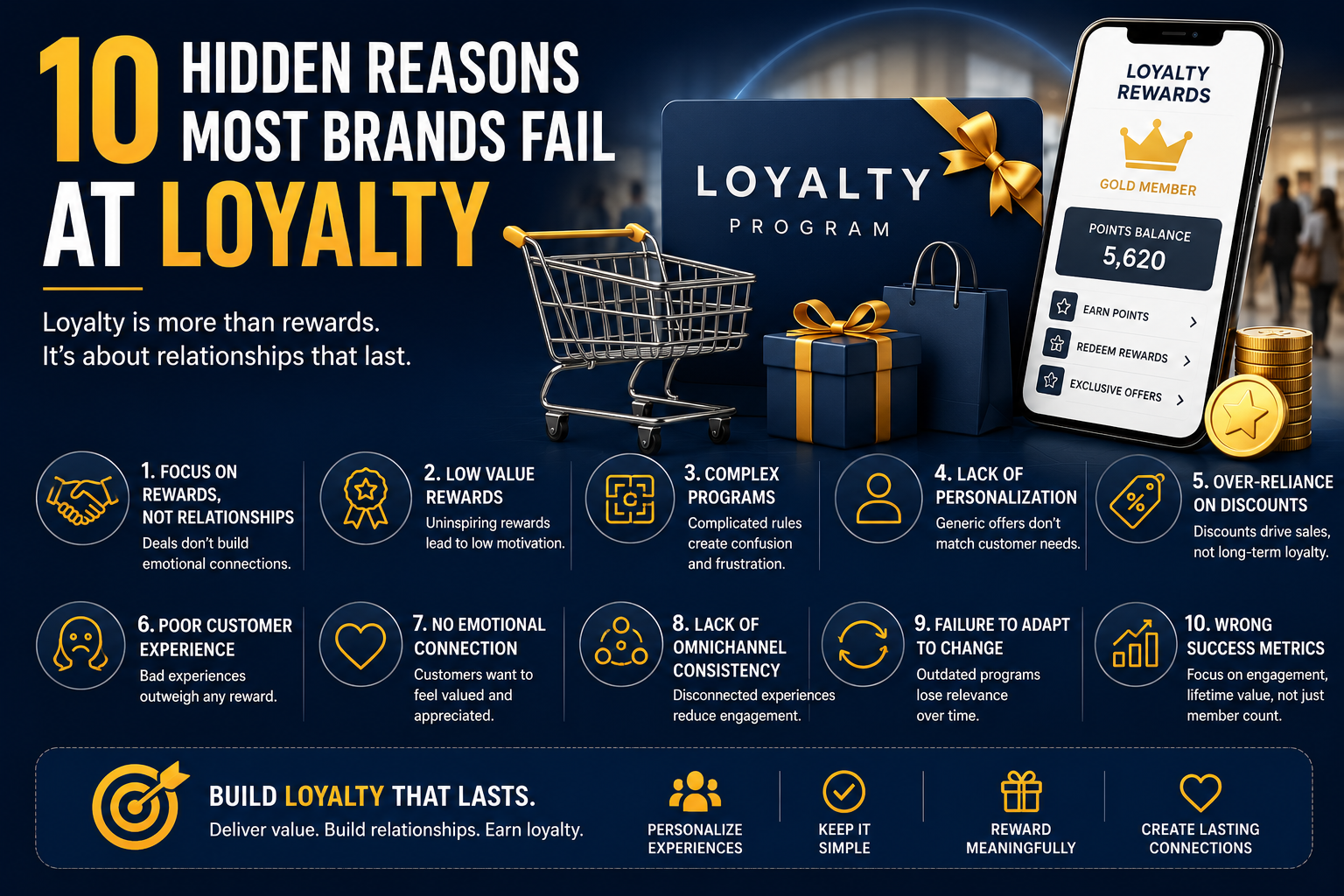
Companies spend millions of dollars in hopes of getting customers, but many find that they have trouble retaining them. Brands invest heavily in creating loyalty programs with the expectation that they will create repeat purchases, create stronger customer relationships, and increase customer retention of customers. Unfortunately, loyalty programs do not always produce the expected results despite the good intentions and large investments that brands commit to their programs.
There is nothing wrong with rewarding customers. The issue for many brands is that they confuse a transaction for a relationship.
Today’s consumers have more options than ever before; they can compare prices in a matter of seconds, switch to a different brand with just a few clicks, and find other companies to buy from by using social media and/or online marketplaces. In a competitive world, points or discounts alone cannot create true connections between brands and customers.
So why do so many loyalty initiatives fail? Let’s dig deeper into the leading reasons for loyalty program failures.
Loyalty Is About Relationships, Not Rewards
Loyalty doesn’t come from rewards; it comes from creating emotional bonds with your customers. Yes, a customer could purchase something from you because of a discount or another incentive, but unless they had a good experience with your business, they will likely not come back. By focusing on just selling to their customers rather than forming a deeper connection, brands do not build up the loyalty that is required for long-term engagement with their existing customers.
Loyalty is created by providing consistent experiences, one-on-one interactions with customers, and authentic customer care to the successful companies that get it.
The Rewards Aren’t Valuable Enough
Many programs offer rewards that customers perceive as difficult to achieve or simply not worth the effort.
Imagine spending months collecting points only to receive a small discount that provides little real value. Most customers will quickly lose interest.
Research consistently shows that perceived value plays a major role in participation. When rewards feel meaningful, relevant, and attainable, customers are far more likely to engage regularly.
Brands should focus on benefits that matter to their audience, whether that’s exclusive access, personalized offers, premium experiences, early product launches, or useful perks.
Complex Rules Create Frustration
An unexpected number of loyalty programs have complexities that can make them unappealing to potential program members.
Many loyalty program customers find themselves confused about how they’re earning points or other benefits due to confusing point structures; they may also encounter multiple requirements to earn points/benefits, hidden restrictions that prevent them from using their points/benefits, and/or a complicated redemption process. This will cause frustration rather than excitement for them.
Today’s consumers typically expect systems that are easy-to-use and straightforward. If they have to read tons of terms and conditions about earning and redeeming benefits before they can understand how the program works or whether they’ll participate, a good number of them will choose not to.
The best loyalty programs minimize confusion for customers at each step of the process—customers clearly understand both how they earn rewards through the program as well as how they can use the rewards they earn.
Lack of Personalization
Today’s consumers expect brands to recognize their preferences and behaviors.
Generic offers sent to every member rarely generate strong engagement. A customer who regularly purchases skincare products is unlikely to respond to promotions for unrelated items. Similarly, frequent shoppers expect different experiences than occasional buyers.
Personalization has become a key driver of retention because it makes customers feel recognized rather than treated as just another account number.
Brands that use customer data responsibly to deliver relevant experiences often see stronger participation and higher satisfaction levels.
Brands Focus Too Much on Discounts
Many businesses rely heavily on discounts as their primary retention strategy. While discounts can generate short-term sales, they often fail to create genuine loyalty.
In fact, customers may become loyal to the discount rather than the brand itself.
When another company offers a better promotion, these customers can easily switch. This creates a cycle where businesses continuously lower prices without building meaningful relationships.
True loyalty comes from delivering value beyond price, including exceptional service, convenience, exclusive benefits, and memorable experiences.
Poor Customer Experience Undermines Loyalty
A rewards initiative cannot compensate for poor customer experiences.
Customers remember delayed deliveries, difficult returns, unhelpful support teams, and inconsistent service. Even the most attractive benefits cannot overcome repeated negative interactions.
Studies from customer experience research consistently show that poor experiences are among the leading reasons customers stop buying from brands.
Before investing heavily in rewards, businesses must ensure their customer journey is smooth, reliable, and enjoyable.
No Emotional Connection
People often remain loyal to brands that align with their values, identity, or lifestyle.
Think about the brands consumers proudly recommend to friends and family. In many cases, the relationship goes beyond products or pricing. Customers feel connected to the brand’s mission, community, or overall experience.
Many companies overlook this emotional component and focus entirely on transactions. As a result, customers see little reason to remain committed.
Creating a sense of belonging through communities, recognition, exclusive experiences, and shared values can significantly strengthen customer relationships.
Lack of Omnichannel Consistency
Today’s customers interact with brands across websites, mobile apps, physical stores, social platforms, and customer support channels.
Unfortunately, many loyalty initiatives operate in silos. Customers may earn rewards in one channel but struggle to access them in another.
This fragmented experience creates confusion and reduces participation.
Modern consumers expect seamless experiences wherever they engage with a brand. Consistency across all touchpoints has become essential for maintaining trust and engagement.
Failure to Evolve With Customer Expectations
Customer preferences change rapidly. What worked five years ago may no longer be effective today.
Yet many businesses launch a program and rarely update it. Benefits become outdated, engagement declines, and participation gradually drops.
Successful brands continuously monitor customer feedback, analyze behavior, and refine their strategies. They treat loyalty as an ongoing process rather than a one-time project.
Measuring the Wrong Success Metrics
Numerous organizations concentrate on their member count rather than member involvement.
While thousands of members can seem substantial in number, being a member alone does not provide you with any correlation to success. The critical differentiating factors will include whether customers are engaged, making repeat visits; the amount spent over an extended period; and how much stronger a relationship is forged with each respective brand.
When measuring a successful loyalty program, organizations should use metrics like repeat purchases, lifetime value of the customer, retention rates, redemptions, and customer satisfaction overall.
Building Loyalty That Actually Lasts
Customers may not demonstrate loyalty as a result of simply being rewarded with points; rather, they demonstrate loyalty when a brand consistently provides them with value, convenience, recognition, and positive experiences.
The most successful loyalty programs provide customers with: meaningful rewards; personalization; simplicity; emotional connection/engagement; and an overall exceptional experience. Companies’ focus should be placed on building their relationship with each customer, versus just providing them with a way to transact.
Novus Loyalty believes loyalty should be much more than just rewarding customers; loyalty should also constitute a strategic way to help brands develop a deeper understanding of their customers and to continually engage and retain them throughout their entire journey.
Businesses that focus on building authentic relationships with their customers, as customer expectations continue to rise, will ultimately turn the occasional buyer into a lifelong advocate for their brand; this represents the essence of true loyalty.